


 中文简体
中文简体  Español
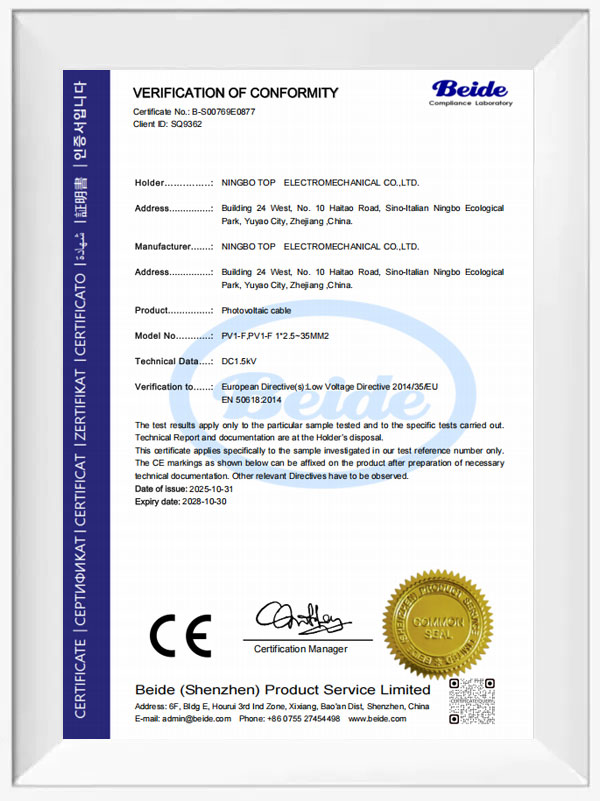
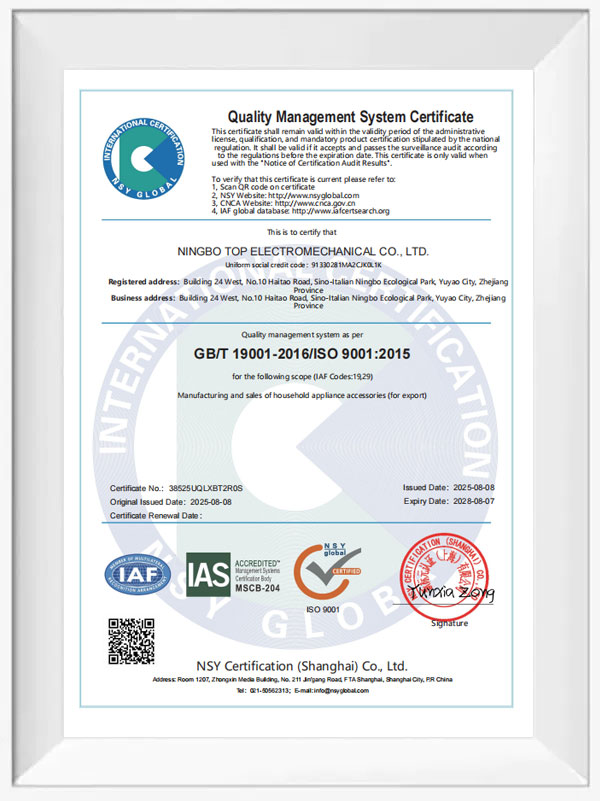
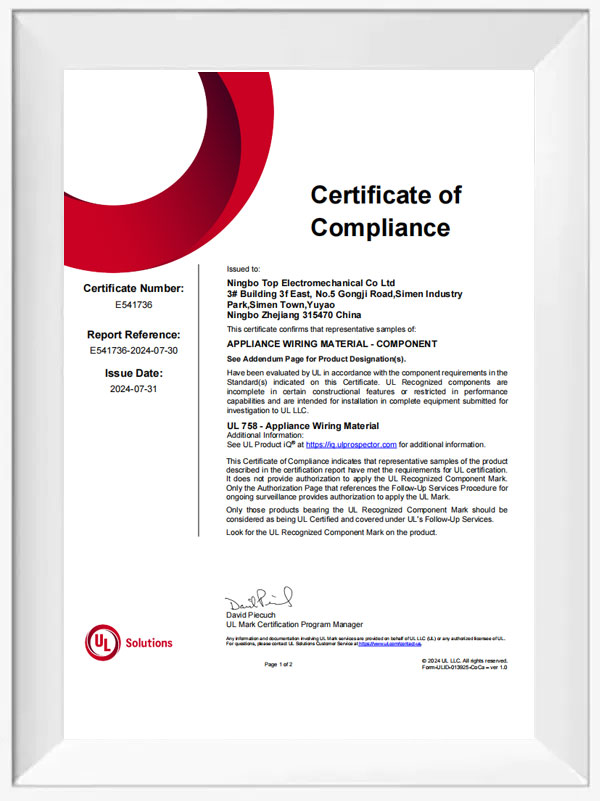
As China Korean Standard Plug Manufacturers and Korean Standard Plug Suppliers, Ningbo TOP Electromechanical Co., Ltd. is a globally renowned supplier of electrical and electronic products, specializing in the research, development, and manufacturing of series such as wires and cables, plugs and sockets, waterproof LED connectors, LED junction boxes, and lighting string wiring. The company strictly adheres to national and international standards, establishing itself in the market with exceptional quality and serving customers both domestically and internationally. Located in the conveniently accessible and economically vibrant Yuyao Zhongyi Wanyang Innovation Park on the southern coast of Hangzhou Bay, the company enjoys a strategic position with a one-hour economic radius covering Hangzhou International Airport, Ningbo Port, and Shanghai Airport. Its logistics network extends globally, ensuring prompt delivery and efficient service. We possess state-of-the-art manufacturing and testing equipment, implement comprehensive quality management systems, and have built a professional service team to ensure high standards at every stage from production to after-sales service. The company has obtained multiple international certifications, including CCC, VDE, UL, PSE, ASTA, SAA, and KC, with products meeting various international safety standards and earning the trust of clients worldwide. Our vision is to become a leader in the global power connection industry. We remain customer-centric, pursue excellence, and look forward to partnering with collaborators to achieve a brilliant future.

CATEGORIES
Korean Standard Plug Suppliers
-
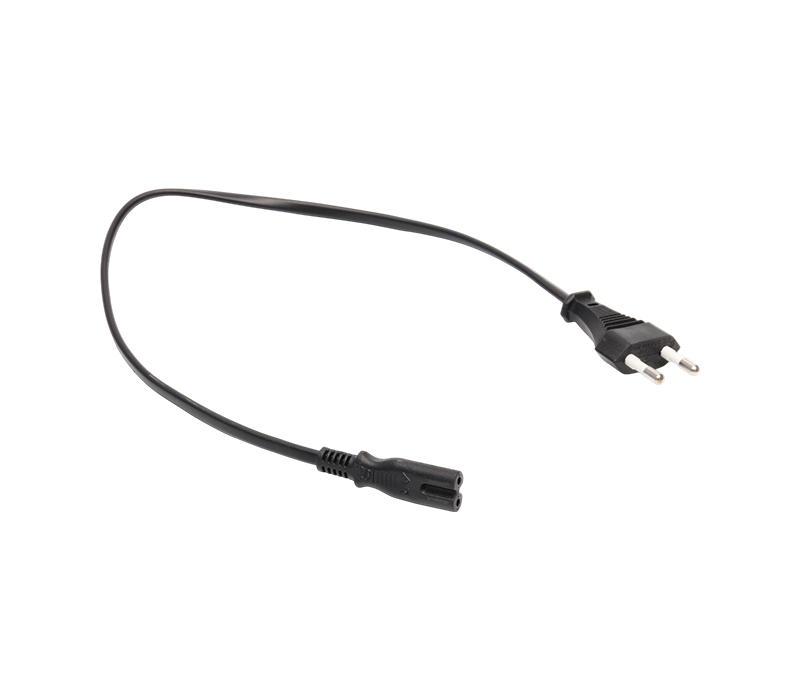 K2-3+ST2/FY-ST2 2.5A 250V Korea 2-Pin Plug With IEC Connector C7This Korean two-pin plug is distinguished by its capability to operate at 2.5A and 250V, suitable fo...
 -
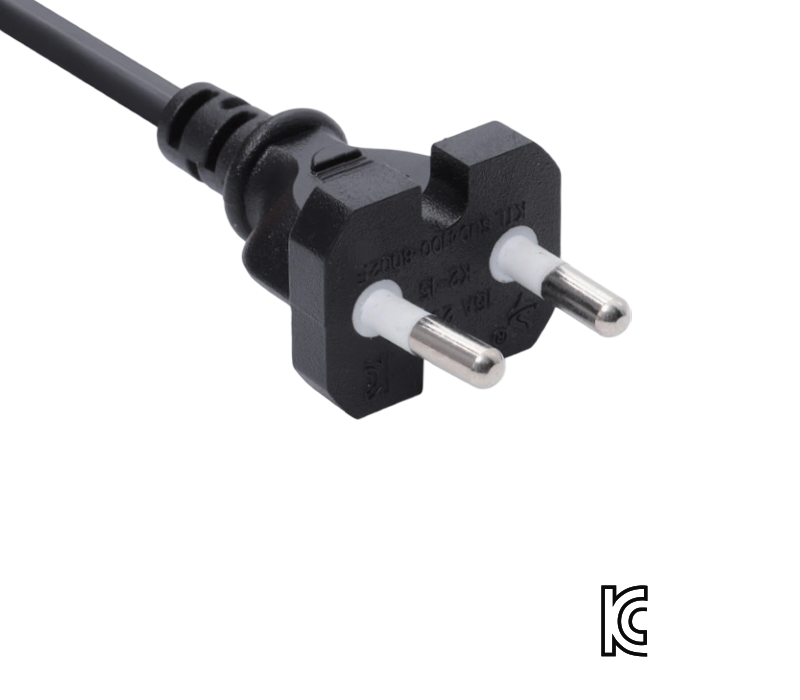 K2-15 16A 250V Korea 2-Pin Tool PlugThis Korean two-pin tool plug is notable for its ability to handle high current at 16A and 250V, mak...
 -
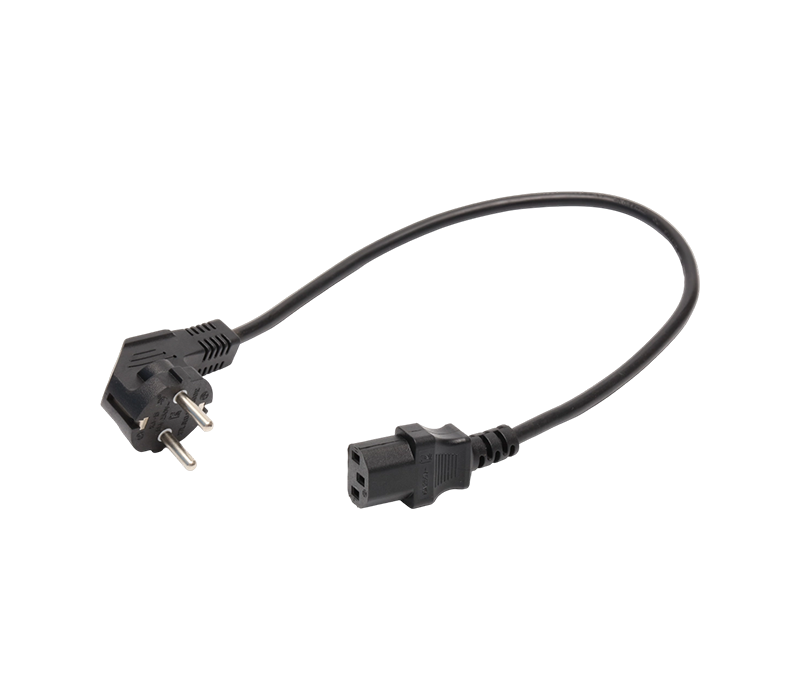 K3-15+JT-ST3 16A 250V Three-Pin Korean 90-Degree Elbow Plug With IEC C13 ConnectorThis Korean three-pin 90-degree elbow plug with IEC C13 connector is characterized by its space-savi...
Introduction: Utilizes a two-round-pin design, some models equipped with grounding, compliant with KSC standards.
Applications: Korean electrical appliances, electronics such as televisions and refrigerators, and some European markets.
Manufacturing: Housing made of high-strength plastic, internal copper conductors tinned, certified under KC standards.
Service: Provides 220V/60Hz voltage configurations, with customizable pin angles.
Advantages: Strong compatibility, suitable for high-humidity environments.

About Us
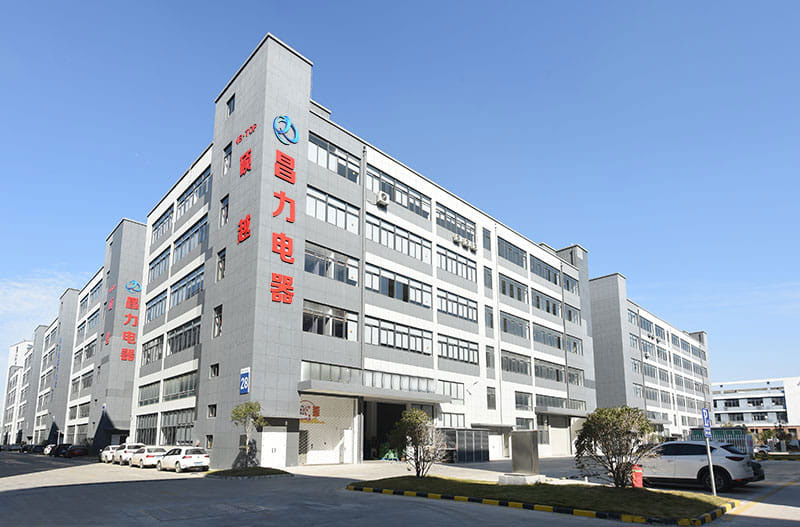
Ningbo TOP Electromechanical Co., Ltd.
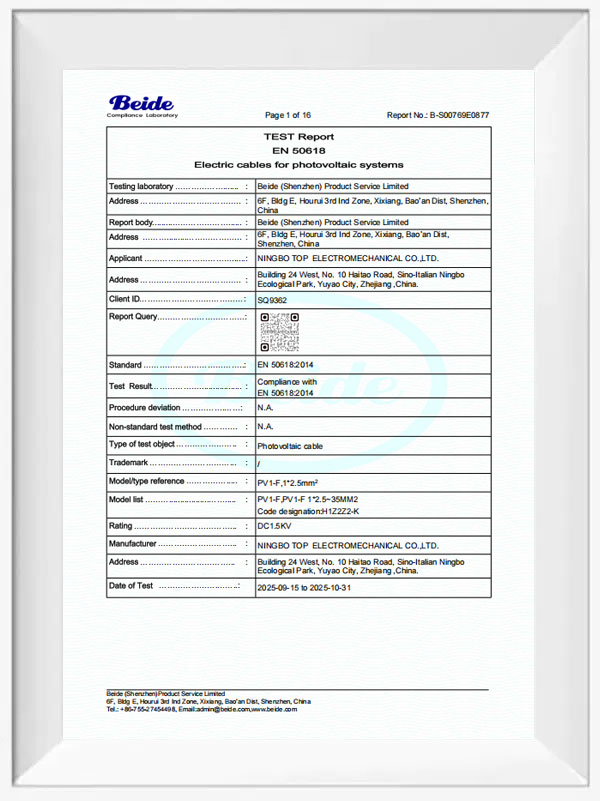
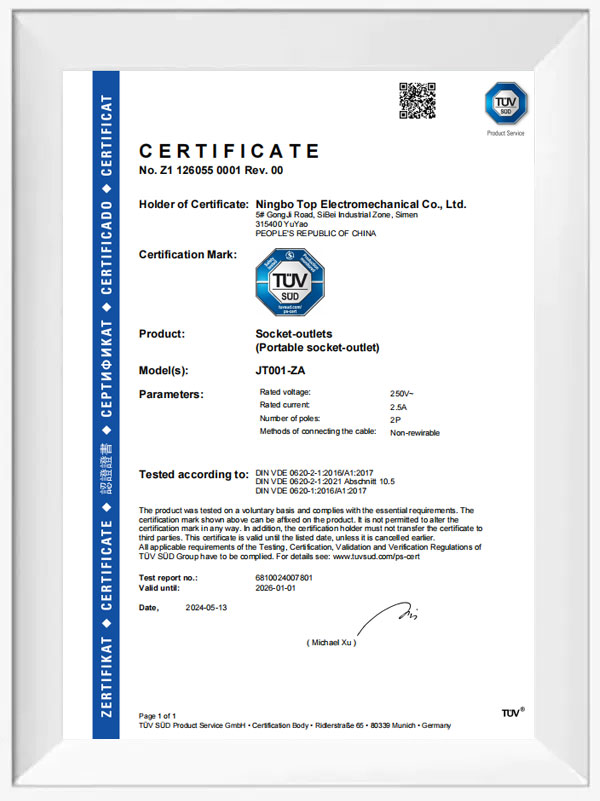
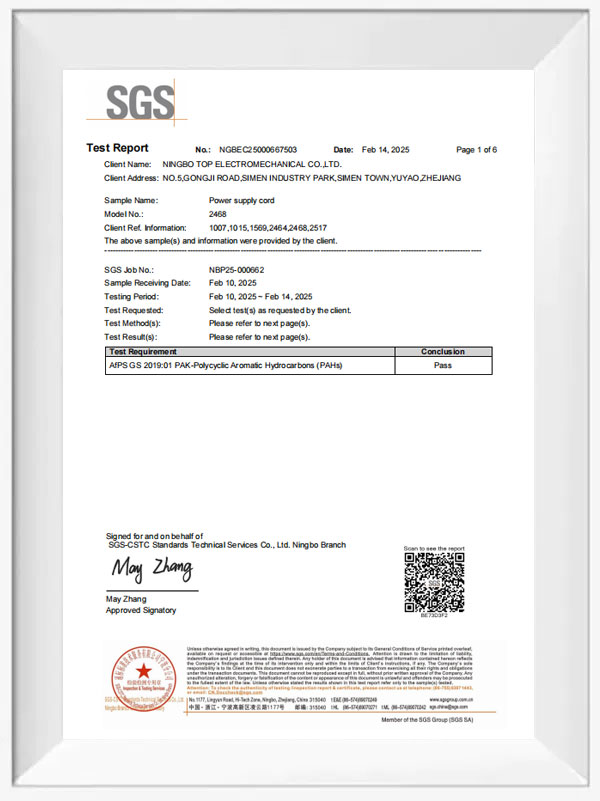
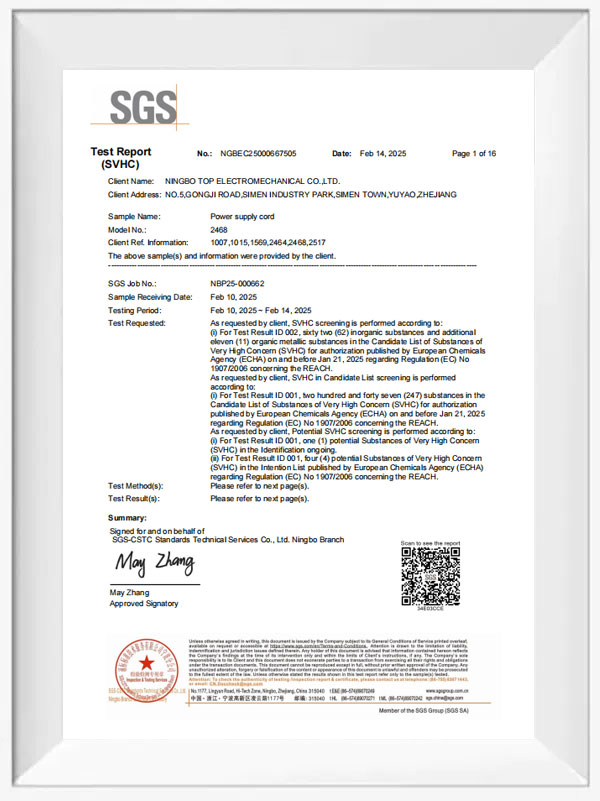
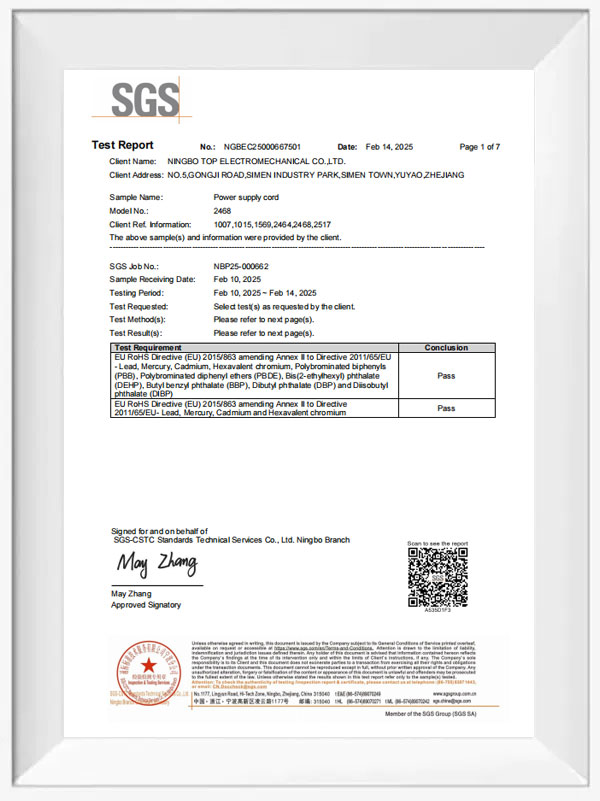
Certificate Of Honour
Latest News
Industry knowledge
How Do KSC Standards and the KC Certification Frame the Reliability of the Korean Standard Plug?
In the specialized field of global power connections, the Korean Standard Plug stands out as a paradigm of safety and high-voltage efficiency. Defined by its distinct two-round-pin configuration, the Korean Standard Plug must navigate the rigorous demands of Korea's 220V/60Hz electrical grid. Unlike the 100V or 120V systems found in North America or Japan, the higher voltage of the Korean grid necessitates a heightened focus on insulation integrity and arcing prevention within the Korean Standard Plug design.
The Significance of KC (Korea Certification) for Global Markets
The "KC" mark is the heartbeat of the Korean Standard Plug industry. This mandatory certification system ensures that every Korean Standard Plug sold in the Republic of Korea meets the strict safety requirements set by the Korean Agency for Technology and Standards (KATS).
Electrical Safety and Dielectric Integrity: Every Korean Standard Plug must undergo comprehensive high-potential testing (Hi-Pot) during the manufacturing phase. This process involves applying a voltage significantly higher than the standard 220V operating level to ensure that the internal insulation and external housing can withstand sudden, unexpected voltage surges without experiencing a catastrophic dielectric breakdown. This rigorous validation ensures that the Korean Standard Plug remains a safe barrier between the high-voltage grid and the end-user, even under unstable electrical conditions.
Electromagnetic Compatibility (EMC) in the Smart Era: In the modern age of smart homes and interconnected IoT devices, a certified Korean Standard Plug must adhere to strict EMC standards. It is engineered to ensure that it does not emit excessive electromagnetic interference (EMI) that could potentially disrupt the delicate microprocessors found in sensitive Korean appliances, such as high-definition OLED televisions or AI-driven smart refrigerators. Furthermore, the shielding properties of a premium Korean Standard Plug help maintain signal purity for the connected device.
As a premier Korean Standard Plug Supplier, Ningbo TOP Electromechanical Co., Ltd. ensures that its production lines are meticulously optimized for KC compliance. By integrating these advanced safety protocols and EMC testing directly into the early stages of product development and material selection, the company guarantees that every Korean Standard Plug provides a foundation of reliability for the world's most advanced consumer electronics.
Material Engineering: High-Strength Housing and Tinned Copper Conductors
The physical durability of a Korean Standard Plug is a result of advanced polymer science. The housing is typically constructed from high-strength, impact-resistant plastics that can endure the mechanical stress of thousands of insertion cycles. Internally, the conductivity of the Korean Standard Plug is optimized through the use of tinned copper conductors. Tinning the internal copper provides a critical barrier against oxidation, particularly in the humid coastal climates often found in South Korea. This technical detail ensures that the Korean Standard Plug maintains a low contact resistance over its entire lifespan, preventing the heat buildup that often leads to fire hazards in substandard power connections.
Optimized Pin Geometry and Grounding Logic
The Korean Standard Plug is often compared to European Type F (Schuko) or Type C plugs, but it has specific dimensional tolerances mandated by KSC standards. Whether it is a simple two-pin non-grounded version or the more robust three-conductor grounded Korean Standard Plug, the pin diameter and spacing are engineered to provide a "locking" feel when inserted into a Korean socket. This prevents partial contact, which is a leading cause of electrical fires. The grounded models feature side-earth clips that engage with the socket before the live pins make contact, providing an essential safety bridge for high-wattage Korean electronics.
Why is the Korean Standard Plug the Preferred Choice for High-Humidity Environments and Heavy-Duty Domestic Appliances?
One of the most discussed topics among electrical engineers is the environmental adaptability of various plug standards. The Korean Standard Plug is specifically celebrated for its resilience in high-humidity conditions, a feature that makes it indispensable for both domestic Korean use and specific European markets.
Resilience in High-Humidity Coastal Climates
South Korea's geography, surrounded by sea on three sides, creates a challenging environment for electrical components. Salt-laden air and high humidity levels can cause rapid corrosion in standard brass pins. The Korean Standard Plug addresses this through its sealed over-molding process and the aforementioned tinned conductors. The hermetic seal between the cable jacket and the Korean Standard Plug head prevents moisture from seeping into the wire strands. This moisture resistance is a primary reason why the Korean Standard Plug is favored for appliances located in kitchens or laundry rooms, such as large-capacity refrigerators and high-speed washing machines.
Powering the Giants: Televisions and Large Refrigerators
South Korea is home to global giants in the electronics industry, and these high-precision devices require a stable, high-current power interface. The Korean Standard Plug is designed to handle the 220V/60Hz frequency with minimal harmonic distortion. For high-end OLED televisions, a stable current flow from the Korean Standard Plug is vital to protect the delicate internal circuitry from voltage ripples. In the case of refrigerators, which run 24/7, the mechanical stability of the Korean Standard Plug ensures that vibration from the compressor does not loosen the connection over time.
Versatility Across International Borders
While its primary home is South Korea, the Korean Standard Plug enjoys a high degree of cross-compatibility with many European and Southeast Asian sockets. This "Strong Compatibility" is a major advantage for exporters. However, professional China Korean Standard Plug Manufacturers like Ningbo TOP highlight that while the pins may fit European sockets, the specific 60Hz optimization of the Korean Standard Plug makes it uniquely suited for the Korean grid's specific power signature. This allows for a seamless user experience where the appliance performs exactly as the manufacturer intended.
Technical Specification Comparison Table
|
Feature |
Standard 2-Pin Korean Plug |
Grounded 3-Pin Korean Plug |
Heavy-Duty Industrial Variant |
|---|---|---|---|
|
KSC Reference |
KSC 8305 (Modified) |
KSC 8305 (Grounded) |
Industrial KSC Standard |
|
Voltage/Frequency |
220V / 60Hz |
220V / 60Hz |
220V - 380V |
|
Standard Current |
2.5A - 10A |
10A - 16A |
16A - 32A |
|
Housing Material |
High-Strength PC/PVC |
Impact-Resistant ABS/PVC |
Reinforced Nylon 66 |
|
Pin Configuration |
2 Round Pins |
2 Round + Grounding Strip |
3-5 Pin configurations |
|
Environment Suitability |
General Indoor |
High-Humidity / Kitchen |
Outdoor / Factory |
|
Certification Required |
KC (Safety) |
KC (Safety) |
KC / Industrial Grade |
Summary of Product Versatility
The data in the table above illustrates that the Korean Standard Plug is not a "one size fits all" component but a specialized tool. The transition from 2-pin to grounded 3-pin models is determined by the insulation class of the appliance. For Class II appliances, the compact 2-pin Korean Standard Plug provides sufficient protection, whereas Class I high-power devices rely on the grounded version to ensure user safety. This diversity in the Korean Standard Plug lineup allows manufacturers to optimize their bill of materials while maintaining total compliance with international safety norms.
How Do User-Centric Design and Ergonomic Features Enhance the Market Value of the Korean Standard Plug?
Beyond the fundamental requirements of electrical safety and durability, the Korean Standard Plug is increasingly evaluated by its user-centric design features. For global distributors and end-users, the "feel" and usability of the Korean Standard Plug are as critical as its internal specifications, influencing consumer perception of the connected brand.
Ergonomic Grip and Ease of Extraction
A significant innovation in the modern Korean Standard Plug is the focus on ergonomic housing. Many high-quality models now incorporate textured finger grips or slightly concave surfaces on the plug head. These features facilitate an easier insertion and extraction process, which is particularly beneficial for the elderly or individuals with limited hand strength. A well-designed Korean Standard Plug reduces the likelihood of a user pulling on the cable itself—a dangerous practice that can lead to internal wiring damage. By prioritizing a secure grip, the Korean Standard Plug enhances overall safety and provides a more premium user experience for high-end household electronics.
Visual and Tactile Branding Integration
In the competitive consumer electronics market, the Korean Standard Plug serves as a vital touchpoint between the product and the user. Professional Korean Standard Plug Suppliers now offer sophisticated customization options, such as laser-etched logos or custom-colored over-molding that aligns with the brand identity of the appliance. This aesthetic integration ensures that the Korean Standard Plug does not look like a generic aftermarket accessory but feels like an intentional, high-quality component of the television or refrigerator it powers. This visual consistency builds consumer trust and reinforces the perception of a high-standard, unified product ecosystem.
Compact Profile and Space-Saving Geometry
As modern living spaces become more compact, the physical footprint of the Korean Standard Plug has become a hot topic in the industry. Manufacturers like Ningbo TOP Electromechanical Co., Ltd. have focused on developing "low-profile" versions of the Korean Standard Plug. These designs minimize the distance the plug protrudes from the wall, allowing furniture—such as TV consoles or kitchen cabinets—to be placed closer to the power outlet. By optimizing the internal arrangement of the conductors and using high-density insulation materials, the Korean Standard Plug achieves a sleek, modern aesthetic without sacrificing its ability to handle 220V current. This combination of space-saving geometry and robust electrical performance makes the Korean Standard Plug a favorite among interior designers and technology enthusiasts alike.
Global Presence and Manufacturing Excellence of Ningbo TOP
To support these design innovations, Ningbo TOP Electromechanical Co., Ltd. leverages its strategic position as a world-class China Korean Standard Plug Manufacturer. Located in the economically vibrant southern coast of Hangzhou Bay, the company integrates advanced R&D with global logistical efficiency. Their diverse portfolio of international certifications ensures that their user-centric Korean Standard Plug designs meet the safety requirements of multiple international markets. This global expertise, combined with a commitment to customer-centric service, allows Ningbo TOP to deliver high-performance power connection solutions that serve the needs of a rapidly evolving digital world.
The Korean Standard Plug represents a perfect synergy between technical rigor and user-centric innovation. Whether it is through the use of tinned copper conductors to resist humidity or the implementation of ergonomic grips to enhance usability, every aspect of the Korean Standard Plug is engineered for excellence.
By partnering with a dedicated Korean Standard Plug Supplier like Ningbo TOP Electromechanical Co., Ltd., international brands gain access to products that are not only compliant with KC safety standards but also optimized for the modern consumer experience. As the industry moves toward smarter and more sustainable power solutions, the Korean Standard Plug will continue to serve as a benchmark for quality, safety, and reliability in the global marketplace.
Contact Us
LET'S START COLLABORATING
 Ningbo TOP Electromechanical Co., Ltd. specializes in the R&D and manufacturing of
wires & cables, plugs & sockets, waterproof LED connectors, and more. Ourproducts
meet multiple international certifications and are widely used in global markets.
Ningbo TOP Electromechanical Co., Ltd. specializes in the R&D and manufacturing of
wires & cables, plugs & sockets, waterproof LED connectors, and more. Ourproducts
meet multiple international certifications and are widely used in global markets.
STAY CONNECTED
 Phone:+86-13586690829
Tel:+86-0574-62135837-801
 [email protected]
[email protected]
 Sibei Industrial Yuyao City, Ningbo, Zhejiang, China
MOBILE
Copyright ? Ningbo TOP Electromechanical Co., Ltd. All Rights
Reserved
 Custom Korean Standard Plug Manufacturers