


 中文简体
中文简体  Español
How to Choose a Power Cord Manufacturer: Standards, Tooling, and Lead Times
 2026.10.08
 Industry News
A purchasing manager in Rotterdam opens the first carton of a 20,000-piece European power cord order. The plug bodies look correct, the cable printing matches the drawing, and the shipment still cannot go to the UK, because the same purchase order bundled a British-style plug without the fused insert that BS 1363 requires. The quoted price gap between the two suppliers was three percent. The rework quote was closer to thirty percent of order value.
The conclusion first: in power cord sourcing, unit price is rarely the deciding variable. Standards coverage across your destination markets, tooling ownership, molding discipline, and the ability to hold dimensional tolerances after the first 50,000 pieces decide whether a program runs quietly or slowly eats your margin.
What a Power Cord Manufacturer Actually Is
Suppliers in this category fall into three groups, and the difference shows up in your third or fourth order rather than your first.
- Trading companies resell finished cords and forward your drawing to a third party. Samples arrive fast; process control is hard to audit.
- Assembly shops buy molded plugs and prepared cable, then crimp and assemble. Often competent, but a change of plug source under price pressure stays invisible to you.
- Integrated manufacturers control conductor stranding, plug-body molding, terminal crimping, fuse fitting, and end-of-line testing inside one plant.
A finished cord is a stack of tolerances, and knowing which ones your supplier owns tells you where your risk actually sits.
- Plug end
- Molded or detachable body in PVC or rubber compound
- Live, neutral, and earth pins, plated to specification
- Fuse and fuse clip where the standard demands one, such as BS 1363
- Crimp terminals joining conductors to pins
- Cord
- Conductor cross-section from 0.75 mm² up to 1.5 mm² or heavier
- Insulation and jacket with a stated temperature rating
- Strain relief or cord guard, molded or assembled
- Connector end, when the cord is detachable
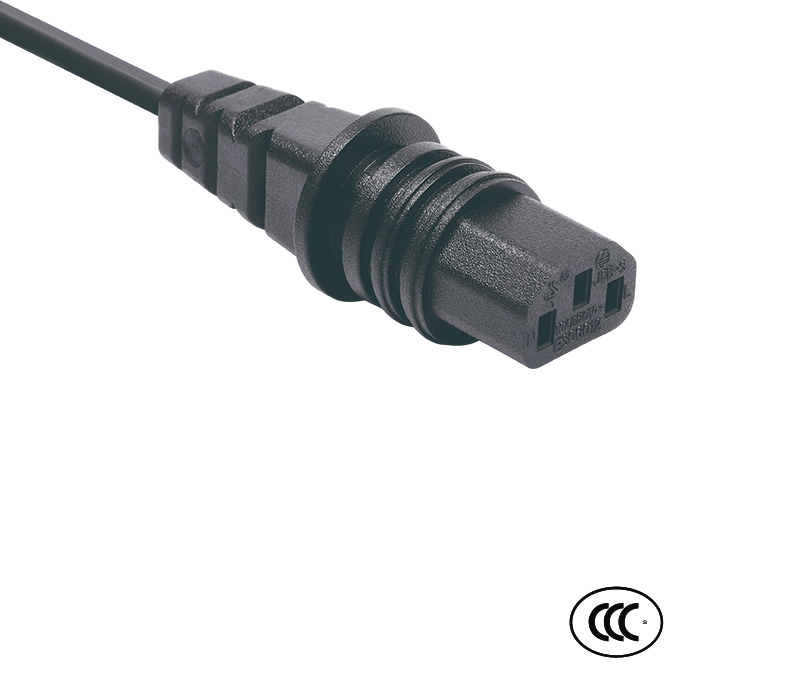
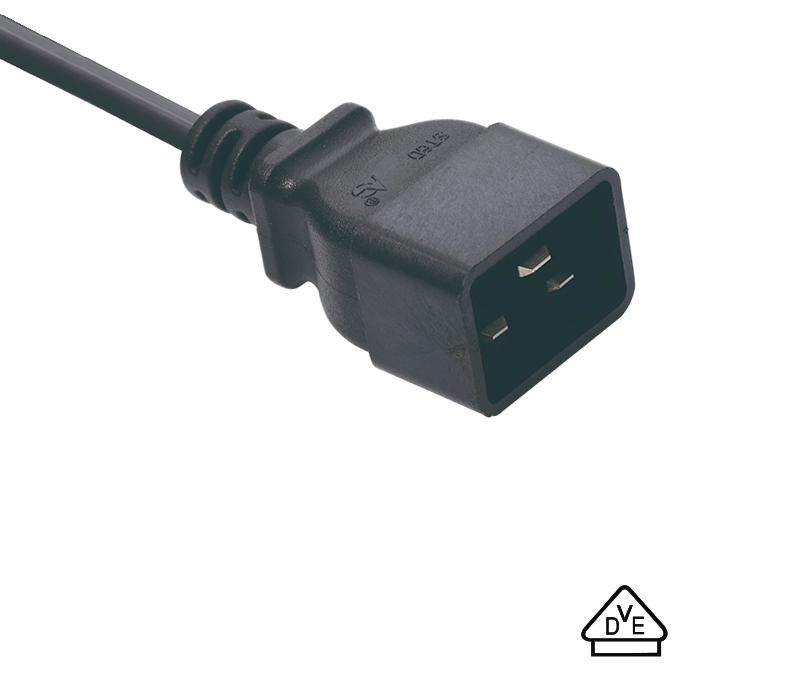
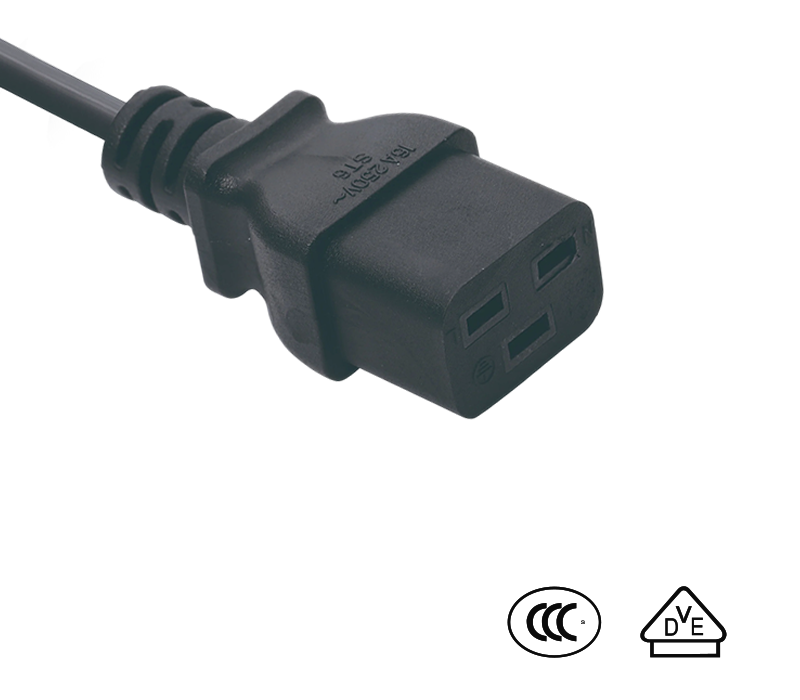
- IEC housing such as C13, C5, C7, or C19
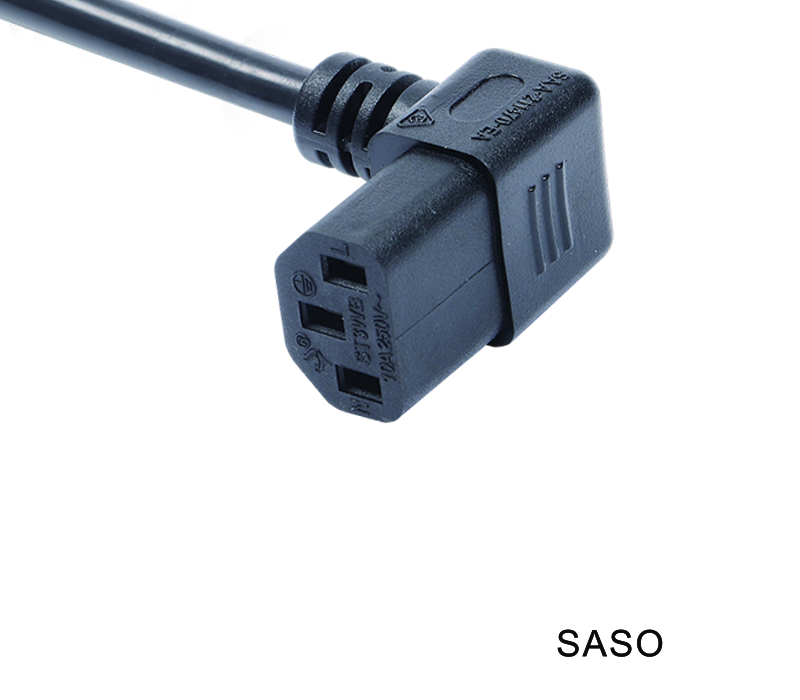
- Straight or 90-degree angled body
If you want pin geometry and body construction explained piece by piece, this breakdown of how a plug is built is a useful reference to share with your engineering team.
Plug Standards Narrow the Supplier List Before Price Does
Destination markets filter suppliers earlier than most buyers expect. A cord that is legal in Germany is not legal in Denmark, and a US two-pin plug will not satisfy the pin-insulation requirements of AS/NZS 3112.
| Market | Plug family | Common rating | Watch point |
|---|---|---|---|
| United States, Canada | NEMA 1-15P, 5-15P, 5-20P | 15A 125V, 20A 125V | Conductor gauge must match the branch circuit rating |
| Continental Europe | CEE 7/16, CEE 7/7 | 2.5A to 16A, 250V | The 2.5A europlug body is often ordered where 16A is needed |
| United Kingdom | BS 1363 | 13A 250V | A fuse inside the plug is mandatory and its rating must match the appliance |
| Australia, New Zealand | AS/NZS 3112 | 10A and 16A, 250V | Partially insulated pins are required on 10A variants |
| China | GB 1002, GB 2099 | 10A and 16A, 250V | 90-degree elbow bodies are common in appliance builds |
| Japan | JIS C 8303 | 15A 125V | Geometry resembles NEMA but tolerances are tighter, so shared tooling carries risk |
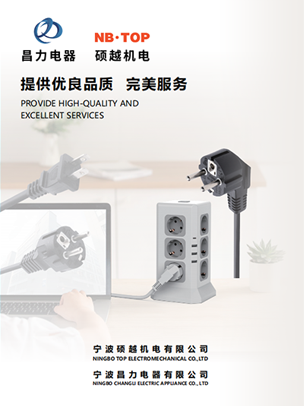 European Standard Power Cord OEM/ODM CategoryCompare European-standard cords, tool plugs, waterproof versions, and IEC connector assemblies to match market requirements and consolidate sourcing with one manufacturer.View Product →
A supplier that already molds several of these families in-house can consolidate your order instead of splitting it across three vendors with three sets of dimensional habits. That consolidation is usually worth more than a two or three percent price difference.
Where Power Cords Actually Fail Inspection
Defects in cord programs concentrate in a short list rather than a long tail, and the distribution below reflects what pre-shipment inspections tend to surface.
Flash and parting-line defects on the molded body, about 34%
Strain relief below pull-force specification, about 26%
Terminal crimp resistance above limit, about 18%
Fuse contact or incorrect fuse rating, about 12%
Marking, print, or labeling errors, about 10%
Two of those five causes rarely originate in the cable. Flash and parting lines come from mold condition and cycle settings; weak strain relief comes from mold design and material choice. Both are tooling and process issues, which is why a supplier that outsources plug molding has limited ability to correct them on your schedule.
Write the pull-force value and the test method into the drawing, then require the report with each shipment. A cord specification without a stated test method simply invites two laboratories to disagree about the same carton.
IEC Connectors: Matching the Cord to the Device Inlet
When the cord is detachable, the connector end matters as much as the plug end. The common families are worth keeping straight.
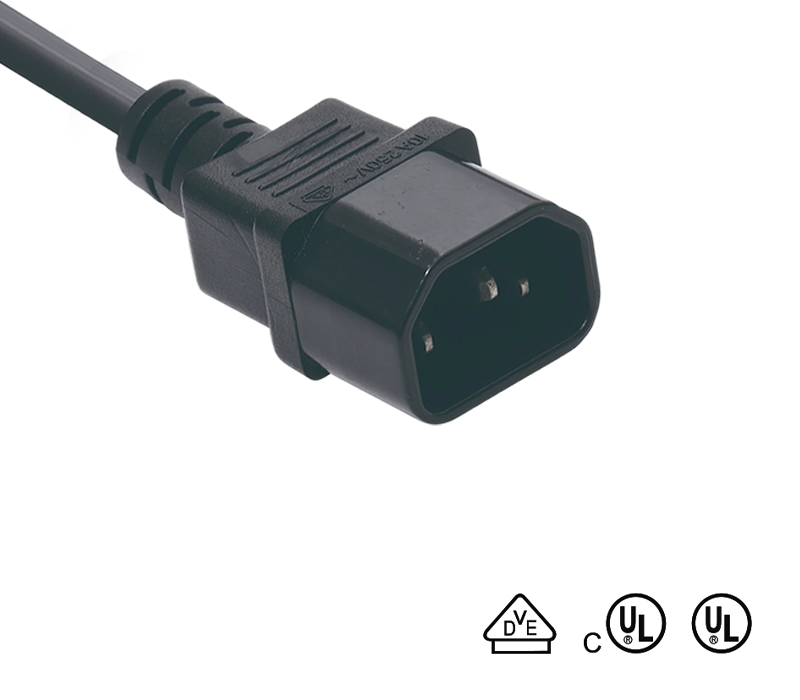
- C13 and C14: 10A 250V, 70°C, the default for computers, monitors, and lab equipment.
- C15 and C16: the same footprint with a higher temperature rating, used on kettles, heaters, and some IT power supplies.
- C5: the three-pin cloverleaf found on laptop adapters and small appliances.
- C7: two-pin figure-eight, commonly rated 2.5A, for double-insulated devices.
- C19 and C20: 16A or 20A for servers, UPS units, and power distribution.
Temperature rating is the step buyers skip most often. A C13 body will fit a C16 inlet mechanically, but the assembly may no longer be valid for the heat the appliance produces. Angled C13 housings solve a genuine installation problem when the inlet sits close to a wall or inside a rack.
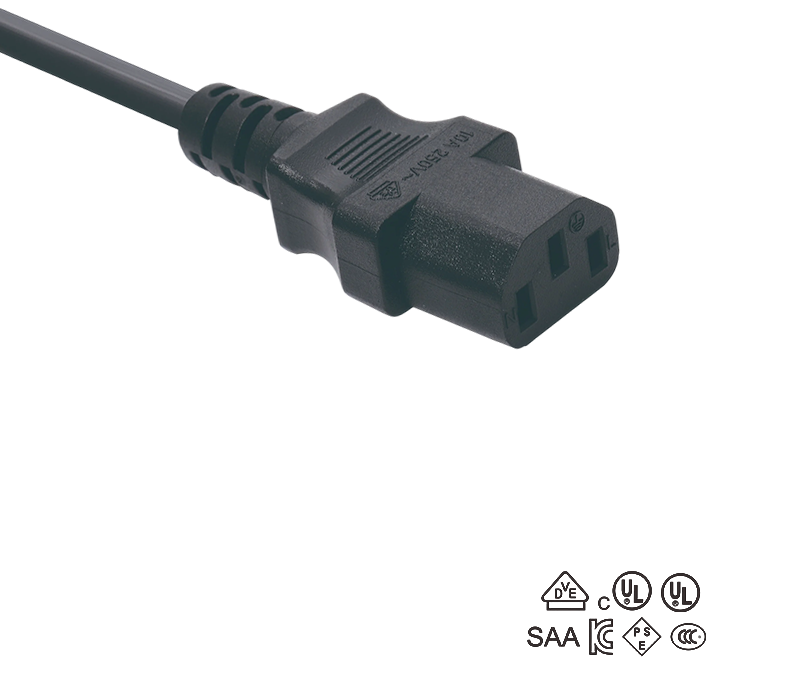 JT-ST3 IEC C13 Female Socket Connector 10A 250VA 10A 250V IEC C13 socket with overload protection and copper contacts for computer cords, where consistent polarity and continuity checks matter.View Product →
Ordering plug and connector ends from one manufacturer also keeps polarity and continuity checks consistent across the whole assembly.
Waterproof Cords: Where Molding Quality Becomes Visible
Outdoor and wet-location cords expose assembly shortcuts quickly. Splash protection and immersion protection are different claims, and the difference usually lives in the gasket, not in the housing.
- Molded-in gaskets rather than loose O-rings, which fall out during installation.
- Sealing compression defined by the housing, not by how hard an installer tightens the coupling.
- Strain relief matched to the actual cable diameter; a loose cord guard is the first path water follows.
- Consistent sealing across lighting runs, so 2, 3, and 4-pin harnesses and Y-splitters use the same system as the cord.
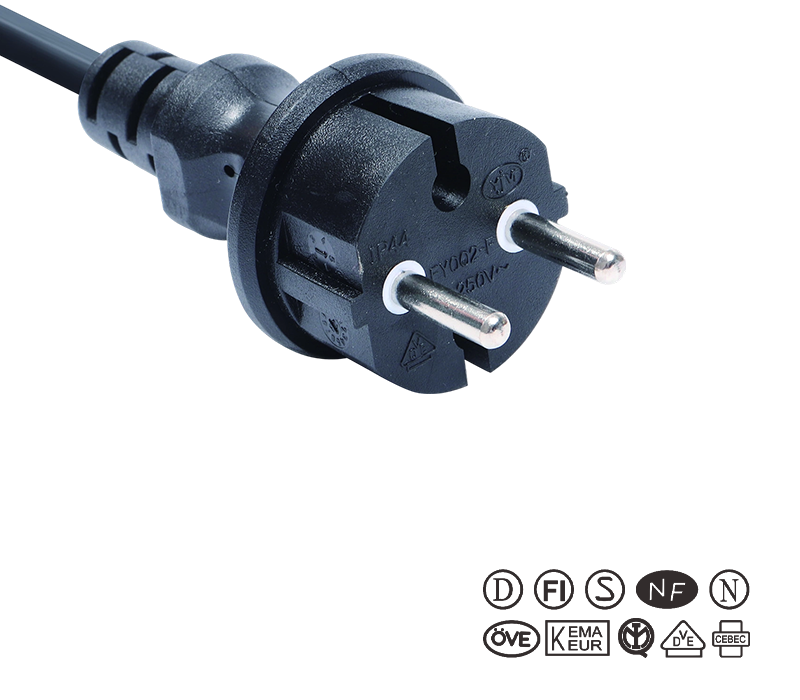 JT002-F/FY002-F 16A European Two-Pin Waterproof Power CordA 16A 250V European two-pin waterproof cord with sealed prong design; add gasket and seal checks for wet-location inspections.View Product →
Waterproof cords also change your inspection plan. Add a gasket presence check and a visual seal inspection to the routine sampling, because a missing gasket passes every electrical test you run.
Qualifying a Manufacturer Before the First Purchase Order
Five items separate a supplier you can scale with from one you will replace next year.
- A dimensional drawing of the plug body with tolerances, not a photograph.
- Written tooling ownership: who owns the mold, where it is stored, and how it transfers.
- A test plan that separates 100% testing, such as continuity, polarity, and hi-pot, from sampled testing, such as pull force and dimensional checks.
- Certification file numbers you can verify with the issuing body. Logos on a website are not evidence.
- Conductor cross-section and material declarations, because copper content is the easiest place to hide cost.
Then place a pilot order at production settings, not a hand-built sample run. The pilot is the only reliable way to see whether the process holds after the tooling has warmed up.
Tooling, MOQ, and the Real Timeline
Power cord tooling is inexpensive next to most injection-molded programs, and that is exactly why buyers underestimate it. The mold is not the cost; the elapsed time around it is.
Prototype samples: about 1 week
Tooling and first-article approval: about 4 weeks
Mass production run: about 3 weeks
Sea freight to Europe or North America: about 5 weeks
Plan a new plug body, a new cord print, and a new carton as a ten to fourteen week exercise from drawing approval to stock on your floor. If the schedule is tighter, the only honest options are reusing an existing tool and standard packaging, or paying for air freight on the first shipment.
Minimum order quantity usually tracks the cable rather than the plug. Common black PVC cord in 0.75 mm² and 1.0 mm² may ship from a few thousand pieces, while a custom jacket color or a rarely ordered plug standard can push the floor to five or ten thousand. Ask which share of the MOQ is cable, which is molding, and which is packaging.
Geography matters quietly here. Factories within an hour of a major export port, such as the manufacturing belt around Ningbo and Yuyao in Zhejiang, remove roughly a week of inland transport and make consolidation with other suppliers easier. If you would like a drawing checked against a physical sample before committing, sample requests go through our contact page.
None of this makes power cord sourcing complicated; it makes it specific. Put the destination standard, current and voltage rating, conductor cross-section, fuse requirement, pull-force value, and test method into the drawing, then ask the supplier to confirm which of those they control in-house. Suppliers who answer that question precisely are the ones whose third shipment looks exactly like their first.
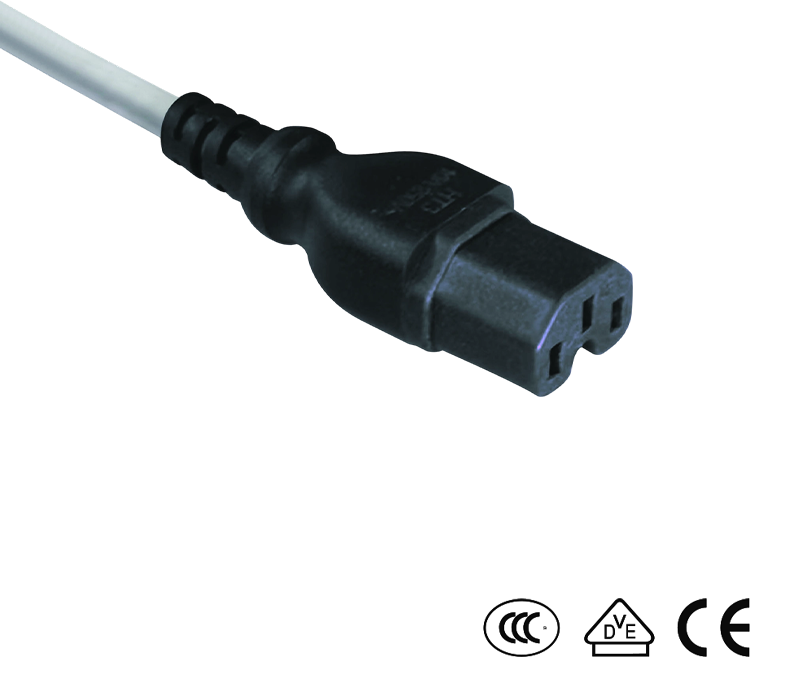
Latest News

Contact Us
LET'S START COLLABORATING
 Ningbo TOP Electromechanical Co., Ltd.
specializes in the R&D and manufacturing of
wires & cables, plugs & sockets, waterproof LED connectors, and more. Ourproducts
meet multiple international certifications and are widely used in global markets.
Ningbo TOP Electromechanical Co., Ltd.
specializes in the R&D and manufacturing of
wires & cables, plugs & sockets, waterproof LED connectors, and more. Ourproducts
meet multiple international certifications and are widely used in global markets.
STAY CONNECTED
 Phone:+86-13586690829
Tel:+86-0574-62135837-801
 [email protected]
[email protected]
 Sibei Industrial Yuyao City, Ningbo, Zhejiang, China
MOBILE
Copyright © Ningbo TOP Electromechanical Co., Ltd. All Rights
Reserved
 Custom Electrical Power Cord Manufacturers