


 中文简体
 Español

Electrical Power Cord Buying Guide: Standards, Ratings, and Compliance
 2026.10.22
 Industry News
Imagine receiving a purchase order for 10,000 appliance power cords and then discovering that the plug you approved in the sample does not match the national standard of the destination market. The shipment is held at customs, the production line waits, and the delay costs more than the entire order. This scenario repeats every year across importing companies, yet it is entirely preventable once you understand a few fundamentals about electrical power cords.
The electrical power cord is a compliance-critical component, not an accessory. Before comparing prices, you should lock down four variables: the plug standard of the target market, the current and voltage rating, the cordage construction, and the certification marks. Each one depends on the others, and getting them right is the difference between a smooth launch and a stranded container.
What an Electrical Power Cord Is and Why It Matters
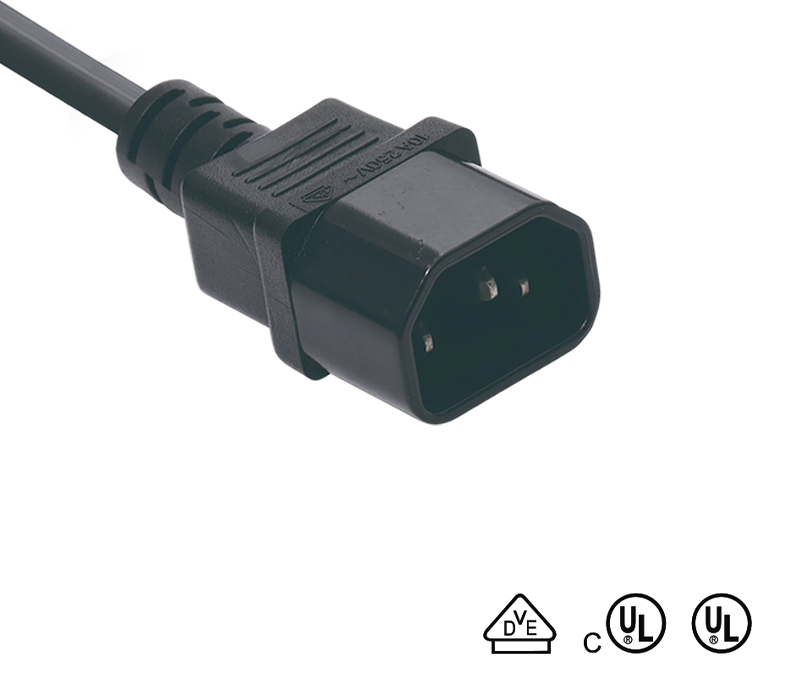
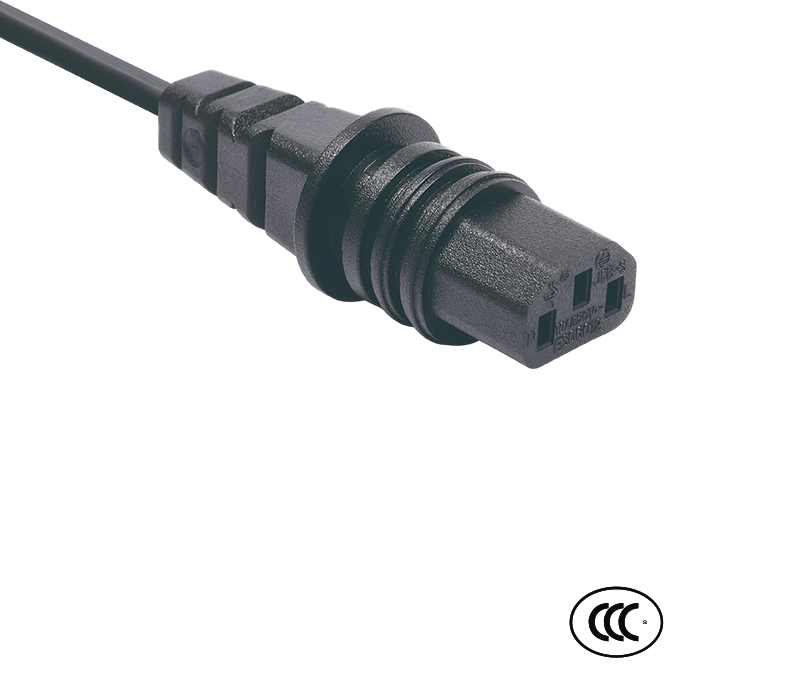
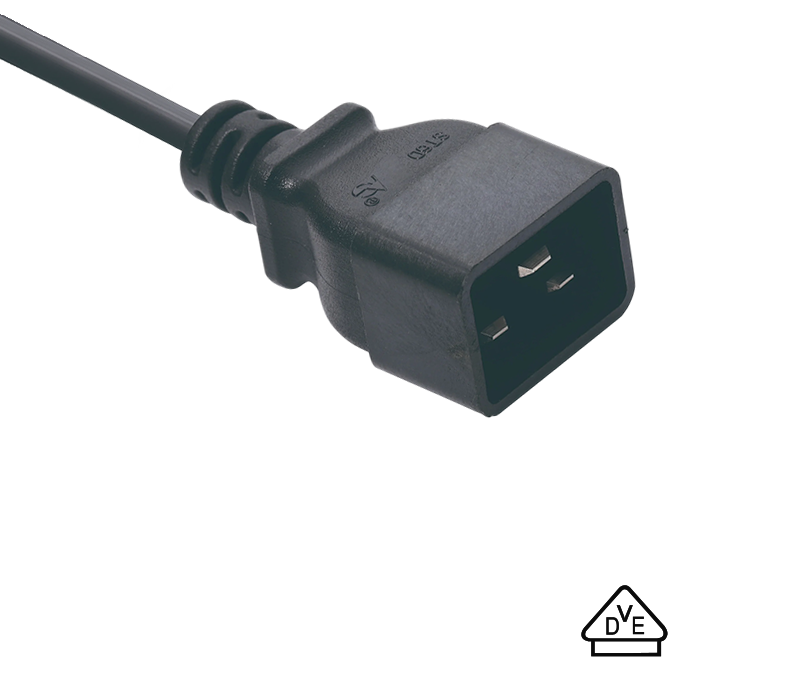
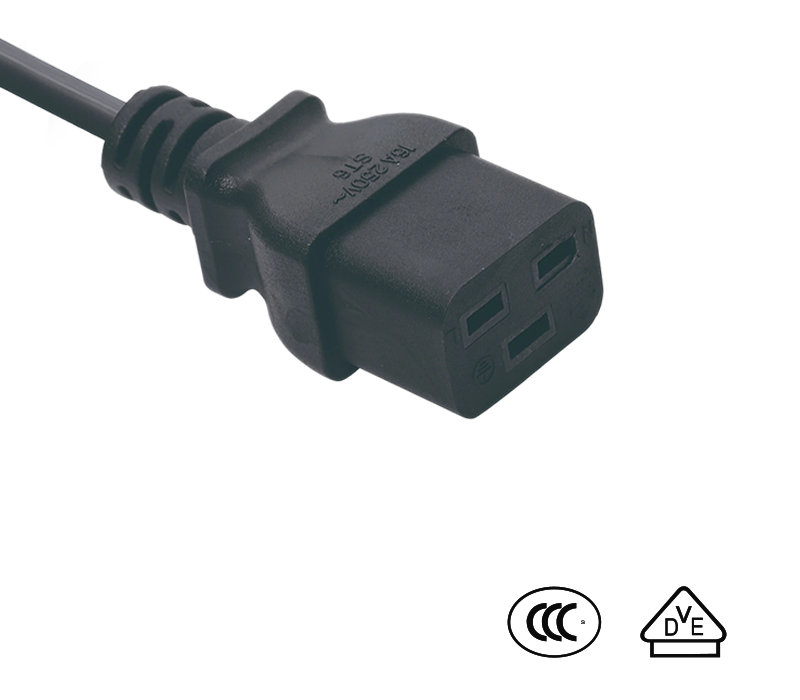
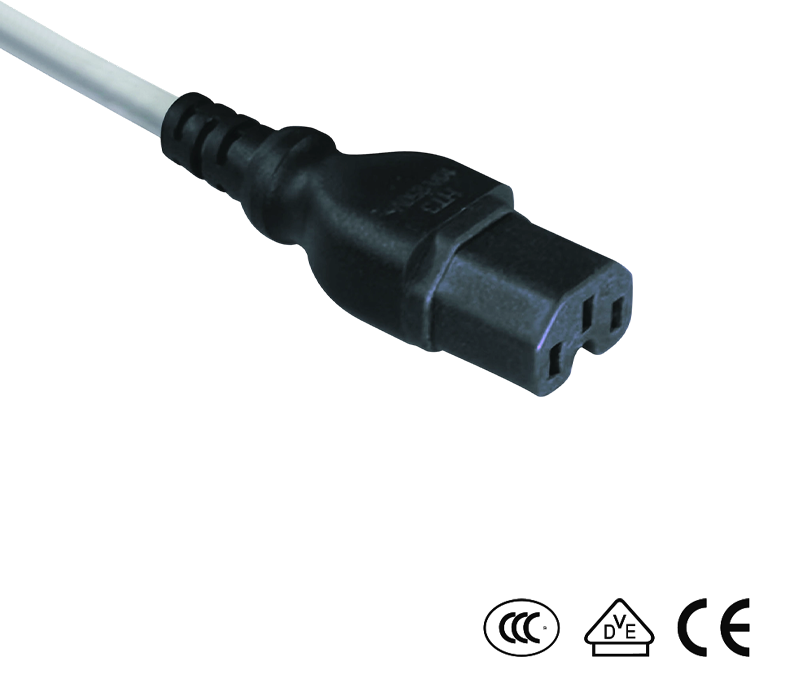
An electrical power cord is an assembly of a molded plug, a flexible cable, and, in detachable versions, an appliance connector that matches an IEC 60320 inlet such as C13, C5, or C7. It carries mains energy from the wall socket to the equipment. That makes it one of the first parts a regulator inspects before a product can be sold.
Power cords take two general forms. An integral cord is permanently attached to the device and is common in lighting fixtures, kitchen appliances, and power tools. A detachable cord uses a country-specific plug and a standard IEC connector on the appliance side, simplifying shipping, storage, and field replacement.
Start with the Plug Standard for the Destination Market
The destination country determines plug geometry. A cord for the United States must use NEMA blade pins, a European product needs a CEE 7/7 shape, and the United Kingdom requires a three-pin fused plug. These configurations are not interchangeable and cannot be adapted in the field without violating safety regulations.
| Market | Plug standard | Typical rating | Grounding |
|---|---|---|---|
| United States / Canada | NEMA 5-15P | 15 A, 125 V | 3-pole grounded |
| European Union | CEE 7/7 (Schuko-French) | 16 A, 250 V | Grounding clip or pin |
| United Kingdom | BS 1363 | 13 A, 250 V | Fused, 3-pole grounded |
| Australia / New Zealand | AS/NZS 3112 | 10 A, 250 V | 3-pole grounded |
| Japan | JIS C 8303 | 15 A, 125 V | 2-pole or grounded |
| China | GB 1002 | 10 A, 250 V | 3-pole grounded |
A manufacturer that produces cords for all these standards, such as Ningbo TOP Electromechanical, lets you validate one appliance design against several destination markets without adding extra suppliers. This is especially valuable for exporters who serve multiple regions, because one production line can handle different plugs while the cordage and the appliance connector remain the same.
Match Current and Voltage Ratings to the Actual Load
The rating printed on a plug is the maximum continuous current the cord is designed to carry, not the current your appliance draws. A 15 A NEMA 5-15P cord should be reserved for loads up to 12 A when the equipment runs continuously, following the common 80% rule. A 16 A European cord is comfortable with a 13 A continuous load, while a 10 A cord must never be used on an appliance that draws 15 A.
Figure 1: Maximum current rating of common plug standards
China (GB 1002) 10 A
Australia (AS/NZS 3112) 10 A
United Kingdom (BS 1363) 13 A
United States (NEMA 5-15P) 15 A
Japan (JIS C 8303) 15 A
European Union (CEE 7/7) 16 A
Voltage follows similar logic. North American and Japanese circuits run at 120 V, so a 125 V rating is enough. Most other markets operate at 220-240 V and require 250 V. A 250 V cord is safe on a 120 V circuit, but a 125 V cord has no place in a 230 V installation. Dual-rated cords simplify global inventory.
Select Cordage and Conductor Size for the Environment
Cordage is defined by conductor cross-section, insulation material, and jacket type. Oversizing raises cost, while undersizing creates overheating and voltage drop. Two cord families dominate the market: UL-style service cords such as SJT and SVT, and European harmonized cords such as H05VV-F and H07RN-F.
| Cord type | Conductor cross-section | Typical rating | Common use |
|---|---|---|---|
| SVT | 18 AWG (0.82 mm²) | 10 A, 125 V | Light indoor appliances |
| SJT | 16 AWG (1.31 mm²) | 13 A, 125 V | Indoor appliances (North America) |
| SJTW | 16 AWG (1.31 mm²) | 13 A, 125 V | Outdoor weather-resistant jacket |
| H03VV-F | 0.75 mm² | 6 A, 250 V | Short light-duty European cords |
| H05VV-F | 1.0-1.5 mm² | 10-16 A, 250 V | Household appliances |
| H07RN-F | 1.5-2.5 mm² | 16-25 A, 250 V | Industrial rubber cords |
Reading the type code saves money. H05VV-F 3G1.5 means a three-conductor cord with 1.5 mm² conductors and PVC insulation; that size suits a 16 A European application. An 18 AWG UL cord, by comparison, suits low-power products like lamps and small electronics. For outdoor use, choose a rubber or TPE jacket, or a UL cord with a "W" suffix, which marks a weather-resistant jacket.
Length also affects conductor choice. If a seven-meter cord or longer is part of your design, go one size larger than the minimum ampacity, because voltage drop rises with length, and a thin conductor at full load will run hot.
Plug Geometry, Fusing, and Mechanical Details
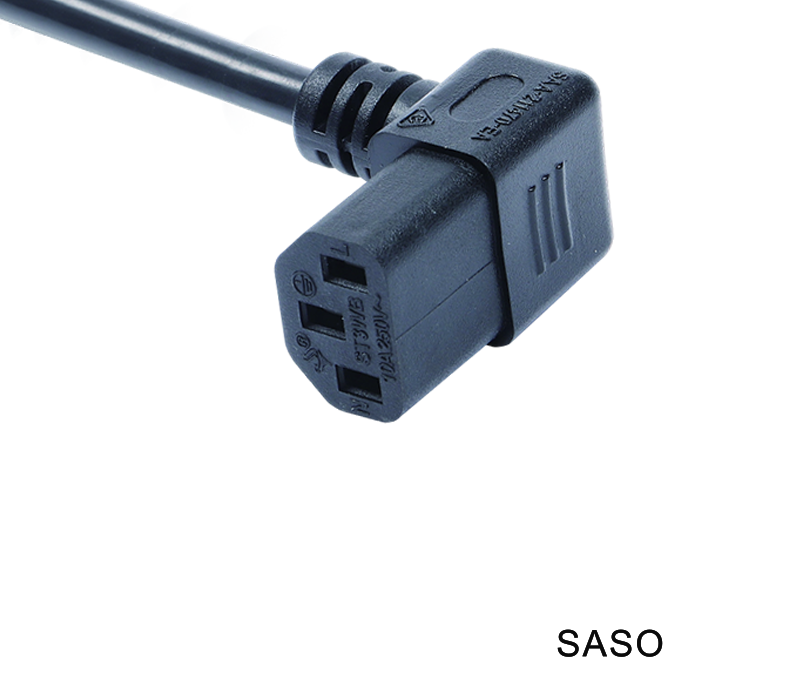
Plug shape is not the only mechanical decision. A right-angle plug fits behind cabinets and furniture where a straight plug does not, which is convenient for refrigerators and wall-mounted lights. Molded plugs are standard in certified cords because the insulation is fused to the cable, leaving no exposed live parts. The United Kingdom also requires a fuse inside a BS 1363 plug, and the fuse rating should match the appliance load rather than the plug rating.
Two-pin ungrounded plugs such as the CEE 7/16 Europlug or NEMA 1-15 are limited to double-insulated products. Devices with exposed metal parts need a grounded three-pin plug. Strain relief matters too: the connection inside a molded plug should pass a pull test without visible jacket movement, because a cord that fails at the strain point fails quickly in daily use.
Certification Is Part of the Product
Power cords are regulated by mandatory certification. In the United States, a cord must carry UL or CSA recognition under UL 817. In the European Union, plugs require scheme-based approval such as ENEC. The United Kingdom uses UKCA and BS certification, Australia requires SAA approval, Japan requires PSE, and China requires CCC. CE marking alone does not replace an independent plug approval in many European markets.
Always ask for active certificates that name the exact product model and verify the issue date. The certification mark is part of the product design; it cannot be added after the fact to satisfy customs. A factory that presents valid certificates up front saves weeks of corrective work.
What to Include in a Power Cord Inquiry
To get an accurate quotation, give the manufacturer a complete picture of the installation:
- Destination countries and target certification marks.
- Appliance power consumption in watts or amperes at rated voltage, including continuous or intermittent duty.
- Cord length, plug orientation (straight or right-angle), and connector if detachable, such as IEC C13.
- Environmental conditions: indoor, outdoor, water exposure, temperature range, or UV exposure.
- Required certificates and documentation such as RoHS or REACH declarations.
- Annual quantity, packaging requirements, and expected lead time.
A specialist supplier like Ningbo TOP Electromechanical, which produces multiple national standards in-house, can combine all of this into one quotation and flag mismatches before tooling starts. That is where a power cord supplier earns its value: not only in unit price, but in the engineering review that happens before your order reaches production.
A well-selected electrical power cord protects your product, your customers, and your brand. Fix the destination standard, size the current rating to the load, choose cordage that fits the environment, and verify valid certification. Done correctly, the cord becomes a competitive advantage rather than the last component anyone wants to think about.
Latest News

Contact Us
LET'S START COLLABORATING
 Ningbo TOP Electromechanical Co., Ltd.
specializes in the R&D and manufacturing of
wires & cables, plugs & sockets, waterproof LED connectors, and more. Ourproducts
meet multiple international certifications and are widely used in global markets.
STAY CONNECTED
 Phone:+86-13586690829
Tel:+86-0574-62135837-801
 [email protected]
 Sibei Industrial Yuyao City, Ningbo, Zhejiang, China
MOBILE
Copyright © Ningbo TOP Electromechanical Co., Ltd. All Rights
Reserved
 Custom Electrical Power Cord Manufacturers