


 中文简体
中文简体  Español
Outdoor Extension Cord Guide: Gauge, Length, and Weatherproofing Choices
 2026.09.20
 Industry News
You are halfway across the yard with a hedge trimmer in one hand and an indoor extension cord stretched to its limit. The trimmer starts, then hesitates every time the blades meet a thick branch. The cord feels warm near the plug. That warmth is not normal; it is resistance in an undersized conductor turning current into heat, and it is the first warning that the wrong cord can shorten the life of a tool, trip a breaker, or start a fire. An outdoor extension cord has to handle moisture, sunlight, temperature swings, and the full current draw of the equipment at the far end. Choosing one comes down to three variables: wire gauge, length, and the quality of the plugs and connectors.
What Makes an Extension Cord Suitable for Outdoor Use
An outdoor cord is not just an indoor cord with a longer cable. The jacket, the plug, and the internal conductor all change when the application moves outside. The most reliable way to identify an outdoor cord is the mark printed on the jacket.
- SJTW, SJTOW, or SJEOOW jackets resist UV light, moisture, and abrasion, and they stay flexible in cold weather. Plain vinyl jackets used on indoor cords become stiff and brittle after a few months of sun.
- Molded plugs and strain relief keep water out of the electrical connection and prevent conductor strands from breaking where the cable meets the plug.
- Grounding is a requirement for outdoor tools and metal-bodied equipment. A three-wire cord with a properly connected ground pin is the minimum for 120 V and 230 V systems.
- Temperature rating matters in cold climates. Jackets rated to -40 °C remain flexible in winter, which is important for holiday lighting and snow-season equipment.
None of these features are visible in a product photo. The printed code on the jacket is the only reliable indicator, and it is the first thing an experienced buyer checks.
Matching Wire Gauge to the Load
Wire gauge, expressed in AWG (American Wire Gauge), determines how much current a cord can carry safely. A lower AWG number means a thicker conductor, lower resistance, and higher ampacity. The table below shows what each common gauge reasonably supports for outdoor use.
| Gauge | Current capacity | Typical outdoor uses |
|---|---|---|
| 16 AWG | 10-13 A | Low-wattage string lights, small fans, light-duty tools |
| 14 AWG | 15 A | Mowers, string trimmers, hedge trimmers, most garden tools |
| 12 AWG | 15-20 A | Heaters, pressure washers, long runs over 50 ft, high-draw equipment |
The practical rule: read the amperage on the tool nameplate, add the other devices on the same cord, and pick a gauge whose capacity is at least 20% above the total. A 15 A mower on a 16 AWG cord works until the cord heats up; on a 14 AWG cord the margin is comfortable. This is the same margin electricians build into permanent installations, and it costs very little at the point of purchase.
Length, Voltage Drop, and the Real Impact
Length affects voltage drop. Every conductor has resistance, and the longer the cord, the more voltage is lost before power reaches the tool. The nameplate rating of a tool assumes full supply voltage; a drop of 5% or more makes motors run slower, overheat, or fail to start.
- Under 25 ft: the voltage drop on a correctly sized gauge is small enough to ignore.
- 25-50 ft: use at least the gauge recommended for the tool amperage.
- Over 50 ft: step up one full gauge. A tool that runs on 14 AWG at 30 ft should get 12 AWG at 75 ft.
The effect is visible: lights dim at the far end, motors hum, and battery chargers take longer or fail entirely. In commercial use, voltage drop is not just a performance issue; it is an equipment warranty issue. Manufacturers of pressure washers and table saws document minimum voltage requirements, and undersized cords can void those protections.
Plugs and Connectors That Handle the Weather
The plug is the weakest link in any outdoor electrical setup. Moisture enters through the gap between the plug and the socket, or through the strain relief where the cable enters the plug. Weatherproofing solutions fall into three levels: molded plugs with a tight fit, hinged or screw-on covers, and IP-rated connectors with gaskets that seal the joint completely.
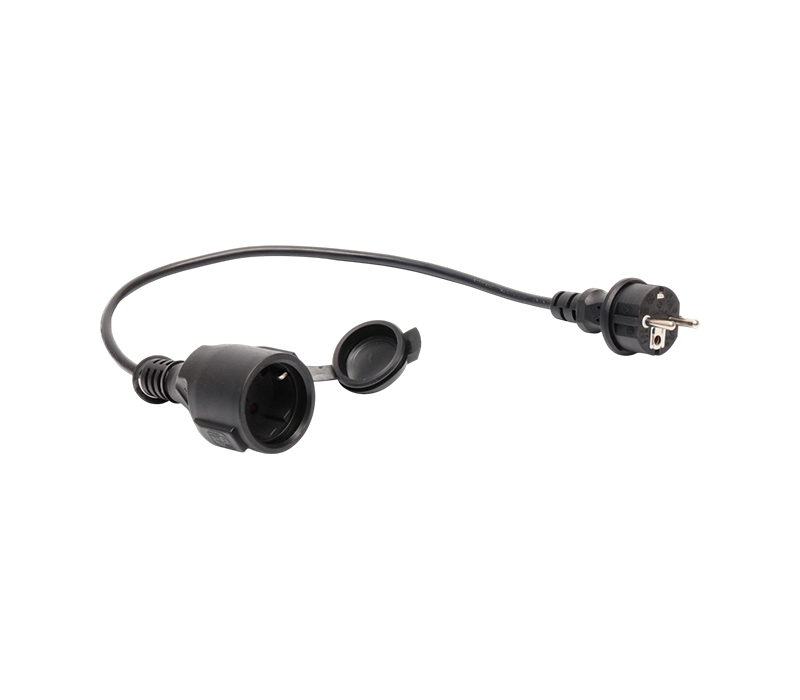
For markets using 230 V systems, a waterproof extension cord with sealed connectors is the standard choice for pumps, garden tools, and temporary power on job sites. Its design keeps the contact area dry even when the connection sits in wet grass or under rain spray. On the socket side, the plug configuration must match the local standard; for most of Europe, a 16 A 250 V three-pin plug with a waterproof housing covers nearly all outdoor applications, from garden pumps to power tools.
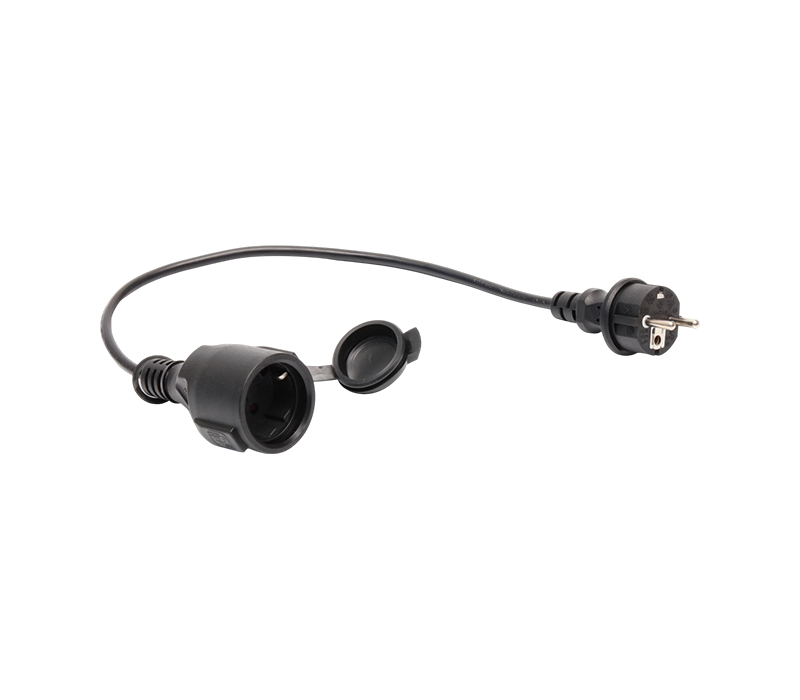 16A 250V European Standard Three-Pin Waterproof Extension CordThis weatherproof extension cord is designed for 230V markets, with sealed connectors to keep contacts dry in wet conditions. It suits pumps, garden tools, and outdoor power needs where moisture resistance is essential.View Product →
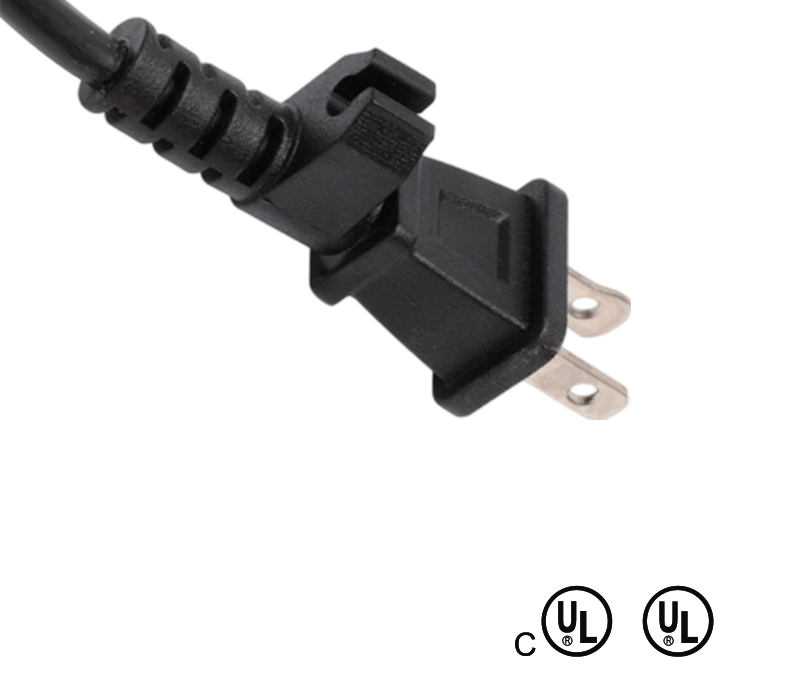
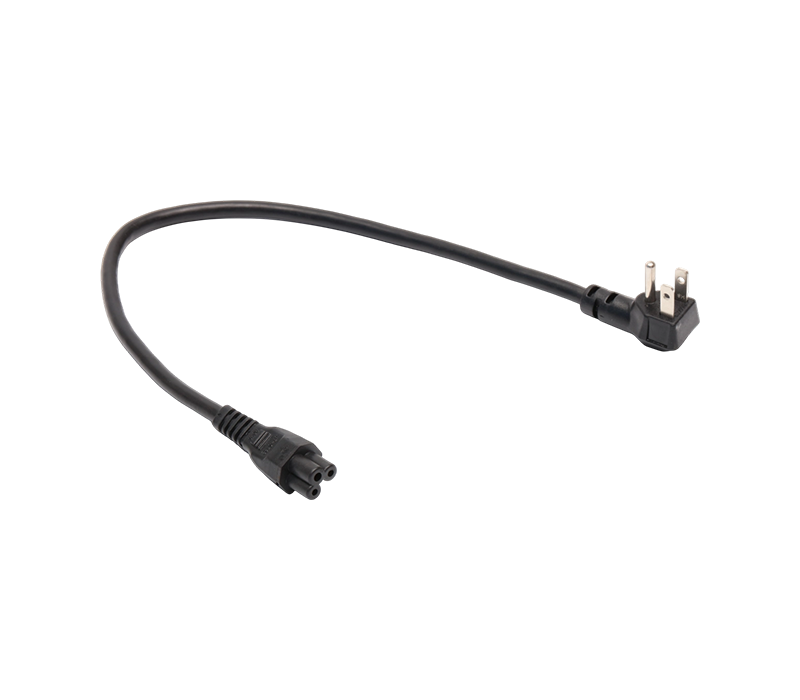
On 120 V North American systems, the ground pin is part of the weatherproofing story: a three-prong molded plug keeps the cord secure, and a weather-resistant outlet cover protects the wall end. Straight plugs are easier to pair with outlet covers, while angled plugs suit cords that run flat against a wall. Both configurations exist for a reason, and the decision is usually dictated by the installation rather than preference.
Three Outdoor Jobs, Three Different Cord Requirements
The right cord depends on what it powers. The three situations below cover most of what an outdoor extension cord does.
Yard tools and power equipment
Mowers, trimmers, blowers, and chainsaws draw 10-15 A and see rough handling. A 14 AWG cord with a grounded three-prong plug and a tough jacket is the baseline; 12 AWG is better when the run goes past 50 ft or the tool is at the top of its amperage range.
Garden and landscape lighting
Lighting loads are usually under 5 A, but the cord runs through wet soil, along fences, and under eaves. A waterproof connector at every joint, not just at the plug, prevents corrosion and intermittent failures. An outdoor lighting extension cord with sealed connectors is a deliberate choice for this duty.
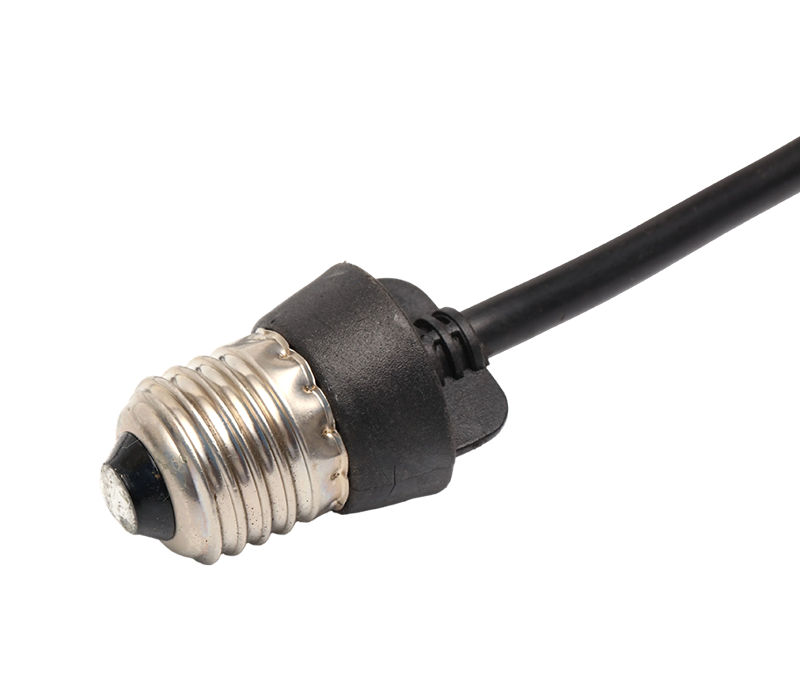 Smart Outdoor Garden LED String Light Extension CordFor outdoor lighting and temporary circuits, this smart extension cord offers app control for on/off, brightness, and color. It helps tailor garden light placement while maintaining sealed connections for wet environments.View Product →
Temporary power for events and job sites
Festoon lighting, power tools, and sound equipment share the same temporary circuit. Here the requirement is visibility: a cord with a bright jacket reduces trip hazards, and a cable reel keeps the run tidy. The electrical requirement, however, stays the same: match the gauge to the sum of the loads, not to the largest single device.
Quality Indicators When Sourcing Outdoor Extension Cords
Whether you are buying one cord for your own patio or a container quantity for distribution, the same quality checks apply. They are also the checks that separate a supplier who assembles parts from one who manufactures plugs and cable assemblies with rigorous testing.
- Measured conductor size. A cord labeled 14 AWG should measure 14 AWG. Some low-cost imports undersize the copper, which shows up as heat and voltage drop under load.
- Plug construction. Molded plugs with internal strain relief and solid pin connections last far longer than snap-together or glued plugs. A three-prong plug with a cable clamp for the cord adds another layer of protection.
- Certification marks. The cord and its plug should carry the marks required by the destination market: UL/CSA or ETL for North America, CE/ENEC for Europe, SAA for Australia, and so on. These are not optional stickers; they are audited standards.
- Cold flexibility. A jacket that handles -40 °C without cracking is worth the premium in northern markets. It also indicates a higher grade of PVC or rubber compound throughout the cord.
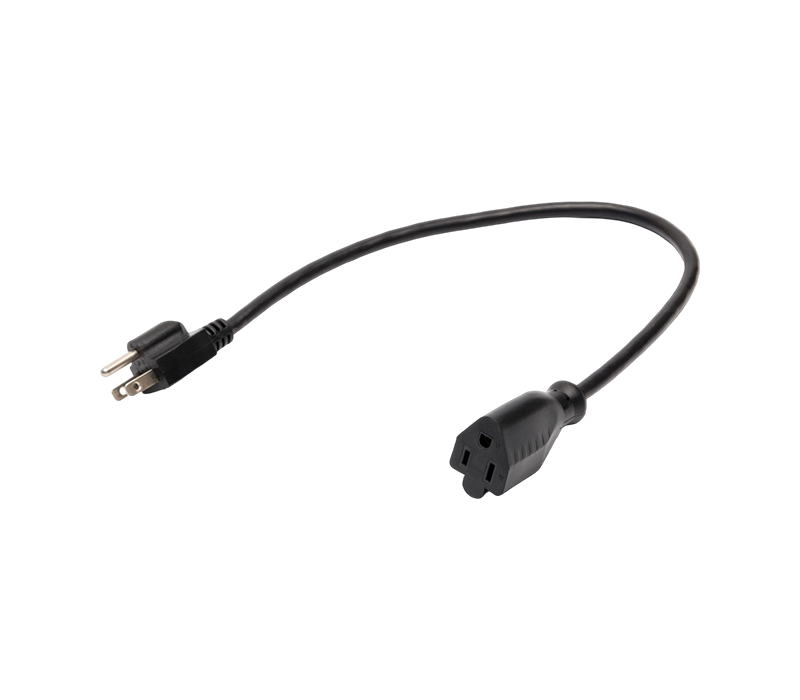 15A 125V American Standard Plug with Female SocketThis three-prong plug with an integrated female outlet supports moderate loads and multi-device setups. It suits domestic and office use, making it a flexible option for power distribution and system expansion.View Product →
A manufacturer that produces plugs and cables in-house, rather than buying them from trading companies, can control these details from the conductor to the final assembly. This is why the power cord catalog of a supplier is often a better starting point than a generic distributor search: the catalog shows the range of standards, gauges, and plug configurations available from one source, which makes it practical to order custom lengths and terminations.
The pattern that runs through every outdoor extension cord decision is the same: current creates heat, heat is the enemy of insulation and connections, and moisture accelerates both. A cord with the right gauge for the load, the right length for the workspace, and properly sealed connectors will outlast the tools it powers. When an installation is permanent or the environment is harsh, talk to a manufacturer that builds cords for export markets; a custom length, plug type, or jacket color is often more affordable than buyers expect, and it can be the difference between a product line that looks professional and one that barely works. The contact page of a factory with in-house plug and cable production is the right place to start that conversation.
Latest News

Contact Us
LET'S START COLLABORATING
 Ningbo TOP Electromechanical Co., Ltd.
specializes in the R&D and manufacturing of
wires & cables, plugs & sockets, waterproof LED connectors, and more. Ourproducts
meet multiple international certifications and are widely used in global markets.
Ningbo TOP Electromechanical Co., Ltd.
specializes in the R&D and manufacturing of
wires & cables, plugs & sockets, waterproof LED connectors, and more. Ourproducts
meet multiple international certifications and are widely used in global markets.
STAY CONNECTED
 Phone:+86-13586690829
Tel:+86-0574-62135837-801
 [email protected]
[email protected]
 Sibei Industrial Yuyao City, Ningbo, Zhejiang, China
MOBILE
Copyright © Ningbo TOP Electromechanical Co., Ltd. All Rights
Reserved
 Custom Electrical Power Cord Manufacturers