


 中文简体
中文简体  Español
How to Choose Power Cable Manufacturers: A Practical Sourcing Guide for Buyers
 2026.09.23
 Industry News
You have a new product ready, and the bill of materials lists a power cord that has to meet a specific plug standard, a rated current, and a length that matches your assembly. The price quote from a potential supplier looks good, but you are not sure whether the factory can actually build it consistently. The conclusion is simple: evaluate power cable manufacturers on process control, certification depth, and logistics, not only on unit price. This guide explains what to check at each stage.
What a Power Cable Manufacturer Should Be Able To Control
A power cable is not a commodity box that you simply attach to a product. The factory decides how the copper conductor is drawn, how the insulation is extruded, how the plug is molded, and how the finished cord is tested. Each step affects electrical safety, durability, and how well the cord survives the daily use of your end customer.
Before you send a request for quotation, make sure the factory can demonstrate control over these stages:
- Conductor selection and stranding: Copper purity affects resistance and heat rise. Ask if the conductor is guaranteed to be 100% copper, because copper-clad aluminum can save money but changes the electrical performance.
- Insulation and jacket materials: The material determines temperature rating, flexibility, and resistance to oil or sunlight. A good manufacturer knows the difference between PVC, rubber, and thermoplastic elastomer.
- Plug molding: Overmolding must protect the connection between the wire and the prongs. A weak molding leads to bent pins, exposed conductors, or failures in pull tests.
- Final inspection and electrical testing: Continuity, polarity, and dielectric strength tests should happen on every finished cord, not on a sample.
| Production stage | What to verify | Question to ask |
|---|---|---|
| Conductor | Copper purity, correct cross-section | Do you use 100% copper? What tolerance do you hold on the cross-section? |
| Insulation | Material grade, wall thickness | Do you have a thickness gauge on the extrusion line? |
| Plug molding | Mold cavity design, strain relief | What pull-force can the molded plug withstand? |
| Final test | 100% continuity and hi-pot testing | Can we see the test protocol? |
Standards and Certifications: The First Filter
The fastest way to reduce the list of power cable manufacturers is to check which standards they can actually produce. There is no single global plug. A product shipped to North America needs a NEMA-style plug, while the same appliance sold in Europe needs a CEE plug. Each market has its own rating, pin geometry, and approval requirements.
Look for a manufacturer whose catalog already includes the specific standard you need. Broad coverage is a strong signal because it means the factory has the right molds, test fixtures, and quality documents in place. If a supplier has to create a new plug design just for your order, you will pay for the engineering and the delay.
| Market | Common standard | Typical rating |
|---|---|---|
| North America | NEMA 5-15P | 15A 125V |
| Europe (Schuko) | CEE 7/7 | 16A 250V |
| United Kingdom | BS 1363 | 13A 250V |
| Australia/New Zealand | AS/NZS 3112 | 10A 250V |
| Japan | JIS C 8303 | 15A 125V |
| China | GB 1002 | 10A 250V |
For example, a US-style 15A 125V three-pin plug with a wire clamp is a common component for appliances sold in North America.
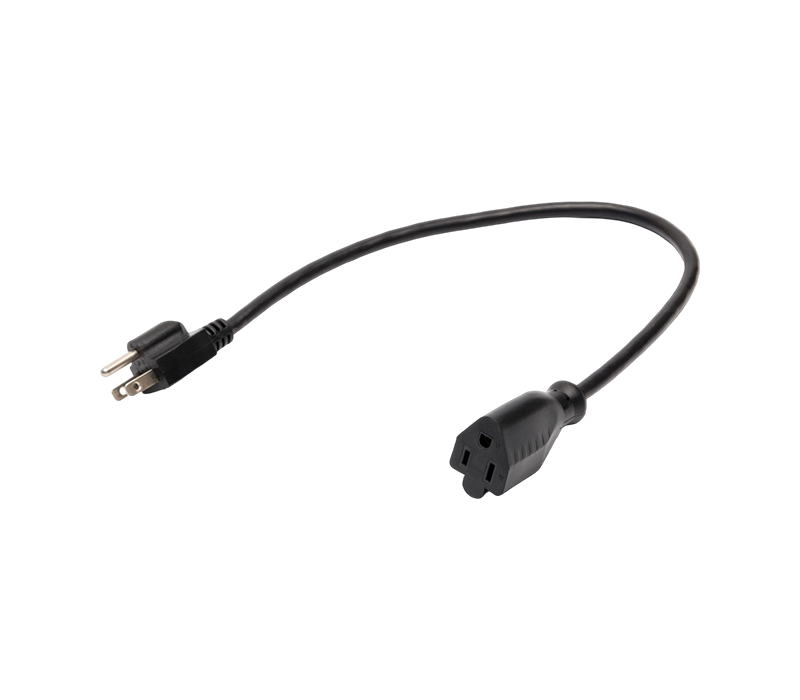 JT-3/FY-3+JT-3Z 15A 125V US Standard Plug with Female SocketThis combined plug and female socket supports 15A 125V for American appliances, enabling direct connection or daisy-chaining multiple devices. Its versatility suits custom power distribution needs, making it a practical choice for flexible cabinet or multi-device setups.View Product →
Customization Capabilities Separate a Factory from a Trader
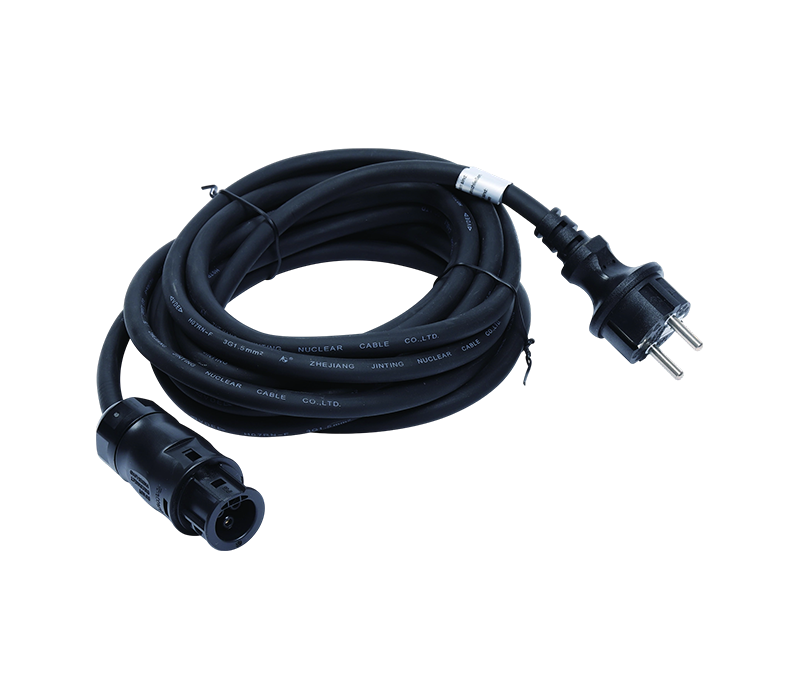
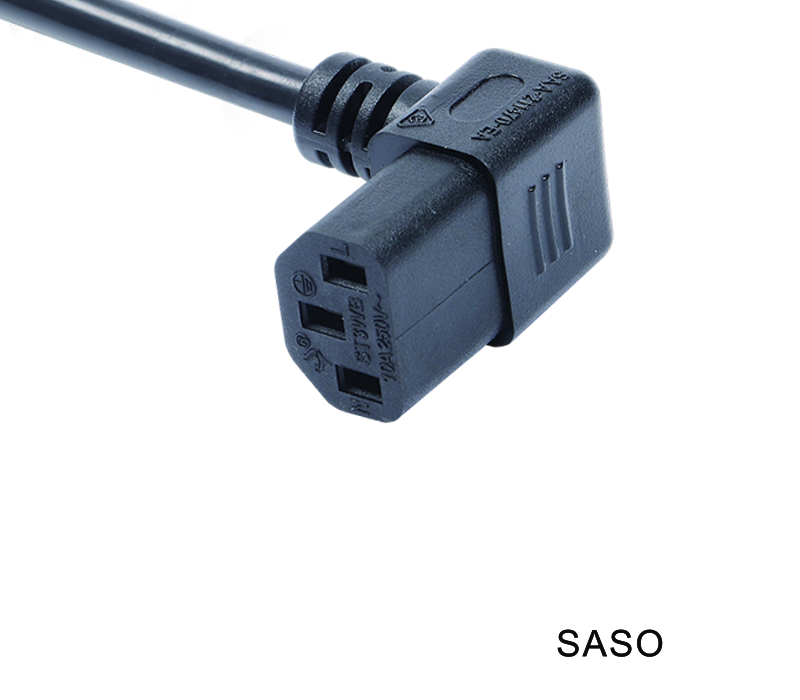
Many buyers assume that power cable manufacturers only sell standard cords. In practice, a large share of orders involve custom work: longer or shorter cables, a 90-degree plug to fit behind a cabinet, a specific color of insulation, or an IEC C13 socket on the other end instead of a bare wire. The ability to handle these variations separates a real factory from a trading company that simply resells standard stock.
Here are the customization points that matter most in an RFQ:
- Cable length and gauge
- Plug type and pin configuration
- Connector type on the equipment side
- Wire strip length and terminal options
- Jacket color, printing, and packaging
To see how a manufacturer handles a common European order, ask for a sample of their CEE 7/7 or CEE 7/3 plug. A 16A 250V European three-pin plug, for instance, is a typical part for floor-standing equipment.
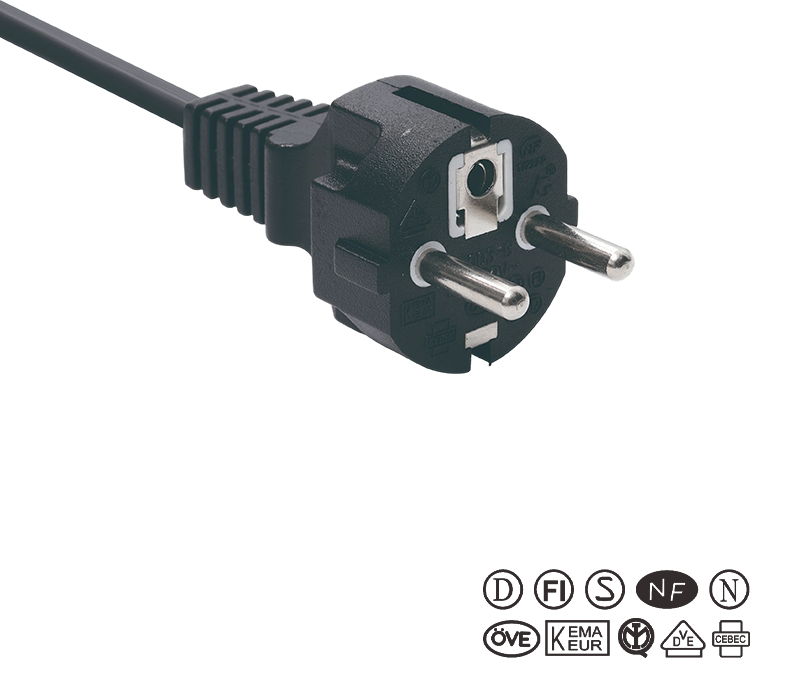 JT003-B/FY003-B 16A 250V European Three-Pin PlugBuilt with high-purity copper contacts and flame-retardant housing, this 16A 250V European plug ensures stable current transfer and safe operation. It suits standard household appliances like TVs and refrigerators, reflecting the quality control buyers should expect from a reliable manufacturer.View Product →
Quality Control and Testing: What to Look For
Power cable manufacturers can differ a lot in the amount of testing they do. A low-cost supplier may only check that the product is not visibly damaged. A competent factory will run electrical tests on every unit and mechanical tests on samples. These tests protect your brand, because a failed cord is one of the easiest ways for an end user to notice poor quality.
Ask the factory to explain its in-line and outgoing quality control. At a minimum, you should see these checks:
- Continuity and polarity on every cord
- Dielectric withstand (hi-pot) at the specified voltage
- Pull test on the plug and the connector
- Plug blade insertion and extraction force
- Visual inspection for molding defects
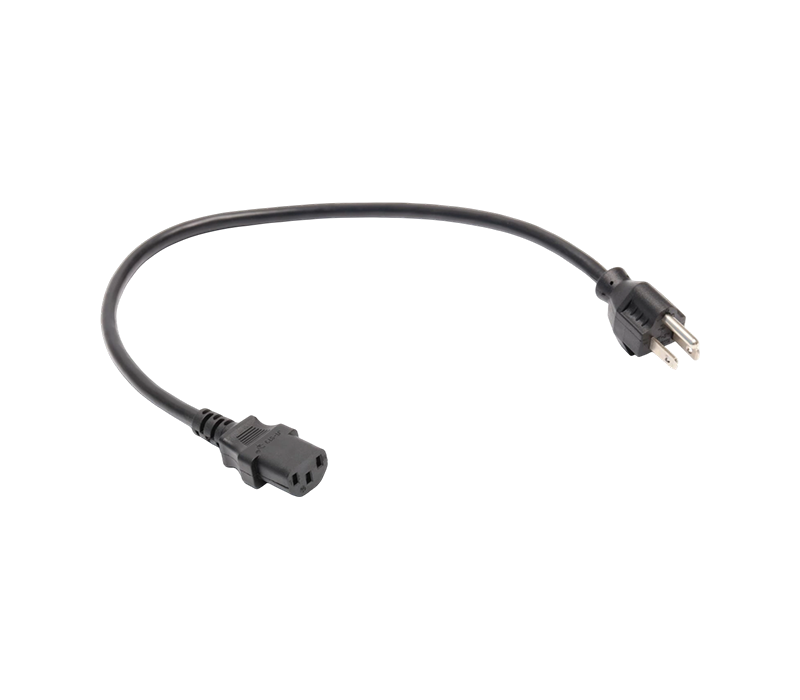
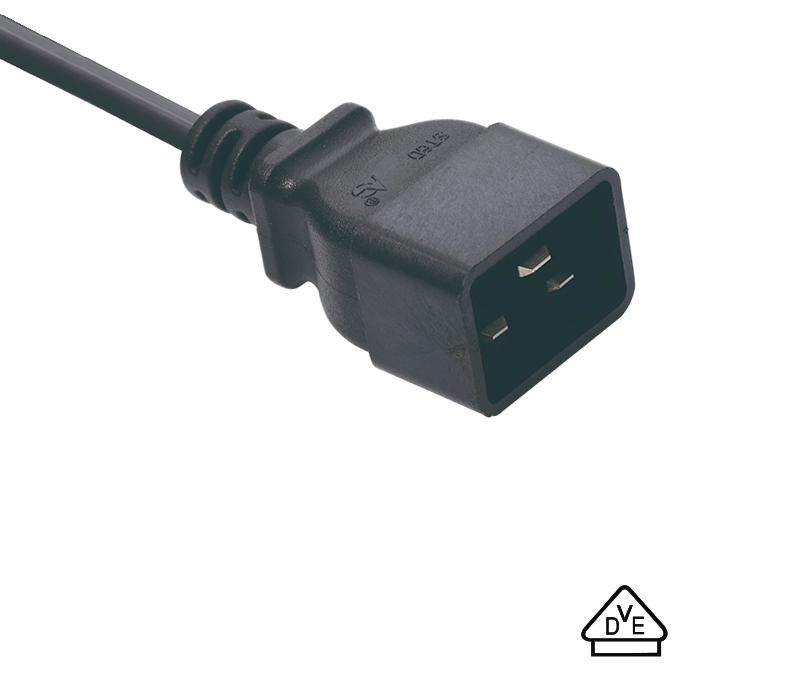
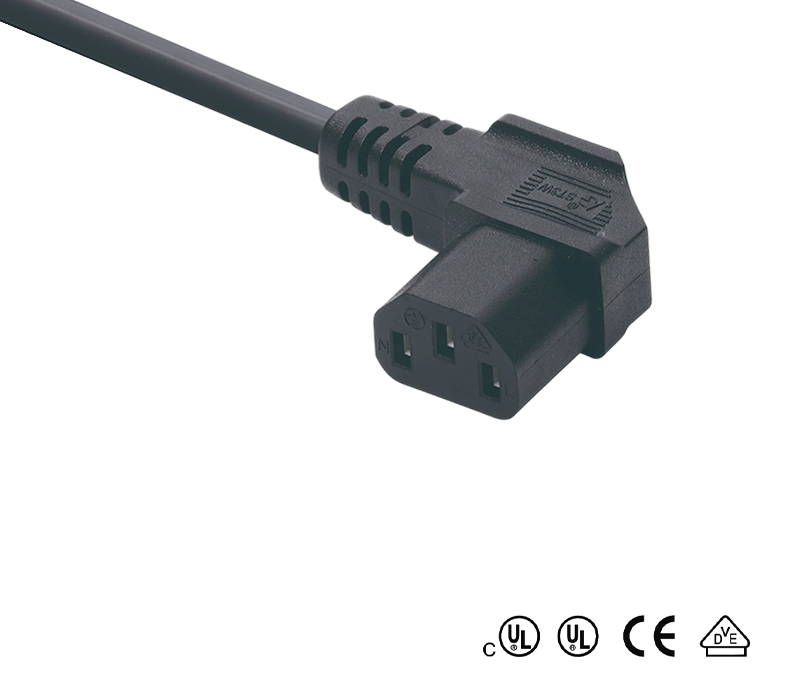
IEC connectors are also part of this process. A C13 female socket used on a power cord, for example, must keep the same level of quality as the plug that goes into the wall. Below is a typical IEC connector from a manufacturer's range:
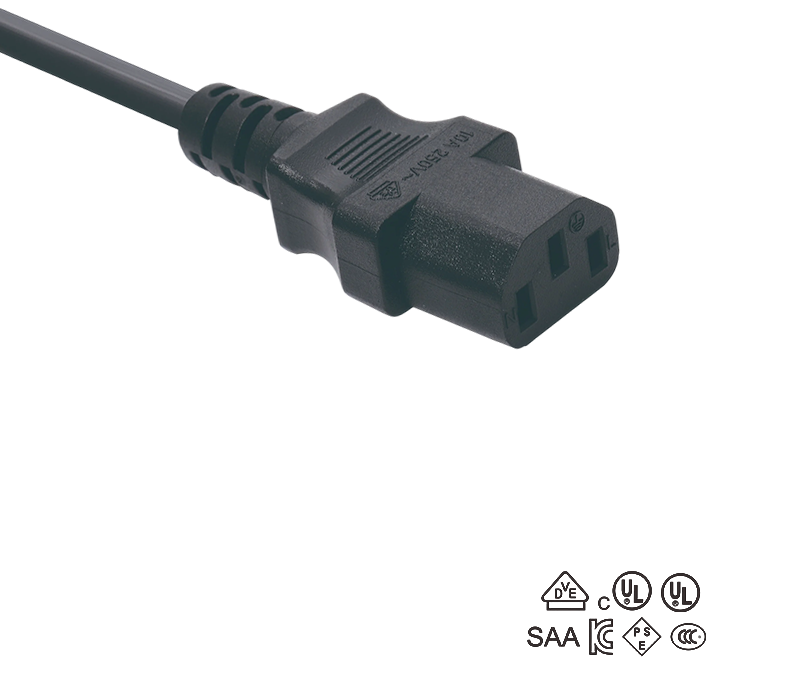 JT-ST3 IEC C13 Female Socket ConnectorRated at 10A 250V with overload protection, this C13 female socket uses high-quality copper contacts for stable conductivity. It offers broad compatibility with computers and monitors, automatically disconnecting during overloads to safeguard devices, ideal for domestic and office use.View Product →
Lead Time, Logistics, and Communication
Price and quality get attention, but delivery performance decides whether a factory is usable. A manufacturer that sits far from major shipping lanes can add weeks to your supply chain. That is why location matters. A factory near a major port can move finished goods faster and is more likely to manage urgent orders.
Ningbo TOP Electromechanical, for example, is located near the south bank of Hangzhou Bay, with convenient access to Ningbo Port and the airports in Hangzhou and Shanghai. That kind of location shortens the distance between production and export, which helps when you need a quick repeat order.
When you evaluate suppliers, ask about:
- Monthly production capacity for cord sets
- Lead time from order confirmation to shipment
- How they handle rush orders
- Packaging method and palletization for long cables
Finally, test the communication before you send a purchase order. Send a technical question and see how long it takes to get a useful answer. A manufacturer that responds clearly during the sample stage will be easier to work with during mass production.
Review the full power cable product range to see whether the supplier has the base models you need. Then contact the manufacturer directly with your specifications.
Choosing a power cable manufacturer should not be based on the lowest quote alone. Start with the standards you need, ask about process control and testing, check customization flexibility, and confirm that the factory has the logistics to deliver on time. A supplier that can do all of these will save you more money than a small price difference on the first order.
Latest News

Contact Us
LET'S START COLLABORATING
 Ningbo TOP Electromechanical Co., Ltd.
specializes in the R&D and manufacturing of
wires & cables, plugs & sockets, waterproof LED connectors, and more. Ourproducts
meet multiple international certifications and are widely used in global markets.
Ningbo TOP Electromechanical Co., Ltd.
specializes in the R&D and manufacturing of
wires & cables, plugs & sockets, waterproof LED connectors, and more. Ourproducts
meet multiple international certifications and are widely used in global markets.
STAY CONNECTED
 Phone:+86-13586690829
Tel:+86-0574-62135837-801
 [email protected]
[email protected]
 Sibei Industrial Yuyao City, Ningbo, Zhejiang, China
MOBILE
Copyright © Ningbo TOP Electromechanical Co., Ltd. All Rights
Reserved
 Custom Electrical Power Cord Manufacturers