


 中文简体
中文简体  Español
Heavy Duty Power Cord Buying Guide: Ratings, Plug Standards, and Cable Types
 2026.09.24
 Industry News
A maintenance supervisor in a metal fabrication shop unplugged a 15 A table saw after a long production run, felt the cord near the plug, and found it noticeably warm. The cord was labeled "heavy duty" by the retailer, but the label said nothing about conductor gauge, plug rating, or jacket material. The warmth was a warning: the cord was undersized for the continuous load. Heavy duty is not a marketing badge. It is a combination of measurable specifications, including conductor cross-section, current and voltage rating, plug configuration, and cable jacket, that together determine whether a power cord can carry a demanding load safely, day after day.
The same logic applies whether you are replacing one extension cord for a workshop tool or specifying cords for a production run of machines. Once you can read a cord specification correctly, the buying decision becomes a checklist instead of a guess.
What Separates a Heavy Duty Power Cord from a Standard One
A standard power cord is designed to feed a modest load for a few hours at a time. A heavy duty power cord is designed for higher current draw, longer duty cycles, harsher physical handling, or all three at once. The practical differences appear in four places: conductor size, insulation and jacket material, plug and connector rating, and mechanical reinforcement such as strain relief and molded ends.
Current ratings also carry an assumption about duty. An intermittent load, such as a drill run for 30 seconds at a time, can tolerate a thinner conductor than a continuous load like an electric heater running for four hours. Heavy duty cords are typically sized for continuous operation at their marked rating, which is why the ampere rating matters more than the label on the packaging.
The rating printed on the cord, for example 16 A 250 V, defines the maximum current it may carry continuously at the rated voltage. Exceeding that rating is what causes heat buildup, melted insulation, and eventual connection failure. The table below shows how ratings map to typical applications.
| Duty category | Typical rating | Conductor size | Common applications |
|---|---|---|---|
| Standard | 10 A 250 V | 1.0 mm² / 17 AWG | Lamps, phone chargers, small kitchen appliances |
| Heavy duty | 13 A 250 V | 1.5 mm² / 15 AWG | Kettles, heaters, power tools, workbench equipment |
| Extra heavy duty | 16 A 250 V or 20 A 125 V | 2.5 mm² (EU) / 12 AWG (US) | Compressors, welders, stage lighting, generator feeds |
Notice that the jump from 10 A to 16 A requires more than a bigger plug. The conductor area roughly doubles, which lowers resistance and keeps the cable cool at full load.
Conductor Size and Ampacity: The Numbers That Matter
Conductor size is the single most important specification in a heavy duty power cord. In European and Asian markets it is expressed in square millimeters (mm²); in North America it is expressed in American Wire Gauge (AWG). The gauge seems backwards at first: smaller numbers mean thicker conductors. A 14 AWG cord is thinner than a 12 AWG cord, and the 12 AWG cord can carry more current.
On a 250 V supply, a 1.5 mm² conductor is comfortable up to about 13 A, and 2.5 mm² handles 16-20 A depending on the installation method. On a 125 V supply in North America, 14 AWG is the minimum for a 15 A circuit, while 12 AWG is the safer choice when the load runs for hours. If the cord is long, voltage drop becomes the hidden cost. A 15 m cord with conductors that are too thin can drop 3-5% of the supply voltage, and a motor under load responds by drawing more current, which makes the heating problem worse.
Insulation temperature class also matters. Standard PVC insulation is typically rated for 70 °C to 90 °C conductor temperature, while silicone or cross-linked insulation handles higher temperatures. The conductor gauge sets the ampacity; the insulation sets the thermal ceiling.
- Check the ampacity of the conductor, not only the plug rating.
- Specify a thicker conductor when the cord length exceeds 10 m.
- Match the cord rating to the circuit breaker or fuse protecting the outlet.
Plug Configurations and Destination Standards
A heavy duty power cord is always built for a specific electrical system. The plug shape, pin dimensions, and earthing arrangement follow the standard of the country where the cord will be used, and the electrical rating must align with that system: 15 A 125 V in North America and Japan, 13 A 250 V in the United Kingdom, 16 A 250 V across much of Europe, Australia, and China, and 20 A 125 V or 20 A 250 V for industrial circuits in several markets. Choosing the correct plug for the destination is not a convenience issue; it is a safety and compliance issue. Inspection authorities and insurance underwriters both look for the right plug and the right certification on equipment that draws heavy current.
North American NEMA Configurations
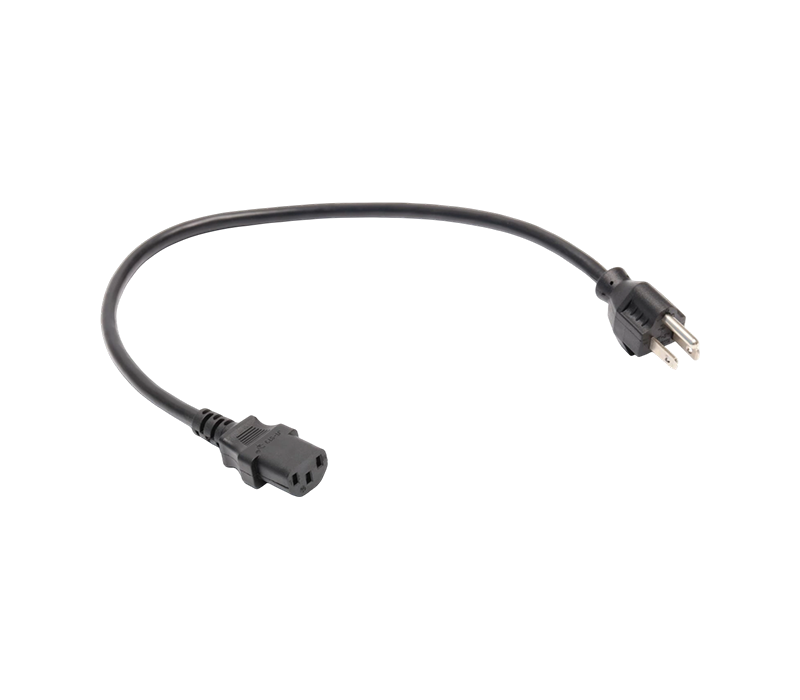
NEMA 5-15P is the familiar three-prong plug rated 15 A 125 V. For genuinely heavy loads, NEMA 5-20P uses a perpendicular neutral blade and is rated 20 A 125 V, which is common in workshops, kitchens, and commercial equipment. A heavy duty cord for this market usually adds a molded strain relief and a cable clamp so that repeated pulling at the plug does not stress the conductor terminations. Right-angle versions of the plug are useful when the cord must exit close to a wall or inside a tight equipment enclosure.
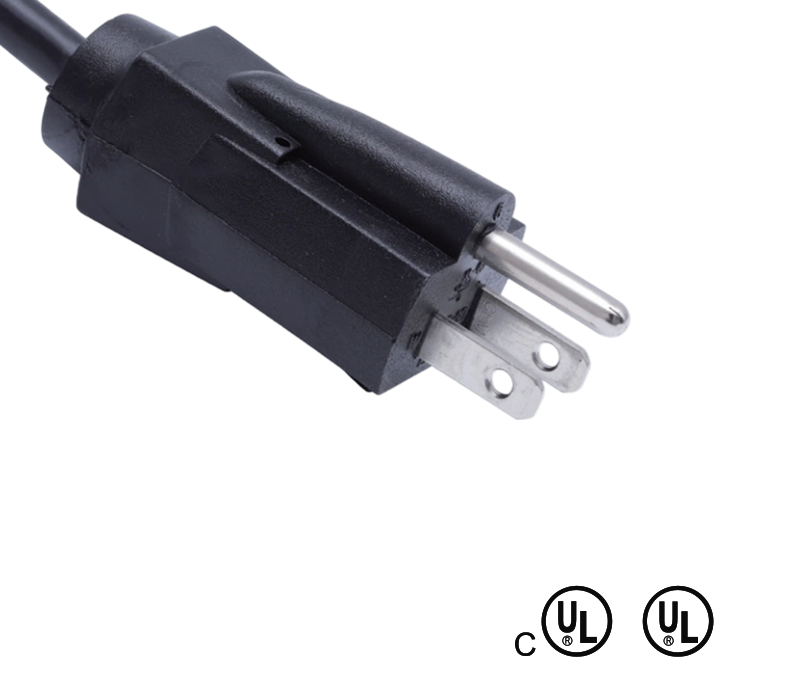 20A 125V High-Current Three-Pin American Standard PlugRated for 20A at 125V, this plug meets the demands of heavy-duty industrial and commercial equipment such as large machinery and high-capacity air conditioners, ensuring stable current transmission and reliable power supply.View Product →
European CEE 7/7 and Schuko-Style Plugs
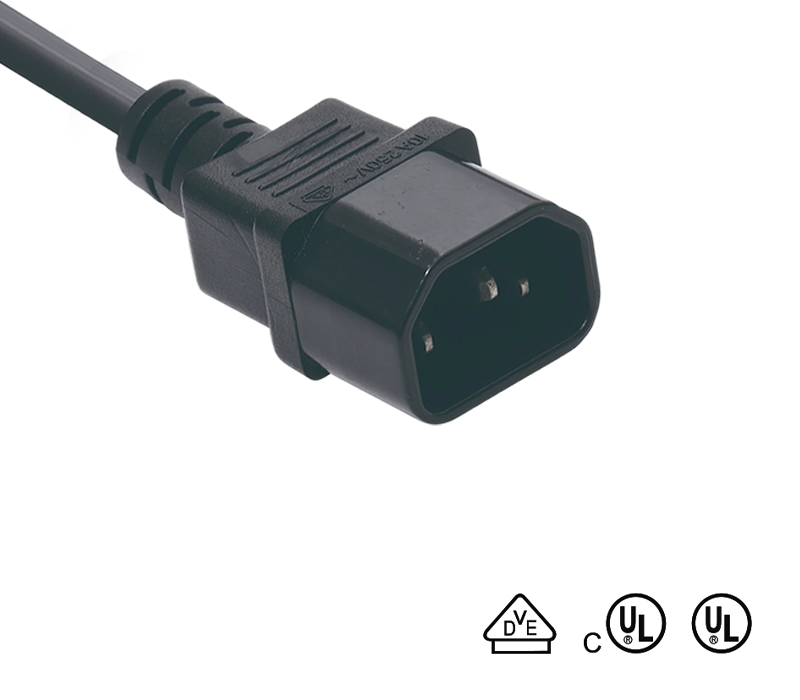
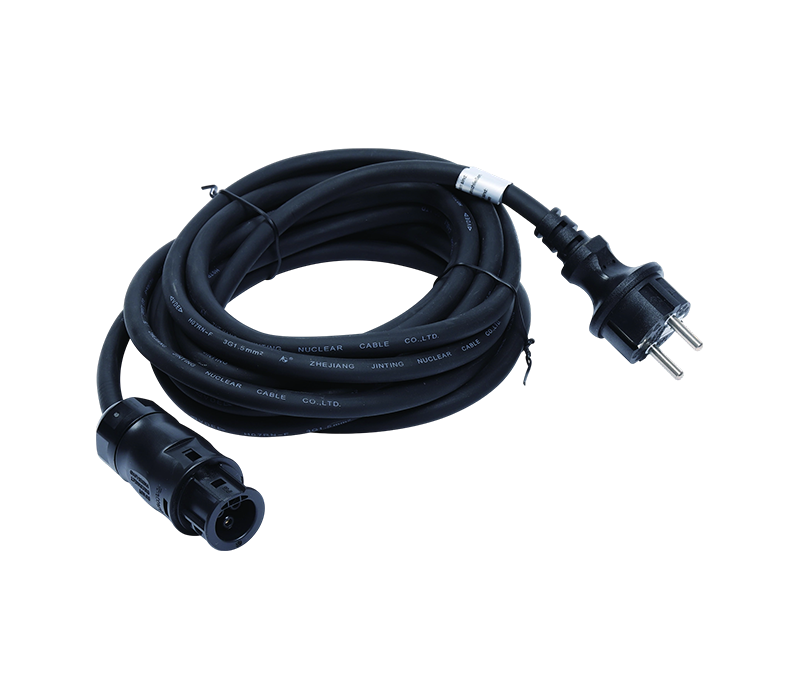
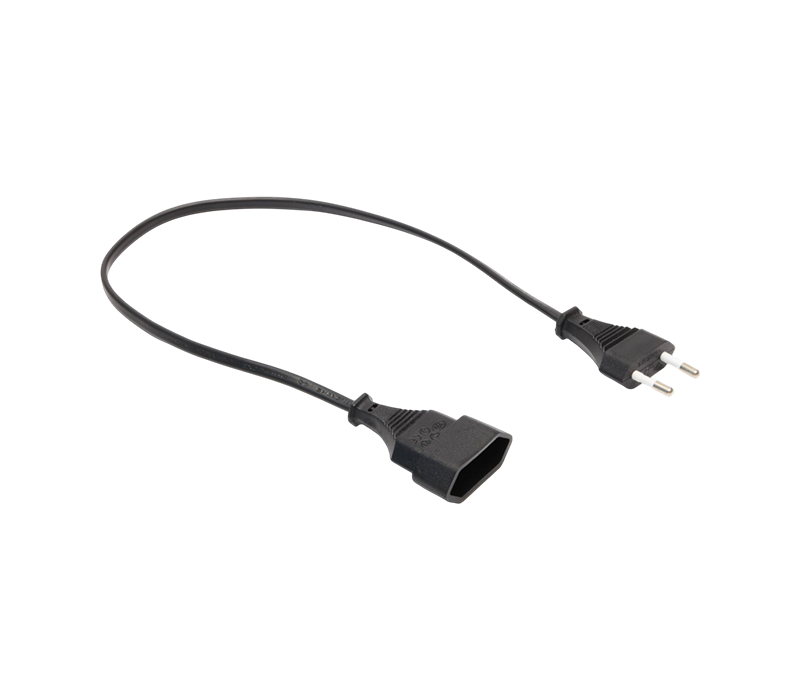
European heavy duty cords typically use a CEE 7/7 plug rated 16 A 250 V. The plug has side contact clips for the French and Belgian earthing systems, while the Schuko-style configuration serves the German market. The round pins are 4.8 mm in diameter, and the cord usually terminates in a female IEC connector or an appliance inlet, depending on the equipment. For outdoor or damp locations, a waterproof plug with a sealed cap prevents moisture from entering the connection, which is essential on construction sites and for garden equipment.
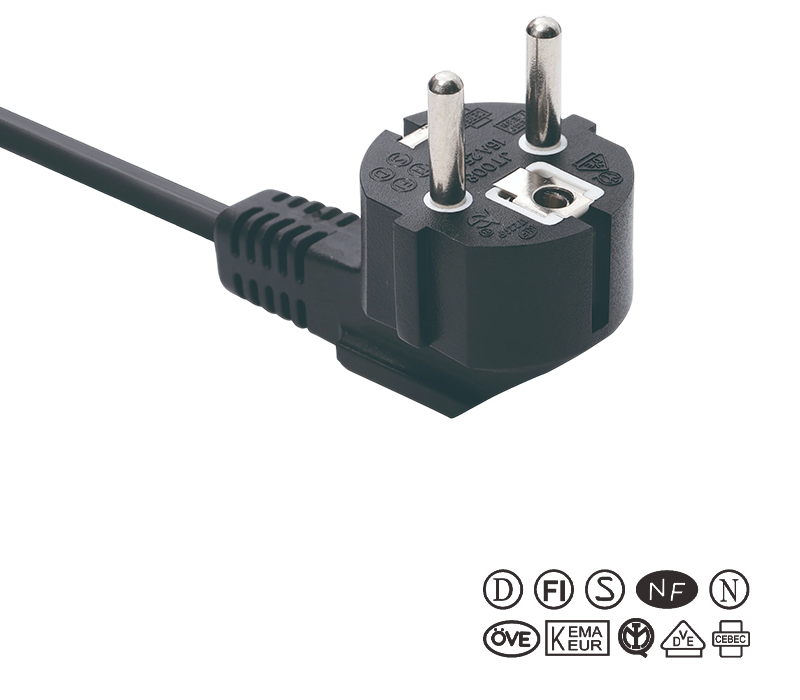 16A 250V European Standard 90-Degree Elbow PlugFeaturing a 90-degree angled design, this plug is ideal for tight spaces, preventing cable over-bending and damage. It meets 16A 250V specifications with durable insulation for safe use in residential and commercial settings.View Product →
British Standard Fused Plugs
British Standard 1363 is a 13 A 250 V system with a distinctive requirement: the plug itself carries a fuse. The fuse protects the flexible cord rather than the fixed wiring, so the cord set and fuse are selected together. A heavy duty UK cord for a 3 kW heater uses a 13 A fuse, while lower-current appliances use 3 A or 5 A fuses. The rectangular pin design, the integrated fuse, and 1.5 mm² or thicker conductors make this one of the most mechanically robust domestic plug systems in the world. Detachable UK plugs are also available when the appliance design requires a replaceable cord end.
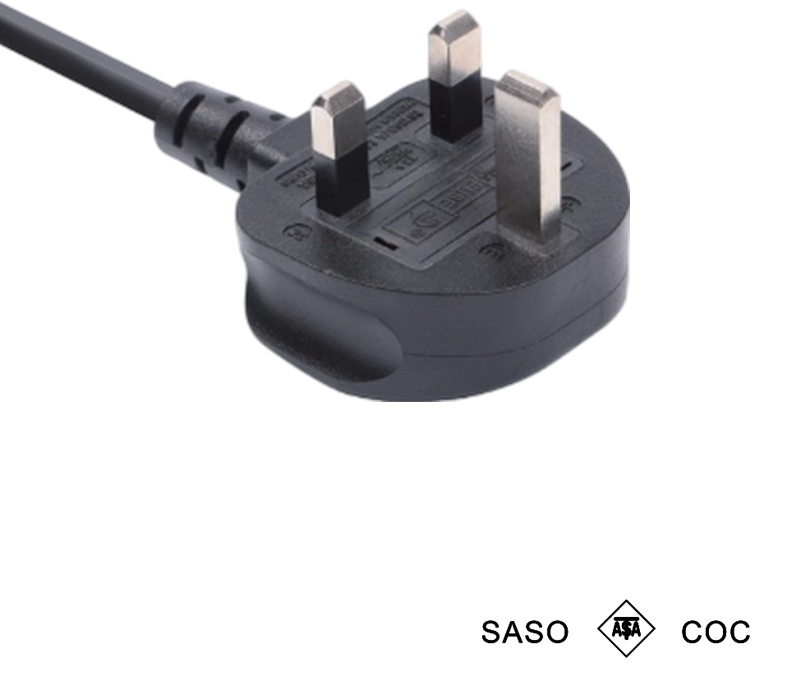 13A 250V British Three-Pin Plug with FuseThis UK plug integrates a fuse that quickly disconnects on abnormal current, protecting devices and preventing fire hazards. With pure copper conductors and PVC insulation, it safely powers equipment in homes, schools, and hospitals.View Product →
A manufacturer that builds cords for multiple export markets can consolidate your procurement. Instead of sourcing a US cord from one supplier, a UK cord from another, and an EU cord from a third, you can specify all of them against the same quality standard and the same production line. That is one of the practical advantages of reviewing a heavy duty power cord catalog that covers multiple national standards.
Cable Jacket and Mechanical Build
The cable jacket determines where the cord can live. PVC jackets are acceptable for indoor appliances. Rubber or neoprene jackets, often designated HO7RN-F in Europe or SOOW in North America, resist oil, moisture, and abrasion, which is why they dominate heavy duty extension cords in factories, construction sites, and outdoor events. Jacket material also affects cold-weather flexibility: a PVC cord that is stiff at 0 °C may crack at -20 °C, while a rubber cord stays pliable.
Molded plug ends are another sign of a properly built heavy duty cord. A molded end bonds the cable to the plug body and prevents the conductors from being pulled loose from their terminals. When a cord is flexed repeatedly, such as an appliance cord on a movable machine or a tool cord on a workbench, the manufacturer must also design the conductor stranding and the entry point of the cable into the plug so that bending stress is distributed instead of concentrated in one spot. A cable clamp or a reinforced boot at the plug adds a small amount of cost but a large amount of service life in high-vibration environments.
Matching the Cord to the Application
Once the basics are clear, the selection process is straightforward: determine the load, choose the conductor size, confirm the plug standard, and verify the jacket. The table below summarizes common heavy duty scenarios and the specifications that fit them.
| Application | Typical load | Recommended cord |
|---|---|---|
| Table saw or air compressor in a workshop | 15 A 125 V | 12 AWG, NEMA 5-20P, rubber jacket |
| Portable heater or electric kettle | 13 A 250 V | 1.5 mm², BS 1363 fused plug |
| Industrial power tool on a European site | 16 A 250 V | 2.5 mm², CEE 7/7 plug, HO7RN-F rubber |
| Generator feed or stage distribution | 20 A 125 V or 20 A 250 V | 2.5 mm² or larger, local plug standard, heavy strain relief |
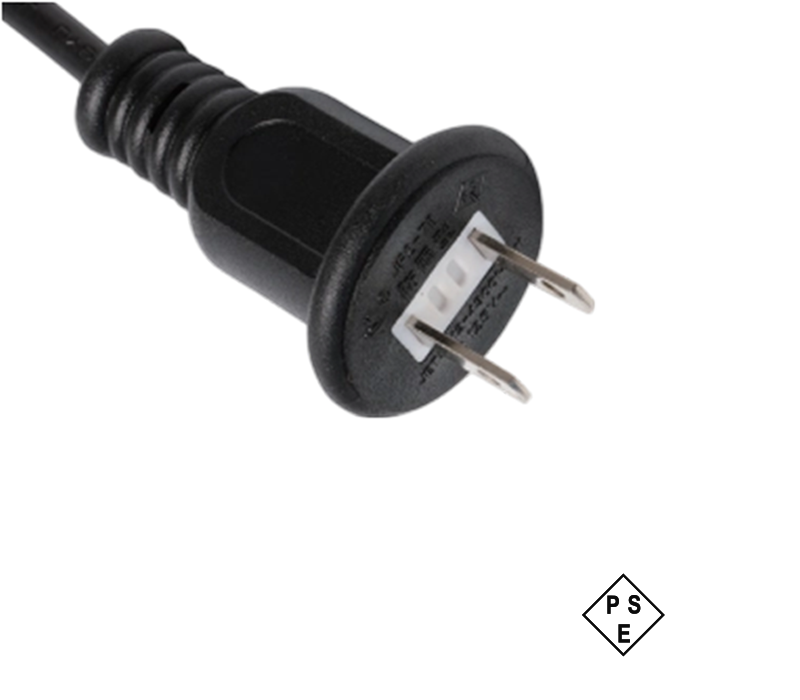
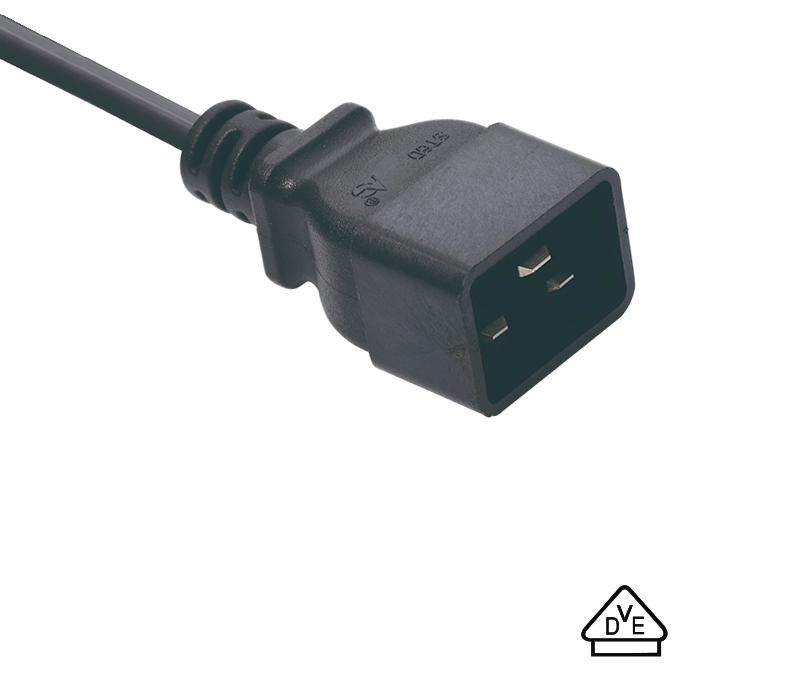
Beyond the specifications, check for certification marks. A cord that carries the relevant national or international mark has been tested against the standard it claims to meet, and that traceability matters when a failed cord causes downtime or, worse, an electrical incident. If your equipment is destined for several countries, ask the supplier whether the same cord platform can be fitted with different plugs as a way to standardize quality across your product lines. That conversation is best held early, before tooling and packaging commit you to a single design. A direct discussion with the factory team can clarify lead times, minimum order quantities, and custom branding options.
Latest News

Contact Us
LET'S START COLLABORATING
 Ningbo TOP Electromechanical Co., Ltd.
specializes in the R&D and manufacturing of
wires & cables, plugs & sockets, waterproof LED connectors, and more. Ourproducts
meet multiple international certifications and are widely used in global markets.
Ningbo TOP Electromechanical Co., Ltd.
specializes in the R&D and manufacturing of
wires & cables, plugs & sockets, waterproof LED connectors, and more. Ourproducts
meet multiple international certifications and are widely used in global markets.
STAY CONNECTED
 Phone:+86-13586690829
Tel:+86-0574-62135837-801
 [email protected]
[email protected]
 Sibei Industrial Yuyao City, Ningbo, Zhejiang, China
MOBILE
Copyright © Ningbo TOP Electromechanical Co., Ltd. All Rights
Reserved
 Custom Electrical Power Cord Manufacturers