


 中文简体
中文简体  Español
How to Choose Electrical Equipment Components: Standards, Ratings, and Sourcing
 2026.09.10
 Industry News
A purchasing engineer opens the bill of materials for a new outdoor LED lighting line and sees the same line item repeated across half the page: electrical equipment components. Each of those components carries a specific standard, a current rating, and a degree of environmental protection. Choose correctly and the finished product passes certification and performs in the field. Choose incorrectly and you are looking at returns, safety complaints, or a failed market launch. The practical question is not what to buy, but how to evaluate what you are buying.
What "electrical equipment components" covers in practice
The term appears in tariff schedules, procurement tenders, and supplier catalogs. In customs classification, plugs, sockets, and similar connection hardware fall under heading 8536; in an engineering bill of materials, the same term refers to the parts that carry power from the wall outlet to the device. For a typical export product, that means seven groups:
- Power cords and plugs — a national-standard plug molded onto a cable, rated from 2.5 A to 20 A depending on the market
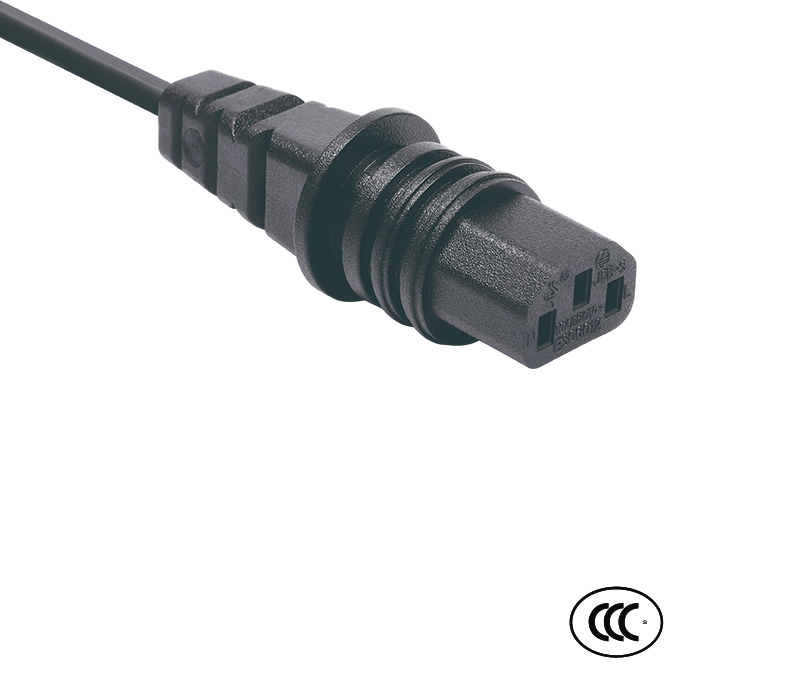
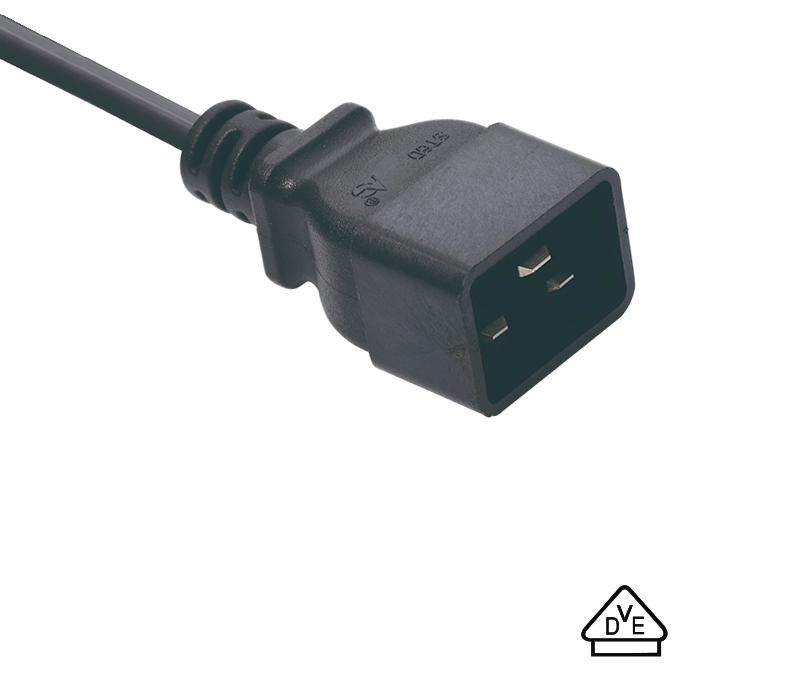
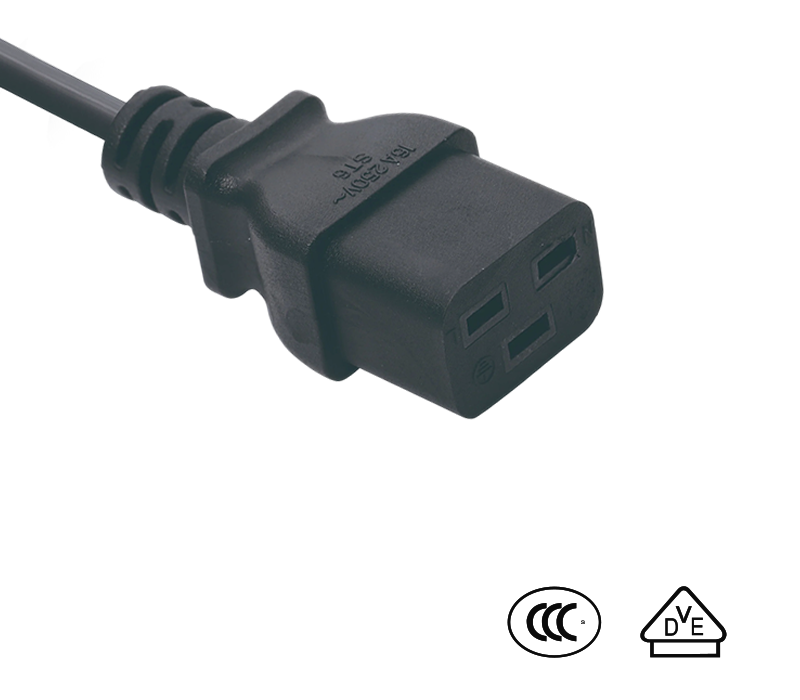
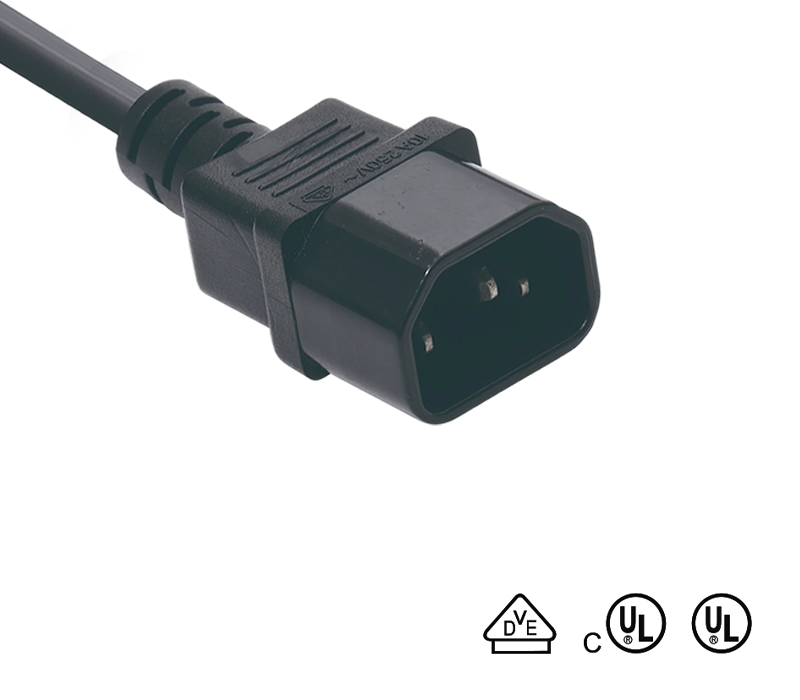
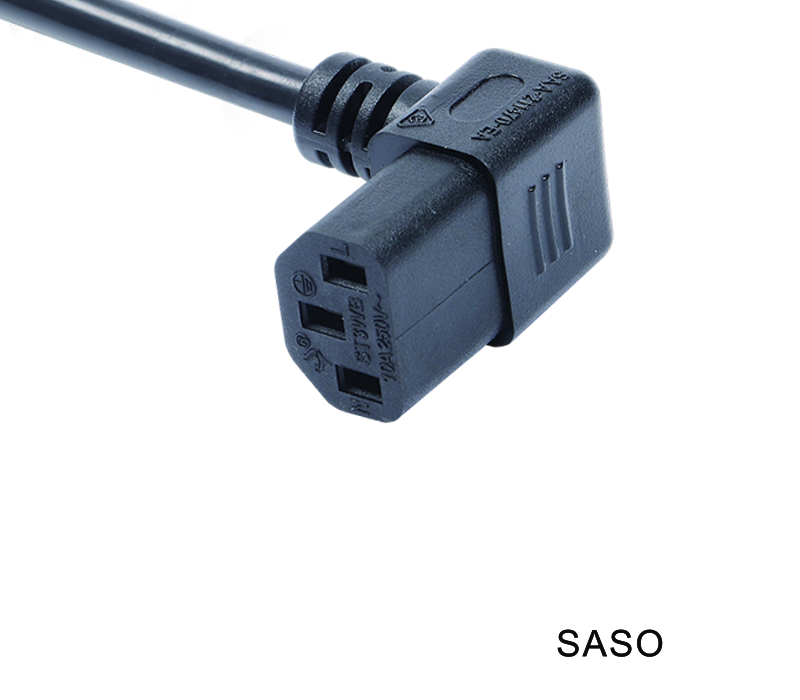
- IEC connectors — standardized inlets and outlets (C1, C5, C7, C13, C14, C15, C17, C19, C20) that join detachable power cords to equipment
- LED connector harnesses — 2-, 3-, and 4-pin male/female connectors for low- and high-voltage LED circuits, including IP67 waterproof versions
- Splitter boxes — junction units that branch one power line into 3, 6, 9, or 12 outputs
- Low-voltage switches — foot switches, touch dimmers, and infrared sensor switches for lighting control
- Power strips — multi-outlet strips with switches, USB ports, or retractable cable reels
- Lighting fixtures and string lights — the end devices that the components feed
These groups are connected: a plug starts the circuit, a connector routes it into a device, and a splitter box distributes it to multiple fixtures. Because of that, buyers usually evaluate them as a system rather than as isolated parts.
Start with the destination standard, not the component
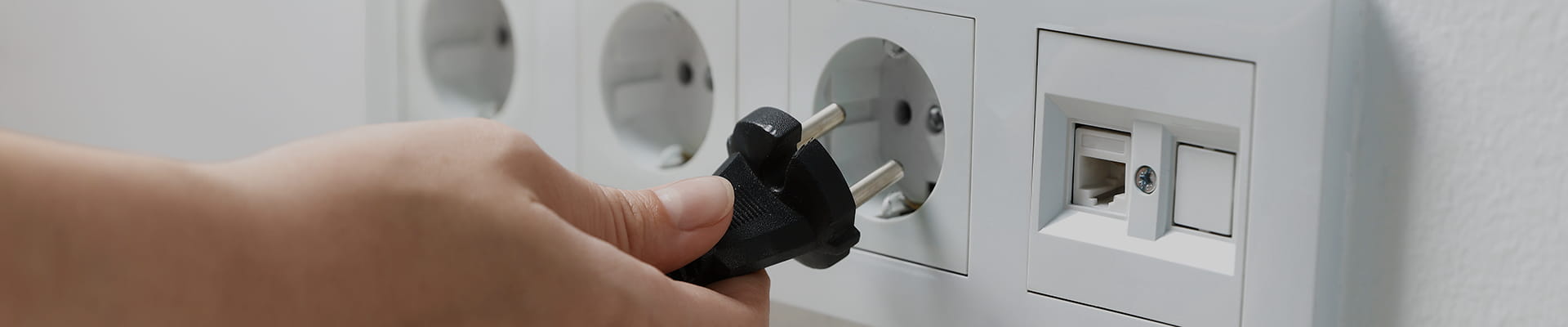
The most common sourcing error is choosing a component before confirming the destination market. A plug that is perfectly legal in one country will be rejected in another, and the rest of the circuit is usually built around that plug.
| Destination | Standard family | Typical rating | Pin configuration |
|---|---|---|---|
| United States | NEMA | 15 A 125 V | Flat two- or three-pin |
| Europe (CEE 7) | CEE 7/7 | 16 A 250 V | Round two-pin with side grounding contacts |
| United Kingdom | BS 1363 | 13 A 250 V | Rectangular three-pin with fuse |
| Australia / New Zealand | AS/NZS 3112 | 10 A or 16 A 250 V | Angled flat blades |
| Japan | JIS C 8303 | 15 A 125 V | Two-pin, polarized and unpolarized variants |
| China | GB 1002 | 10 A or 16 A 250 V | Flat three-pin, straight blades |
For higher-current equipment, the tolerance tightens. A 20 A circuit in North America needs a plug with heavier blades and a different face geometry than a 15 A version. Using the wrong one can cause arcing at the receptacle and fail a safety inspection. Manufacturers that offer both ratings in the same product family make the upgrade path easier to manage.
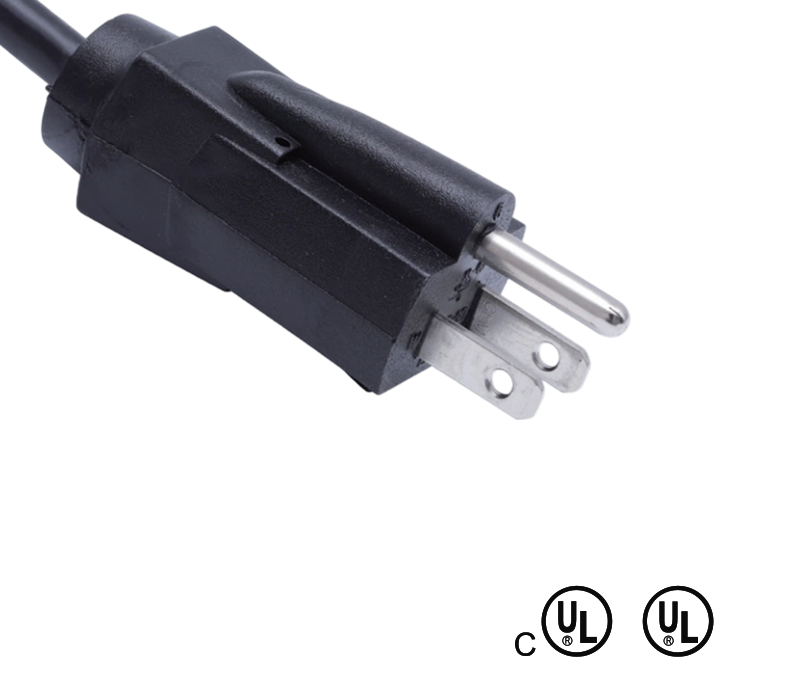 JT-3D 20A 125V Heavy-Duty American Standard PlugThis high-current three-pin plug is rated for 20A at 125V, making it suitable for industrial equipment and large air conditioners. Its robust construction supports stable power transmission and meets American safety standards.View Product →
Certification follows the same rule: the plug standard determines which testing framework applies. UL/CSA in the United States and Canada, CE under the Low Voltage Directive in Europe, SAA in Australia, and PSE in Japan all start at the plug. Before writing the specification, confirm that the supplier can produce to the required standard and provide the paperwork to support the certificate. A power cord catalog organized by national standard, such as the power cord section of the TOP Electromechanical catalog, shortens this step because each market's options are already separated.
Ratings, tolerances, and the real load
After the standard comes the rating. Current rating is not a suggestion: a 10 A component on a 13 A load heats up, softens the insulation, and eventually creates a short circuit. The same rule applies at every connection point in the chain — plug, connector, and the terminal inside a splitter box.
Two numbers cover most of the risk:
- Current (A) — the continuous load the component can carry without exceeding its designed temperature rise
- Voltage (V) — the system voltage that the insulation is designed to withstand
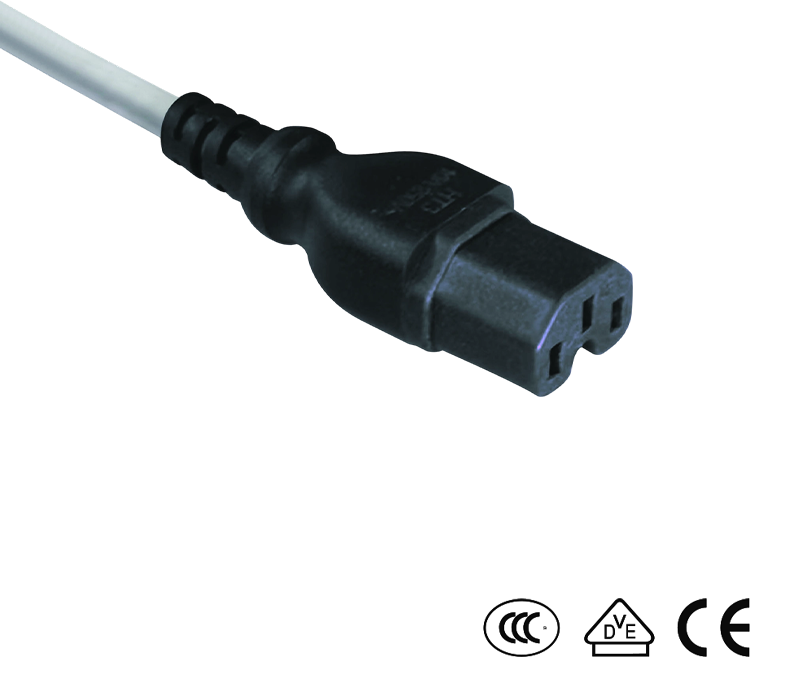
IEC connectors illustrate the point clearly. C13/C14 types are rated for 10 A; C15/C16 add a higher temperature tolerance for appliances such as kettles; C19/C20 are rated for 16 A and appear in servers and industrial equipment. Putting a C13 on a 16 A load is a predictable field failure.
Cable construction matters just as much. The conductor cross-section drives voltage drop over distance. A 15-meter string light with a thin conductor loses visible brightness at the far end; the same length with a larger conductor holds the voltage and extends LED life. When a supplier quotes a complete assembly — plug, cable, and connector — these interactions are already solved, which is one of the main advantages of buying assembled components instead of separate parts.
Environmental protection: IP ratings and materials
Outdoor LED installations demand more than the right plug. Moisture, dust, and UV exposure will degrade an indoor-rated connector within one season. The international shorthand is the IP code: IP44 resists splashing, IP67 is dust-tight and protects against temporary immersion.
For garden or facade lighting, the connector is the weakest link. Every branch point must maintain the same seal as the cable itself. That is where a waterproof Y-shaped connector earns its place: it splits one line into two while keeping the IP67 seal intact, so outdoor kits can run multiple fixture strings without cutting and splicing the cable.
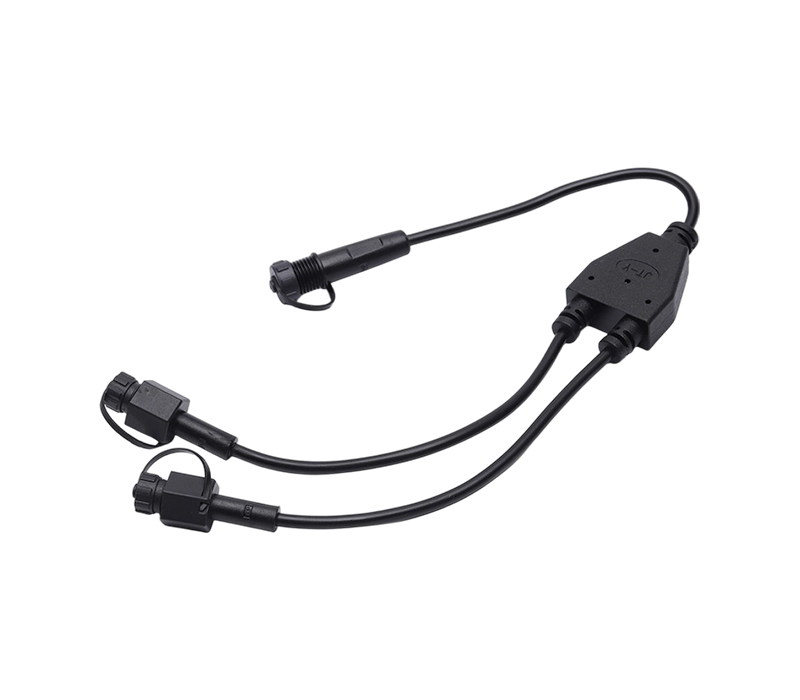 IP67 Y-Shaped Connector for Outdoor LightingThis Y-shaped connector splits one cable into two while maintaining an IP67 seal, ideal for garden or facade lighting. Rated for 12/48V DC at 3A, it fits wire gauges from 0.34 to 0.5mm² and reduces maintenance in harsh environments.View Product →
Material selection affects both durability and appearance. ABS housings are standard for indoor fixtures and budget-conscious products. Chrome-plated or brushed-nickel finishes are specified when the component stays visible in a kitchen, bathroom, or retail display. The choice is not cosmetic only: finish affects UV stability, corrosion resistance, and how the product reads in a retail environment.
The LED wiring system: a case study in component matching
LED products connect all of these categories in one system. From the driver or mains supply, the circuit runs through a connector harness, branches at a splitter box, and reaches each fixture. The components have to match each other or the system fails.
- Power source (LED driver or mains supply)
- Connector harness (2-, 3-, or 4-pin, low or high voltage)
- Splitter box (3-, 6-, 9-, or 12-way)
- Branch 1 — LED fixture or light bar
- Branch 2 — LED fixture or light bar
- Branch 3 — LED fixture or light bar
- Control switch (touch dimmer, IR sensor, or foot switch)
This structure appears in cabinet lighting, garden lights, mirror front lights, and display cases. The selection points are the connector pin count and voltage class, the number of branch outputs, and the switch type. A 6-way splitter box, for example, covers a typical kitchen cabinet run or a garden path with six light points. Choosing the right harness also reduces field defects: loose pins, wrong wire gauge, and poor crimps are the most common failure causes in LED installations.
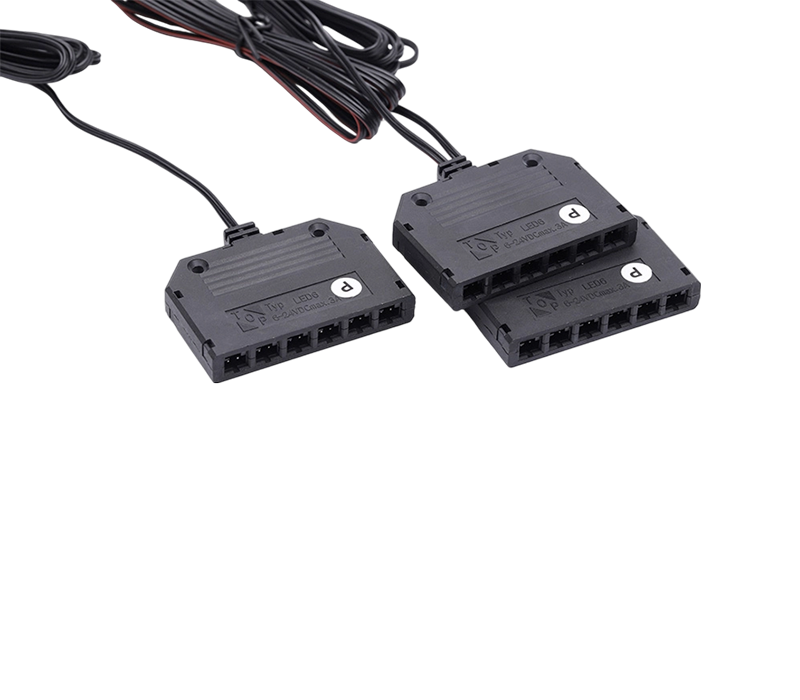 806-6WAY LED Splitter Box for Multi-Point LightingThis six-way splitter distributes power to multiple LED fixtures in cabinet or garden lighting setups. Supporting 12-48V DC at up to 7A and wire gauges 26-18AWG, it simplifies wiring and minimizes loose connections.View Product →
The practical benefits of a well-specified LED connector harness are measurable: fewer loose connections, lower voltage drop, and reduced warranty claims. A harness that matches the driver output voltage and the fixture input protects the whole string, which is why distributors and OEMs usually specify this part of the system carefully. For a closer look at the selection criteria, see this overview of the benefits of using an LED connector harness in wiring.
What to verify before you commit to a supplier
Once the component categories are defined, the supplier decision comes down to a short checklist. These items will surface quickly in a sample review or a factory audit:
- Confirm that the standard and certification claimed on the datasheet match your destination market.
- Check that the current and voltage ratings exceed your worst-case load, not the average continuous load.
- For outdoor use, verify the IP rating and the sealing method at every connector branch point.
- Request samples and measure the details: pin dimensions, cable length, plug fit, connector insertion force.
- Ask about customization — wire length, jacket color, connector type, and logo printing are common requests.
- Inspect the factory's test equipment and quality documentation before committing to a repeat order.
Suppliers that manufacture across multiple component categories reduce the coordination burden. A single qualified component list, one quality system, and one logistics channel are easier to manage than five separate vendors. A manufacturer such as Ningbo TOP Electromechanical, with power cords, IEC connectors, LED accessories, and lighting fixtures in one catalog, is the type of supplier that can support that kind of consolidated purchasing.
Electrical equipment components are not interchangeable commodity parts. Each one encodes a destination standard, a load capacity, and an environmental limit. By starting with the end use — market, current, environment — and working backward to the component specification, buyers can build a bill of materials that passes certification and performs for the end customer.
Latest News
Contact Us
LET'S START COLLABORATING
 Ningbo TOP Electromechanical Co., Ltd.
specializes in the R&D and manufacturing of
wires & cables, plugs & sockets, waterproof LED connectors, and more. Ourproducts
meet multiple international certifications and are widely used in global markets.
Ningbo TOP Electromechanical Co., Ltd.
specializes in the R&D and manufacturing of
wires & cables, plugs & sockets, waterproof LED connectors, and more. Ourproducts
meet multiple international certifications and are widely used in global markets.
STAY CONNECTED
 Phone:+86-13586690829
Tel:+86-0574-62135837-801
 [email protected]
[email protected]
 Sibei Industrial Yuyao City, Ningbo, Zhejiang, China
MOBILE
Copyright © Ningbo TOP Electromechanical Co., Ltd. All Rights
Reserved
 Custom Electrical Power Cord Manufacturers