


 中文简体
中文简体  Español
Electrical Power Cord Guide: Types, IEC 60320 & Global Plug Standards
 2026.08.06
 Industry News
What Is an Electrical Power Cord?
An electrical power cord is a pre-assembled electrical equipment component that safely connects an appliance or machine to a wall outlet. It belongs to the broader family of electrical equipment components used across every industry. In contrast to bare cable and wire, a power cord is a finished product with defined voltage, current, and safety ratings, ready for installation or retail use.
The distinction between a power cord and a cable is more than terminology. A cable is a continuous length of insulated conductors; a power cord is the cable terminated with the appropriate plug and connector. Typical power cords operate between 125V and 250V and carry anywhere from 6A to 20A, depending on the conductor gauge and the regional standard. For a closer look at the plug portion, learn more about what an electrical plug is.
Key Components of a Power Cord Assembly
A complete power cord assembly relies on four core components:
- Plug: the male end that fits the wall socket. Its pin size, shape, and orientation depend on the target country’s standard.
- Cordage: the flexible cable consisting of copper conductors, insulation, and an outer jacket. The conductor gauge (AWG) determines the maximum current the cord can safely carry.
- Connector or receptacle: the female end that mates with the device. Many portable cords use an IEC 60320 connector, while others terminate in a molded lead.
- Strain relief: the reinforced joint where the cable meets the plug or the device housing. It absorbs bending and pulling forces that would otherwise break the internal wiring.
Optional additions include fuses, waterproof boots, wire clamps, and right-angle heads. Two structural configurations are common: detachable cord sets (with a connector) and hard-wired cords that are permanently attached to the equipment. Detachable cord sets simplify replacement, certification, and regional adaptation, which is why most portable electronics use them.
How Electrical Power Cords Work
Power cords transmit alternating current (AC) from the grid to the device. Copper conductors carry the current efficiently, and polymer insulation around each conductor protects against short circuits and electric shock. The outer jacket binds the conductors together while resisting abrasion, oil, and moisture.
Two-wire cords contain a live (line) wire and a neutral wire; three-wire cords add a ground wire for equipment with metal frames or higher power consumption. The ground wire provides a safe path for fault current and prevents electrical shock if an internal failure occurs. International wire color coding (IEC 60446) uses brown for line, blue for neutral, and green-yellow for ground. These colors allow assemblers and inspectors to verify correct wiring quickly, and they are a common compliance checkpoint in certification testing.
IEC 60320 Appliance Coupler Standards Explained
IEC 60320 is the international standard for detachable power cord connectors. It defines a range of coupler shapes, each identified by a C number, so that manufacturers can build cords and devices that mate correctly regardless of the regional plug standard used on the other end.
Some of the most common models are listed below:
| Coupler model | Typical use |
|---|---|
| C1/C2 | Low-power devices such as shavers and small personal care appliances |
| C5/C6 | "Mickey Mouse" style, often used with notebook power adapters |
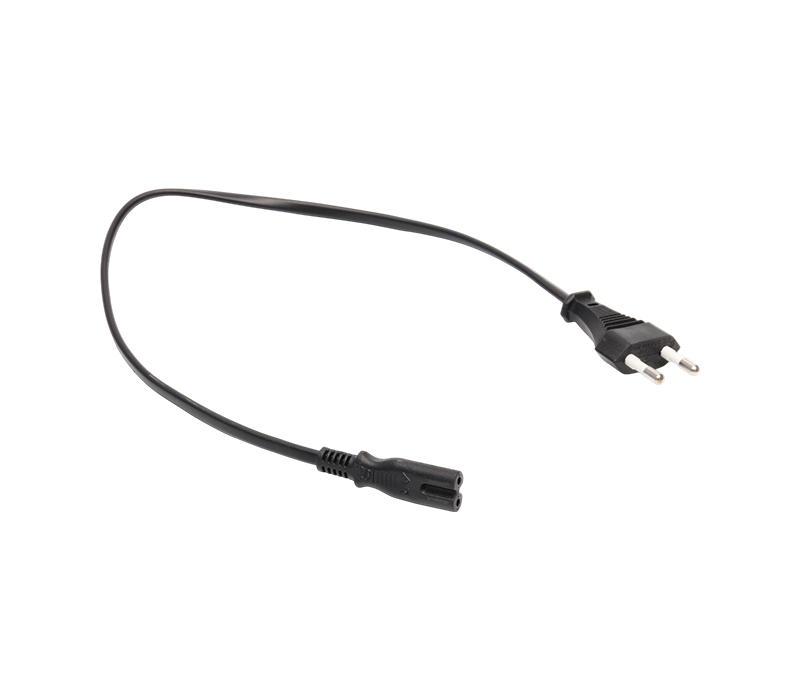
| C7/C8 | Figure-eight shape, found on small consumer appliances |
| C13/C14 | The standard connection for desktop computers, monitors, and networking gear |
| C15/C16 | Rated for higher-temperature environments such as electric kettles |
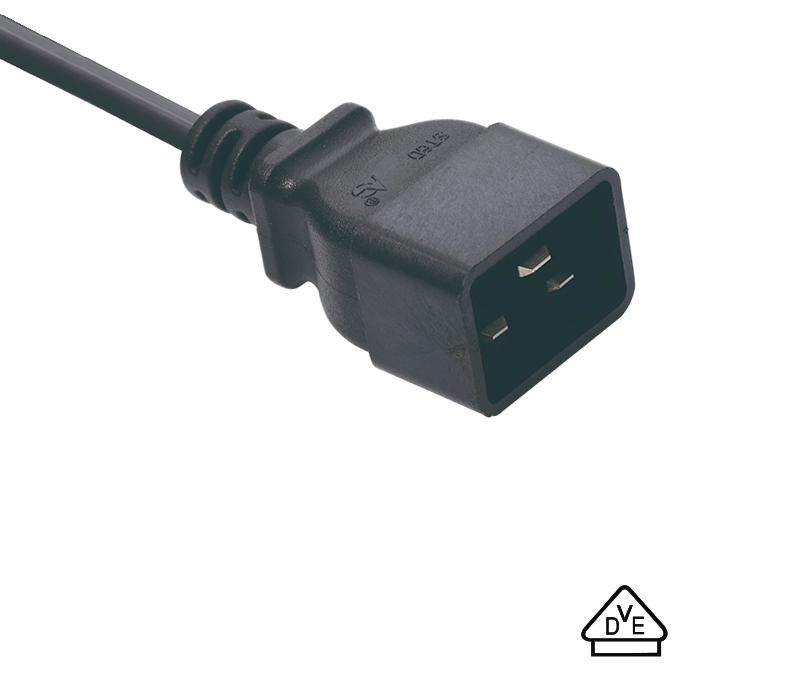
| C19/C20 | High-current connectors for enterprise servers and data center equipment |
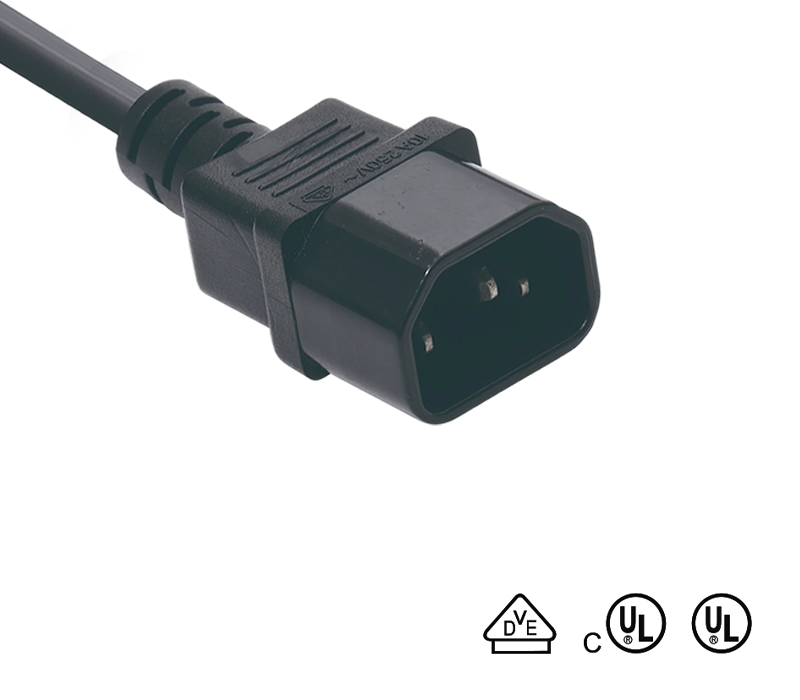
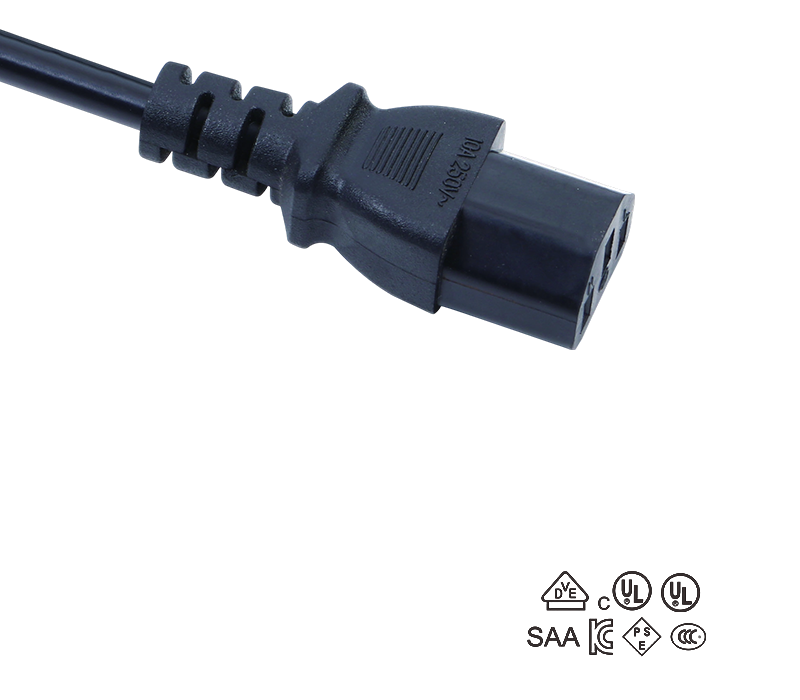
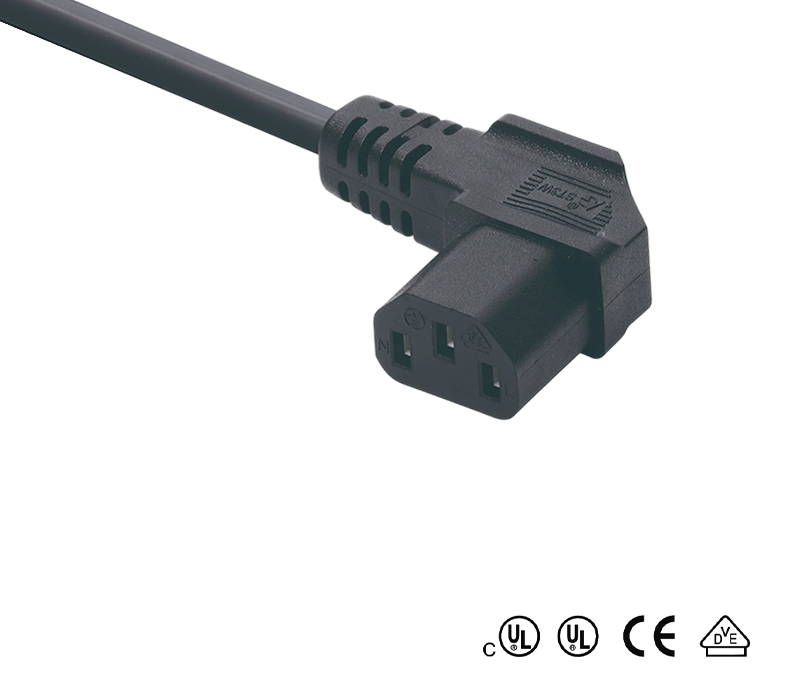
For most IT equipment, C13/C14 is the default choice. The C13 connector is the female socket on the cord, and the C14 is the matching inlet on the device. C19/C20 is reserved for higher-current applications, so it appears mainly on large servers, power distribution units, and industrial devices. If you are designing or sourcing such equipment, our universal C13 connector socket is a practical starting point. To see other coupler shapes, explore our IEC 60320 connector selection.
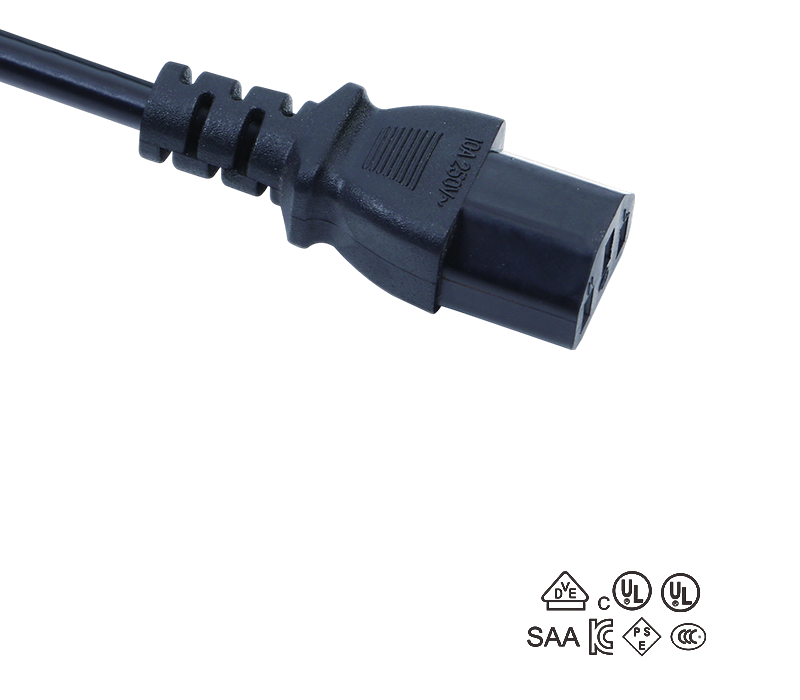 Wholesale FY-ST3 IEC Connector Female Socket C13 For Universal Standards FactoryNingbo TOP Electromechanical Co., Ltd is China wholesale FY-ST3 IEC Connector Female Socket C13 For Universal Standards suppliers and FY-...View Product →
Global Plug and Socket Standards by Region
The plug half of the power cord must match the wall outlet in the destination market. This section is the decision map for choosing the correct plug standard.
| Region | Plug type | Typical rating |
|---|---|---|
| North America | Type A / B | 15A or 20A, 125V, 60Hz |
| Europe | Type C / E / F | 2.5A to 16A, 250V, 50Hz |
| United Kingdom | Type G | 13A, 250V, 50Hz |
| Japan | Type A / B | 15A, 100V, 50/60Hz |
| China | Type A / I | 10A or 16A, 250V, 50Hz |
| Australia | Type I | 10A or 16A, 250V, 50Hz |
| Switzerland | Type J | 10A or 16A, 250V, 50Hz |
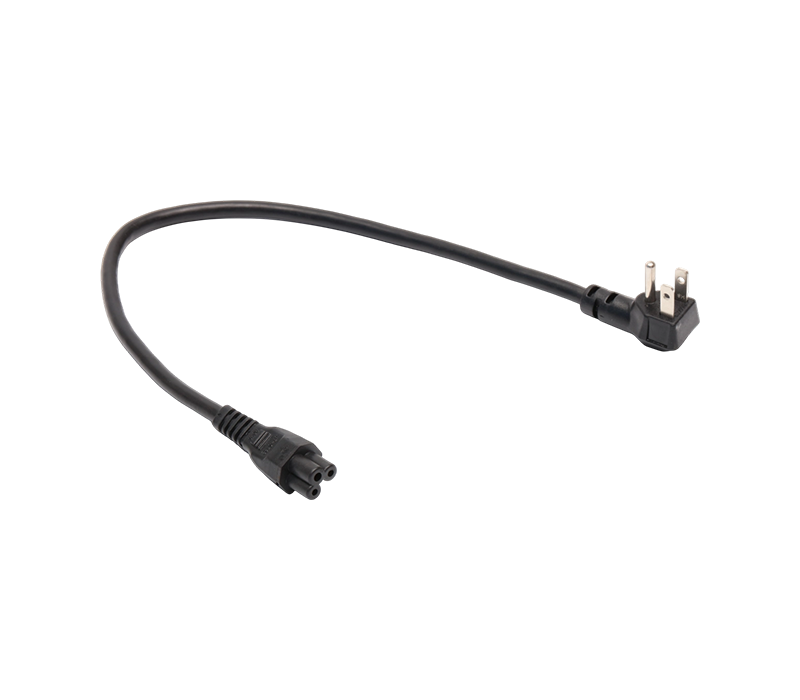
North America uses NEMA 1-15 (Type A) and NEMA 5-15 (Type B) plugs at 120V, 60Hz. Type A is for double-insulated appliances without a ground; Type B is the three-prong standard for most equipment. For higher loads, a NEMA 5-20 plug is used with 20A outlets. If your product targets the US market, a sturdy NEMA plug matters for both safety and compatibility. For example, this 15A 125V three-pin elbow plug for North American use keeps the cord flat against the wall and helps in tight spaces. You can also see available NEMA-standard power cord options.
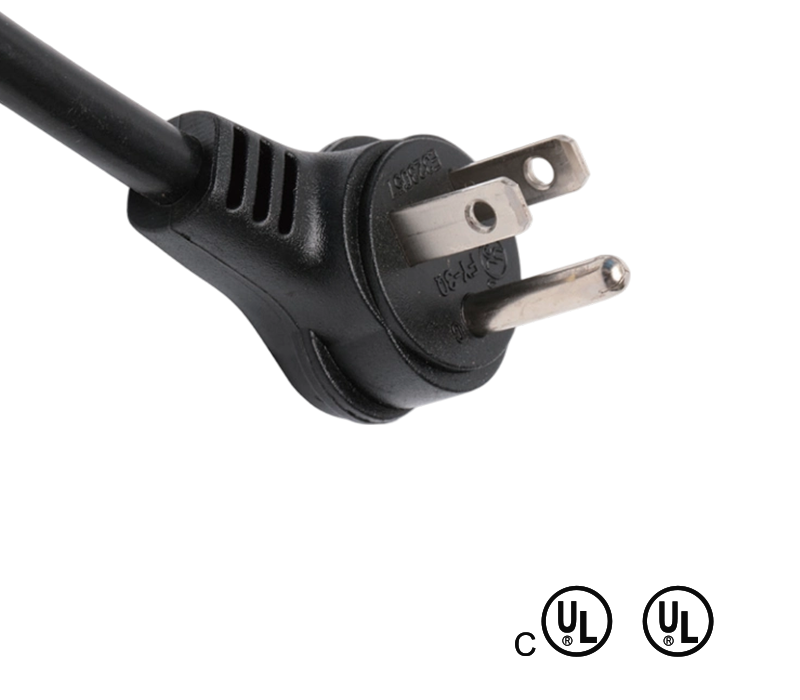 Wholesale FY-3Q 15A 125V American Standard Three-Pin Elbow Plug Factory, SupplieNingbo TOP Electromechanical Co., Ltd is China wholesale FY-3Q 15A 125V American Standard Three-Pin Elbow Plug suppliers and FY-3Q 15A 12...View Product →
Continental Europe relies on round-pin plugs: ungrounded Type C, grounded Type E (France), and grounded Type F (Germany/Schuko). CEE 7/7 plugs fit both Type E and F sockets, which simplifies inventory. Ratings usually range from 2.5A to 16A at 250V. For European projects, browse our European-standard plug cords.
The UK uses the BS 1363 Type G plug with three rectangular pins and a built-in fuse, normally rated at 13A and 250V. The fuse protects the appliance cord and must be matched to the equipment’s current draw. This is why UK cords are often sold with a 3A, 5A, or 13A fuse fitted. We will return to fused plugs in the safety section.
Japan uses Type A and Type B plugs at 100V and 50/60Hz, with a maximum rating of 15A. Although the pins look similar to NEMA types, the dimensions and approval requirements differ. Use check our Japanese-standard plug cords when you source for Japan.
China and Australia both use Type I plugs, but with different grounding pin arrangements and approvals. China runs at 220V/50Hz with 10A and 16A versions; Australia uses 230V/50Hz with the same current tiers. Switzerland is a separate case with the Type J plug, so do not assume a continental European cord will work everywhere.
For the complete overview of plug families by market, browse our full range of power cords by country standard.
Choosing the Right Plug by Voltage, Current & Grounding
Once you know the destination country, calculate the current your device draws. Current (amps) equals power (watts) divided by voltage (volts). For example, a 1,000W appliance on a 230V supply draws roughly 4.3A. You then select a power cord rated for the next standard step above the actual current. This margin prevents overheating and reduces the risk of nuisance fuse blowing.
Grounding is dictated by the device construction. A double-insulated or Class II device can use a two-prong, ungrounded plug. A device with a metal enclosure, an external metal part, or higher power consumption normally requires a three-prong grounded plug. Space constraints also matter: right-angle plugs fit behind furniture and equipment racks, while straight plugs are simpler to assemble and typically lower in cost.
Safety, Compliance & Certification Considerations
Certification is not optional in most markets; it is the legal gate for selling electrical equipment. A missing approval can stop a shipment, cause a recall, or create liability in a safety incident. The required marks depend on the destination: UL for the United States, CSA for Canada, CE under the Low Voltage Directive for the European Union, VDE for Germany, BSI for the United Kingdom, PSE for Japan, and RCM for Australia.
Conductor gauge and current rating also need to match. A common rule of thumb is that 18 AWG copper supports up to about 10A, 16 AWG up to about 13A, and 14 AWG up to about 15A. Using an undersized cord compromises the whole equipment design, so check the gauge before you approve a sample.
The UK fused plug is a useful example of regional compliance. The BS 1363 plug contains a cartridge fuse inside the plug body, sized to protect the flexible cord and the appliance. The fuse rating should be slightly above the device’s normal operating current but below the cord’s maximum capacity. If you need this configuration, view our UK 13A fused plug options.
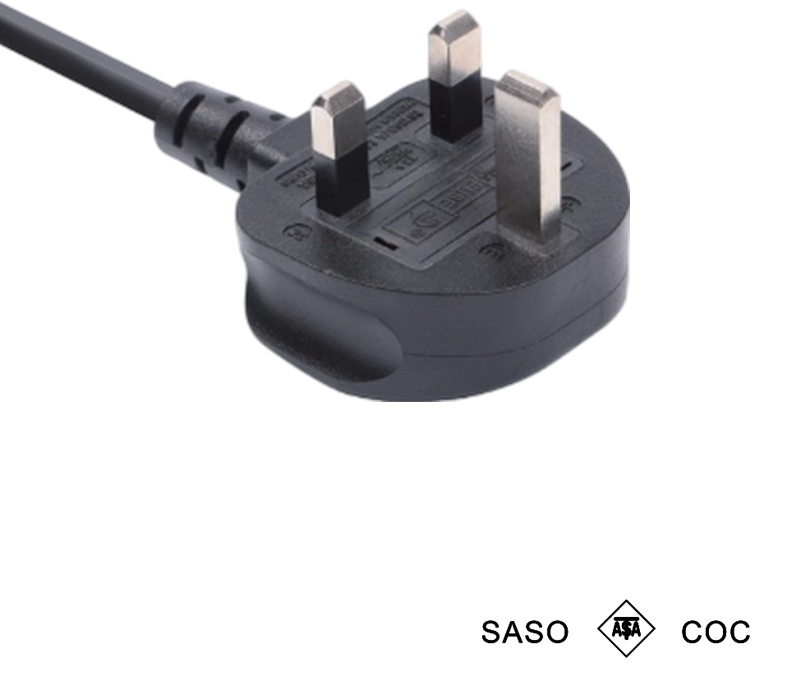 Wholesale FY006A 13A 250V British Three-Pin Plug With Fuse Factory, Suppliers - Ningbo TOP Electromechanical Co., Ltd is China wholesale FY006A 13A 250V British Three-Pin Plug With Fuse suppliers and FY006A 13A 250V B...View Product →
Custom Power Cord Procurement: What to Provide Suppliers
When you contact a manufacturer for a custom power cord, the quality of your specification determines the quality of the quote and the speed of sampling. Provide the following six items to avoid back-and-forth:
- Target market or country, and the certification or approval mark required.
- Plug style: straight or right-angle, with or without a fuse, and the exact standard (NEMA, Schuko, BS 1363, etc.).
- Connector type on the equipment end: IEC C5, C7, C13, C14, C19, or a direct wire lead.
- Cable length and conductor gauge, expressed in AWG or mm2.
- Rated voltage and current for the application.
- Operating environment: indoor, outdoor, water exposure, temperature range, or special mechanical requirements.
After you send those details, the supplier typically confirms the specification and provides a sample for mechanical fitting and basic testing. Certification testing then follows for the target market, and finally the manufacturer moves to mass production. Working directly with a factory offers more flexibility at each stage: adjusting a plug angle, changing cable length, or adding a custom 3D design is easier when the same team builds both the plug and the complete cord assembly.
Conclusion & How to Source From a Manufacturer
Selecting an electrical power cord comes down to three steps: understand the physical components, match the country plug and IEC connector, and verify the required certifications. When these three layers align, your equipment can enter the target market without interruption.
For a supplier review, check three things. First, multi-country coverage: can the manufacturer supply plugs for all your target markets from one catalog? Second, customization: does the supplier support adjustments to plug angle, cable length, connector type, and rating? Third, product completeness: a full range of power cords and IEC connectors reduces your sourcing burden and simplifies quality control.
To start your selection, review the country-specific plug categories in our power cord catalog or compare connector models in the IEC connector range. Then send your specification list and let the manufacturer handle the rest.
Latest News

Contact Us
LET'S START COLLABORATING
 Ningbo TOP Electromechanical Co., Ltd.
specializes in the R&D and manufacturing of
wires & cables, plugs & sockets, waterproof LED connectors, and more. Ourproducts
meet multiple international certifications and are widely used in global markets.
Ningbo TOP Electromechanical Co., Ltd.
specializes in the R&D and manufacturing of
wires & cables, plugs & sockets, waterproof LED connectors, and more. Ourproducts
meet multiple international certifications and are widely used in global markets.
STAY CONNECTED
 Phone:+86-13586690829
Tel:+86-0574-62135837-801
 [email protected]
[email protected]
 Sibei Industrial Yuyao City, Ningbo, Zhejiang, China
MOBILE
Copyright © Ningbo TOP Electromechanical Co., Ltd. All Rights
Reserved
 Custom Electrical Power Cord Manufacturers