


 中文简体
中文简体  Español
Choosing the Right Outdoor Extension Cord: A Technical Comparison
 2026.07.23
 Industry News
Direct Verdict: Selecting the Proper Outdoor Extension Cord
To safely power exterior tools, landscape lights, or heavy equipment, you must match the American Wire Gauge (AWG) and jacket type to your specific electrical load and environmental conditions. Using an undersized wire or an indoor cord outdoors creates severe voltage drops, overheating hazards, and fire risks. For standard residential landscaping and power tools, a 12-gauge or 14-gauge outdoor extension cord featuring an SJTW or SJOOW thermoplastic or rubber jacket provides the optimal balance of safety, weather resistance, and current capacity.
Understanding Wire Gauge Specifications and Amperage Limits
The thickness of the copper wire inside an outdoor extension cord dictates how much electrical current it can safely transport over distance. In the American Wire Gauge system, a smaller numerical designation represents a thicker conductor capable of handling higher amperages with minimal resistance. When electricity travels through a wire, resistance generates heat and causes voltage drop—a reduction in voltage at the appliance end that can cause motors to overheat and burn out.
For instance, a 16-gauge wire is suitable for light-duty applications drawing up to 10 amps over short distances, whereas a robust 12-gauge wire supports up to 15 amps and maintains structural integrity over extended runs. High-value users such as contractors, landscapers, and serious DIYers must calculate both the running amperage of their equipment and the total length of the cord run to prevent thermal overload.
Comparative Breakdown of Common Outdoor Wire Gauges
| Wire Gauge (AWG) | Max Amperage (Up to 50 ft) | Max Amperage (100 ft Run) | Ideal Applications |
| 16 AWG (Light Duty) | 10A / 1,200W | Not Recommended | Holiday lights, landscape accent lighting, low-power electronics |
| 14 AWG (Medium Duty) | 13A to 15A | 7A to 10A | Electric lawn mowers, hedge trimmers, small pressure washers |
| 12 AWG (Heavy Duty) | 15A to 20A | 10A to 13A | Circular saws, tile saws, air compressors, heavy electric snow blowers |
| 10 AWG (Extra Heavy Duty) | 20A to 30A | 15A | Portable generators, large jobsite table saws, continuous high-draw commercial gear |
Jacket Material Engineering: Thermoplastic Versus Thermoset Rubber
Beyond copper thickness, the outer protective sheath of an outdoor extension cord determines its defense against environmental degradation, ultraviolet radiation, moisture, and mechanical abrasion. Letter designations standardized by safety agencies clarify these physical properties at a glance.
The letter S stands for hard service, while SJ denotes a junior hard service cord rated up to 300 volts. Letters following these base designations highlight specific environmental tolerances: T indicates thermoplastic PVC construction, O denotes oil resistance, and W signifies direct weather and sunlight approval.
SJTW Thermoplastic Cords
- Jacket Material: Polyvinyl Chloride (PVC) thermoplastic.
- Environmental Resistance: Excellent defense against moisture, rain, and UV sunlight degradation.
- Thermal Tolerance: Typically rated for standard operating temperatures up to 60 degrees Celsius.
- Primary Benefit: Highly durable, rigid exterior that resists physical cuts and scrapes on abrasive concrete or dirt.
SJOOW Rubber Cords
- Jacket Material: EPDM rubber thermoset compound with neoprene layers.
- Environmental Resistance: Outstanding flexibility combined with full oil, chemical, ozone, and weather resistance.
- Thermal Tolerance: Designed to withstand extreme cold without cracking and high operating temperatures up to 105 degrees Celsius.
- Primary Benefit: Superior limpness and flexibility in sub-freezing temperatures, preventing kinks and tangles.
Analyzing Voltage Drop and Distance Constraints
A frequent error made by operators is assuming that an outdoor extension cord maintains its maximum current capacity regardless of length. Internal electrical resistance increases linearly with the physical length of the conductor. As resistance accumulates, voltage drops proportionally, forcing connected motor-driven tools to draw higher amperage to compensate, which ultimately triggers thermal breakdown.
For example, running a 15-amp tile saw through a 14-gauge wire over a 100-foot span introduces critical voltage sag. Field data demonstrates that doubling a cord length from 50 feet to 100 feet often requires stepping up one complete wire gauge size—such as moving from 14 AWG to 12 AWG—to keep voltage drop within the safe benchmark threshold of 3 percent. Neglecting this adjustment leads to sluggish tool performance, premature component failure, and melted cord insulation.
Operational Safety Protocols and Maintenance Practices
Professional asset management requires rigorous inspection protocols for every outdoor extension cord deployed on a site. Overlooking basic physical damage compromises the internal insulation barriers, exposing live conductors to moisture and creating immediate electrocution hazards.
Inspectors and property managers should enforce strict handling guidelines:
- Never run an outdoor extension cord across active vehicle driveways without heavy-duty rubber protective crossover ramps to prevent internal conductor crushing.
- Avoid daisy-chaining multiple cords together, as cumulative resistance drastically multiplies voltage drop and thermal stress.
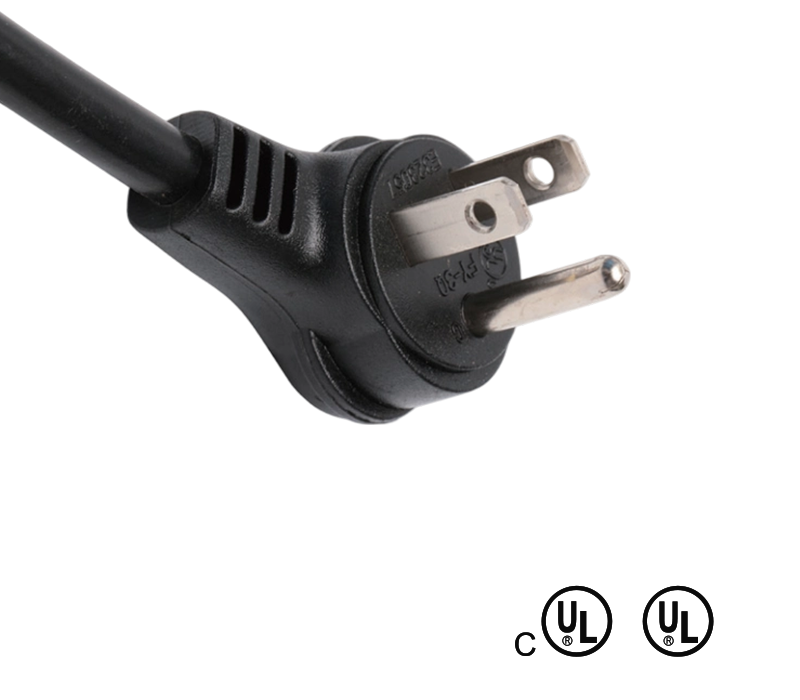
- Check molded plug ends regularly for signs of arcing, discoloration, or loose prongs, discarding any unit where the ground pin has broken off.
- Store cords loosely coiled in large loops rather than tight, constricted wraps to preserve internal copper wire twist integrity and prevent jacket memory warping.
- Keep connection points elevated above wet grass or puddles using weather-resistant safety cover pods to prevent moisture ingress into the receptacle junctions.
Frequently Asked Questions
Can I safely plug a high-draw space heater into a long outdoor extension cord?
Space heaters continuously draw around 12.5 to 15 amps, operating at the upper limit of standard household circuits. You should only use a heavy-duty 12-gauge outdoor extension cord kept under 50 feet in length, though plugging heating appliances directly into a wall receptacle remains the safest practice.
What makes an outdoor extension cord fundamentally different from an indoor version?
Outdoor cords feature specialized rugged jackets—such as thermoplastic or rubber compounds—formulated to resist ultraviolet radiation, water immersion, tearing, and temperature extremes. Indoor cords utilize thin insulation that degrades rapidly under environmental exposure, leading to cracking and exposed live wires.
How do I calculate the correct gauge if my appliance only lists watts instead of amps?
Divide the total wattage rating of your device by the operational voltage (typically 120 volts in standard residential settings) to determine the exact amperage draw. For instance, a 1,800-watt pressure washer divided by 120 volts equals 15 amps, requiring at least a 14-gauge cord for short distances or a 12-gauge cord for longer runs.
Why does an outdoor extension cord feel warm or hot during heavy use?
Heat generation indicates that the wire gauge is too thin for the electrical load or length of the run, creating excessive electrical resistance. If a cord feels warm to the touch, disconnect the equipment immediately and switch to a thicker wire gauge (lower AWG number).
Are molded plug ends better than replaceable field-wired ends?
Factory-molded plug ends provide superior moisture resistance, pull strength, and durability compared to field-installed screw-terminal replacement plugs, making them the preferred choice for demanding outdoor environments.
Latest News

Contact Us
LET'S START COLLABORATING
 Ningbo TOP Electromechanical Co., Ltd.
specializes in the R&D and manufacturing of
wires & cables, plugs & sockets, waterproof LED connectors, and more. Ourproducts
meet multiple international certifications and are widely used in global markets.
Ningbo TOP Electromechanical Co., Ltd.
specializes in the R&D and manufacturing of
wires & cables, plugs & sockets, waterproof LED connectors, and more. Ourproducts
meet multiple international certifications and are widely used in global markets.
STAY CONNECTED
 Phone:+86-13586690829
Tel:+86-0574-62135837-801
 [email protected]
[email protected]
 Sibei Industrial Yuyao City, Ningbo, Zhejiang, China
MOBILE
Copyright © Ningbo TOP Electromechanical Co., Ltd. All Rights
Reserved
 Custom Electrical Power Cord Manufacturers