


 中文简体
 Español

Practical Electrical Power Cord Buyer’s Guide: Standards, Safety, and Selection
 2026.11.19
 Industry News
An electrical power cord can pass a quick fit check and still fail in the field. The plug goes into the wall, the appliance powers up, and the sample looks fine. Then the cord is used outdoors, coiled near a heat source, or pulled by the cable instead of the plug, and the weak point shows up: the wrong jacket, a fuse that does not match the load, or a connector that was never rated for the environment.
For procurement, the reliable approach is to specify the cord from four fixed points: plug standard, current and conductor size, jacket and strain relief, and certification. Length and color matter, but they should not drive the design. The decisions below are the ones that usually determine whether an electrical power cord passes approval and stays in service.
Start with the plug standard, not the color or length
The wall plug is a mechanical and electrical interface. A NEMA 5-15 cord will not mate with a BS 1363 socket, and a 16 A Australian plug will not fit a 10 A outlet. If the plug standard is wrong, the rest of the specification is irrelevant: the sample cannot be approved, the tooling may need to change, and the delivery schedule moves. Confirm the destination market, the appliance inlet, and any local code requirement before drawing the cord.
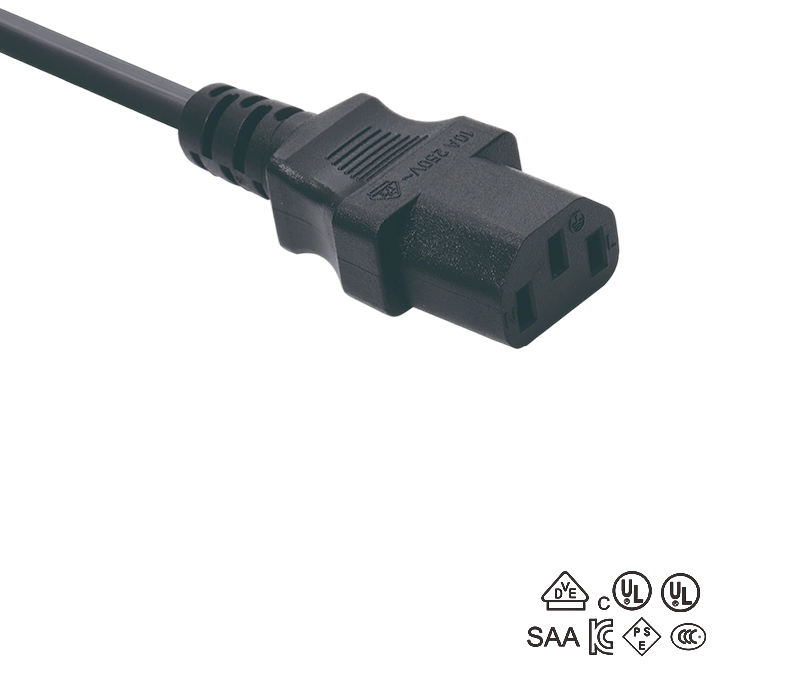
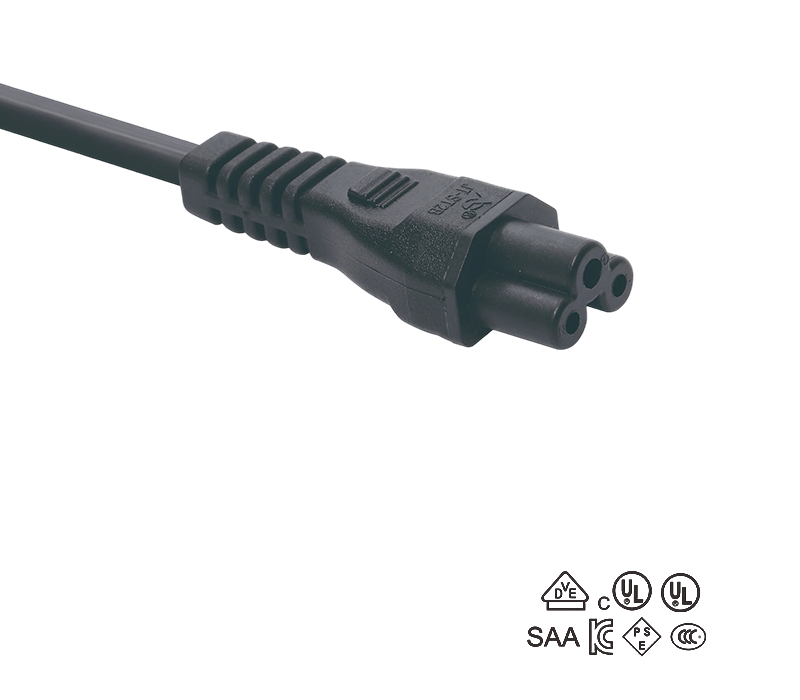
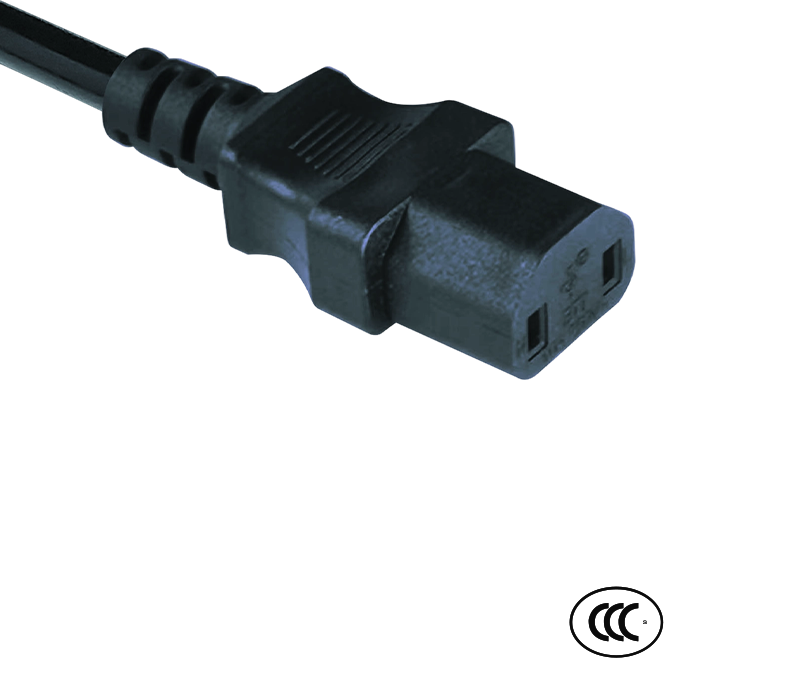
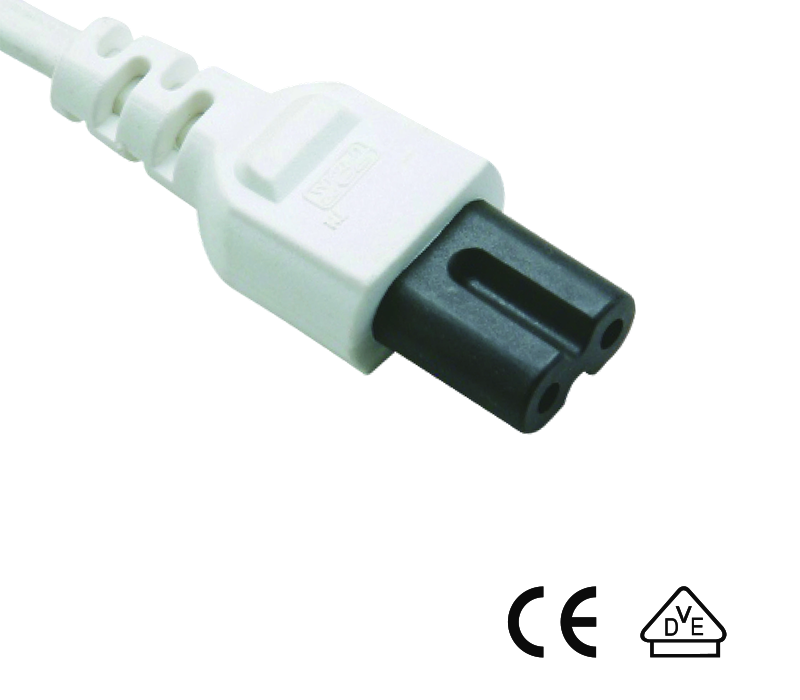
It also helps to separate the wall plug from the appliance connector. An IEC 60320 C13 connector is common on equipment inlets, but it is not a wall plug. A cord assembly may use a country-specific plug on one end and a C13, C7, or C19 connector on the other. Reviewing plug types and their construction early avoids a mismatch between the two ends.
| Plug family | Typical rating | Common market | Procurement note |
|---|---|---|---|
| NEMA 5-15 | 15 A, 125 V | North America | Verify blade orientation, cord gauge, and plug body clearance. |
| CEE 7 | 16 A, 250 V | Europe | Check earthing, straight or angled body, and waterproof versions. |
| BS 1363 | 13 A, 250 V | United Kingdom | Fuse rating must match the appliance, not just the plug rating. |
| AS/NZS 3112 | 10 A or 16 A, 250 V | Australia and New Zealand | 10 A and 16 A pins are not interchangeable. |
| IEC 60320 C13/C14 | 10 A, 250 V | Global equipment inlet | This is an appliance connector, not a wall plug. |
For North American equipment, a 15 A 125 V three-pin plug with cable is a common starting point, but the blade orientation and conductor gauge still need to match the appliance.
 15A 125V US Plug with Cable Clamp and IEC C13 ConnectorFor North American equipment, this 15 A 125 V three-pin plug assembly includes a cable clamp and IEC C13 connector, with multiple cable constructions listed.View Product →
For European equipment, check whether the cord needs a straight or angled plug, and whether the enclosure requires a waterproof version. A plug that fits the socket but leaves the cable entry exposed is not a completed specification.
Match current rating and conductor size to the actual load
A 15 A plug does not make every 15 A cord assembly suitable for a 15 A load. The conductor gauge, insulation temperature rating, cord length, and ambient conditions all affect ampacity. Use the plug rating as a ceiling, not a guarantee. For a heater, compressor, or other continuous load, apply the derating rules in the relevant standard and verify the temperature rise at the terminals.
Typical current ratings by plug family
The chart shows why a single “16 A cord” description is too loose. A 2.5 A European cord, a 13 A fused UK cord, and a 20 A North American cord may look similar in a catalog photo, but their conductors, fuse or breaker assumptions, and test requirements are different. For long runs, voltage drop can also push the design to a larger conductor even when the current is below the plug rating.
Ask for the conductor size in square millimeters or AWG, the insulation material, and the rated temperature. Then compare that data with the appliance’s actual current and the installation environment. If the cord will be coiled, enclosed, or used near heat, the acceptable current may be lower than the nameplate figure on the plug.
Jacket, moisture, and strain relief decide field life
Two cords can have the same plug and conductor size and still behave very differently outdoors. PVC is common for indoor equipment because it is flexible and economical. Rubber or modified PVC may be preferred where abrasion, cold flexing, or sunlight exposure is part of the use case. The jacket must also match the connector: an IP44 plug is not a substitute for an IP67 connector when the joint sits in a wet location.
Strain relief is the other weak point. The cable should be anchored so that pulling the cord does not transfer force to the terminals. Check the bend radius at the plug and at the appliance inlet, especially on 90-degree plugs and compact LED fixtures. A molded strain relief that looks substantial can still fail if the cable jacket is too hard or the mold flash cuts into the jacket.
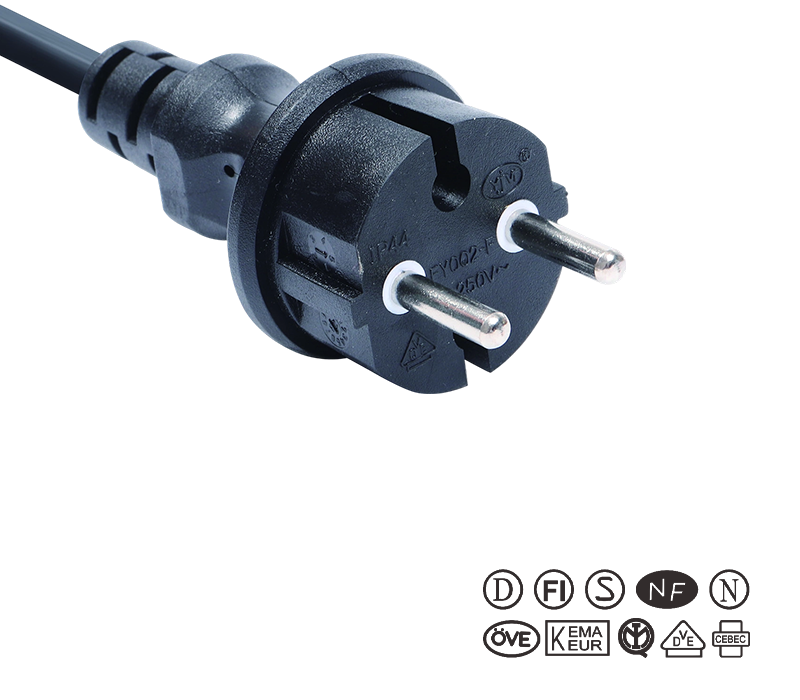 16A 250V European Two-Pin Waterproof PlugFor damp outdoor and bathroom applications, this European two-pin plug offers IP44 or higher sealing and is listed with flexible cable types.View Product →
For outdoor lighting and damp areas, specify the sealing method, the mating connector, and the test condition. A waterproof plug is only one part of the assembly; the cap, gasket, cable entry, and mating socket all need to be compatible.
Fusing, certification, and marking are not paperwork
In the UK, a BS 1363 plug contains a fuse, and the fuse rating must match the appliance. Fitting a 13 A fuse to a low-current appliance may not provide the intended protection. In North America, the protection may sit in the plug, the appliance, or the branch circuit, depending on the design. The procurement question is not “does it have a fuse?” but “what fault current and appliance current is this assembly designed to protect against?”
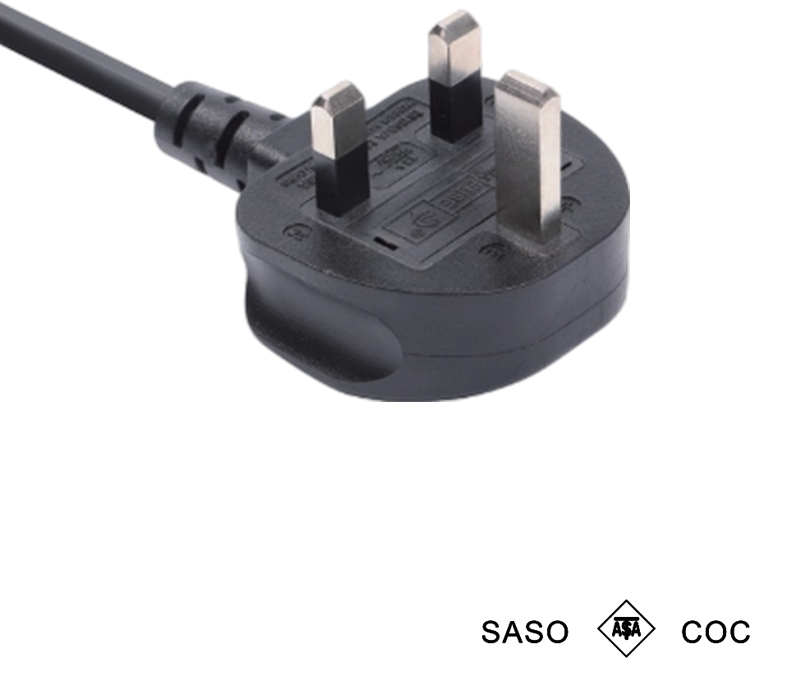 13A 250V British Three-Pin Plug with FuseFor UK appliances, this fused British three-pin plug uses a copper conductor and PVC shell, with compatible cable types and conductor sizes listed.View Product →
Certification documents should be traceable to the exact plug, cable, and connector combination. A certificate for a bare plug does not automatically cover a molded cord assembly with a different jacket or conductor. Ask for the test report, the applicable standard, the mark, and the production marking layout. The cord tag or mold marking should allow a buyer to identify the rating, the standard, and the batch.
For incoming inspection, check the plug dimensions, the fuse rating if applicable, the polarity, the marking permanence, and the pull test. These are simple checks, but they catch many of the errors that only appear after the carton has shipped.
A procurement checklist for the next production order
- Lock the destination market and plug standard before quoting.
- Confirm the appliance inlet and whether the assembly needs a country plug, an IEC connector, or both.
- State the current, voltage, conductor size, and maximum length.
- Define the jacket material, color, temperature rating, and outdoor or indoor use.
- Specify fuse rating, sealing class, strain relief, and bend radius where relevant.
- Require certification documents and marking artwork for approval.
- Approve a production sample under the same conditions as the final use.
This list is deliberately short. It keeps the discussion on the features that change safety, fit, and approval time. Color, package quantity, and label placement can be settled after those points are fixed. If you are comparing quotes, ask each supplier to quote against the same checklist; otherwise the lowest price may simply reflect a thinner conductor or a less durable jacket.
What to look for in an electrical power cord supplier
An electrical power cord is a small part of the purchase order but a visible part of the product’s safety case. The supplier should be able to show the plug standard, the conductor construction, the jacket compound, and the certification path without vague claims. It also helps to work with a manufacturer that already covers multiple plug families, because the same production team can compare the tolerances and test requirements across markets.
Ningbo TOP Electromechanical Co., Ltd. produces power cords, IEC connectors, LED connectors, splitter boxes, string lights, and home lighting fixtures from Yuyao, near Ningbo port. The catalog covers American, European, British, Australian, Japanese, and other standard plugs, including waterproof and fused versions. For buyers, that range is useful when one product family needs several market variants without a completely new supply chain.
Before releasing a production order, send your cord specification with the plug standard, current rating, jacket requirement, length, and certification target. A clear specification shortens sample approval and reduces the risk of a cord that fits the outlet but fails the appliance, the environment, or the safety file.
Latest News

Contact Us
LET'S START COLLABORATING
 Ningbo TOP Electromechanical Co., Ltd.
specializes in the R&D and manufacturing of
wires & cables, plugs & sockets, waterproof LED connectors, and more. Ourproducts
meet multiple international certifications and are widely used in global markets.
STAY CONNECTED
 Phone:+86-13586690829
Tel:+86-0574-62135837-801
 [email protected]
 Sibei Industrial Yuyao City, Ningbo, Zhejiang, China
MOBILE
Copyright © Ningbo TOP Electromechanical Co., Ltd. All Rights
Reserved
 Custom Electrical Power Cord Manufacturers