


 中文简体
中文简体  Español
Electrical Power Cord Showdown: Choosing the Wrong One Is a Fire Hazard Waiting to Happen
 2026.05.14
 Industry News
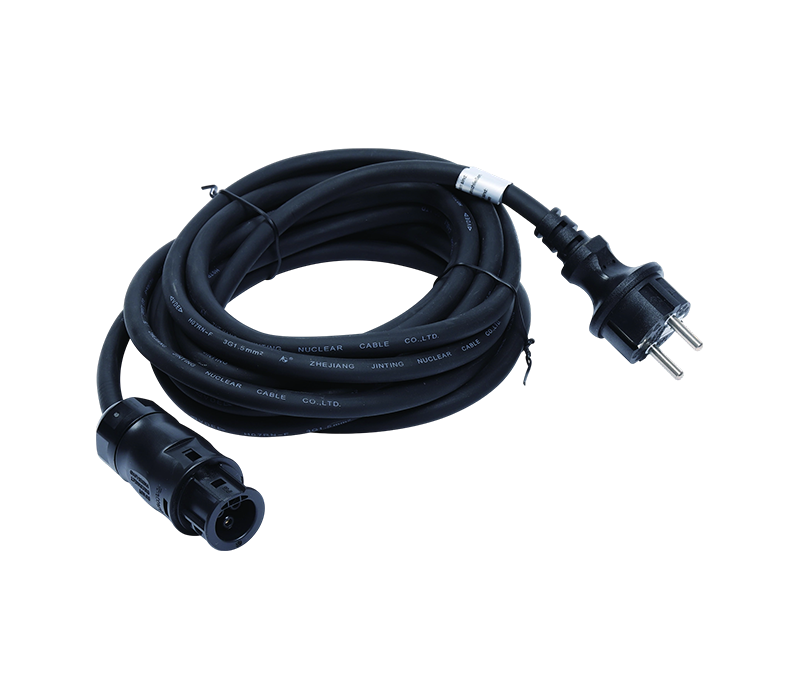
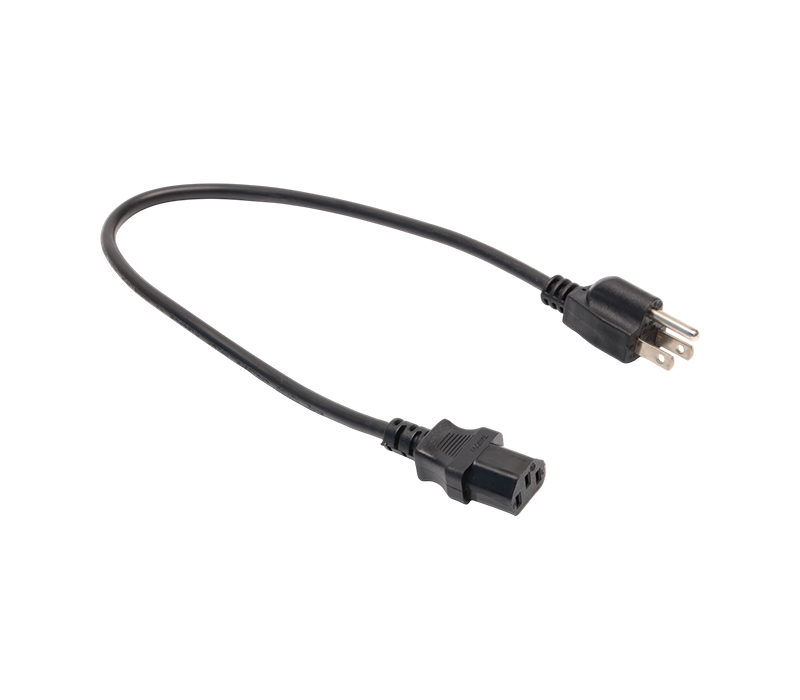
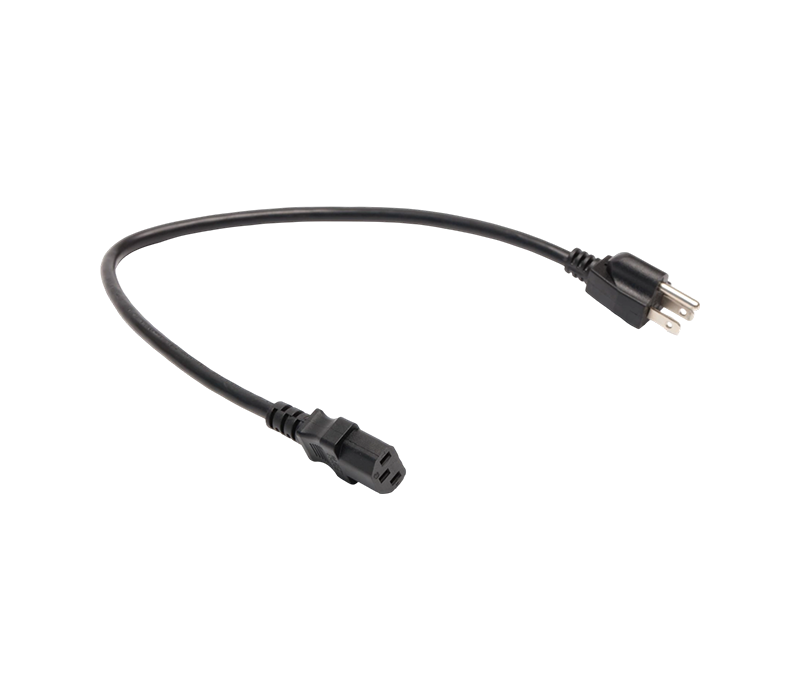
The right electrical power cord is determined by three non-negotiable factors: amperage rating, wire gauge, and intended environment. Use a cord rated below the load it's carrying, and you're looking at overheating, insulation failure, or fire. Use one rated for indoor use in a wet or outdoor environment, and the insulation breaks down at a rate most people never notice—until something goes wrong. The variety of electrical power cords on the market isn't a marketing gimmick; each type exists because a real-world use case demands it.
Whether you're replacing an appliance cord, selecting a heavy-duty extension cord for a worksite, or wiring a permanent power connection for equipment, the decision involves more than grabbing the nearest cord that fits the plug. This article breaks down the types, ratings, and real differences so you can make a safe, code-compliant choice—the first time.
Electrical Power Cord Types Compared: What the Labels Actually Mean
Electrical power cords are categorized by their construction codes—letter designations stamped directly onto the insulation jacket that tell you everything about what the cord can handle. These codes follow standards set by Underwriters Laboratories (UL) and the National Electrical Code (NEC) in the United States. Misreading them—or ignoring them entirely—is one of the leading causes of electrical cord-related fires.
| Cord Type Code | Construction | Max Voltage | Typical Use |
|---|---|---|---|
| SPT-1 / SPT-2 | Parallel, thermoplastic insulation | 300V | Lamps, small appliances, indoor only |
| SJT | Junior hard service, thermoplastic jacket | 300V | Household appliances, portable tools |
| ST / STO | Hard service, thermoplastic, oil-resistant | 600V | Power tools, equipment, light industrial |
| SO / SOW | Hard service, oil-resistant, weather-resistant | 600V | Outdoor, wet locations, heavy equipment |
| SJOOW | Junior hard service, oil + weather resistant | 300V | Outdoor portable tools, damp environments |
| SOOW | Hard service, oil + weather resistant, jacketed | 600V | Construction sites, marine, industrial |
| SJEOOW | Elastomer insulation, cold-rated | 300V | Cold storage, refrigeration, freezer use |
The letter suffix system follows a consistent logic: S = Service cord, J = Junior (lighter duty), T = Thermoplastic, O = Oil-resistant, W = Weather/water-resistant, E = Elastomer insulation. A cord marked "SOOW" is a hard-service, oil-resistant, weather-resistant cord with an overall jacket—built for demanding outdoor and industrial applications. A cord marked "SPT-1" is a lightweight parallel cord built for nothing more demanding than a bedside lamp.
Wire Gauge and Amperage: The Numbers That Prevent Fires
Wire gauge—measured in the American Wire Gauge (AWG) system—determines how much current a power cord can safely carry. The AWG system is counterintuitive: the lower the gauge number, the thicker the wire, and the higher the current capacity. A 10 AWG cord can carry significantly more amperage than an 18 AWG cord. Using a thin-gauge cord on a high-draw appliance is the electrical equivalent of forcing too much water through a narrow pipe—pressure builds, heat develops, and something eventually gives way.
Cord length compounds the problem. Electrical resistance increases with length, and increased resistance means more voltage drop and more heat generation. A 12 AWG cord that can safely carry 20 amps at 25 feet may not safely deliver the same load at 100 feet without stepping up to a 10 AWG conductor.
| Wire Gauge (AWG) | Max Amperage | Max Wattage (120V) | Typical Application |
|---|---|---|---|
| 18 AWG | 7A | 840W | Lamps, phone chargers, clocks |
| 16 AWG | 13A | 1,560W | TVs, computers, fans, power strips |
| 14 AWG | 15A | 1,800W | Space heaters, power tools, microwaves |
| 12 AWG | 20A | 2,400W | Air compressors, heavy power tools |
| 10 AWG | 30A | 3,600W | High-draw equipment, welders, generators |
The U.S. Consumer Product Safety Commission (CPSC) estimates that electrical cords and plugs are involved in approximately 4,700 home fires annually, causing 70 deaths and $112 million in property damage. The most commonly cited contributing factor is using extension cords or power cords rated below the load being drawn—a preventable mismatch that comes down to not checking the gauge.
Indoor Power Cord vs. Outdoor Power Cord: A Dangerous Distinction
This is one of the most frequently misunderstood distinctions in electrical power cords, and one with direct safety consequences. Indoor and outdoor power cords are not interchangeable—the environments impose fundamentally different demands on insulation materials, jacket durability, and resistance to degradation.
Indoor Power Cords (SPT, SJT, SVT)
Indoor power cords use thermoplastic insulation optimized for stable, controlled environments. They perform reliably at room temperature but are not designed to handle UV radiation, moisture, wide temperature swings, or physical abrasion from concrete or gravel surfaces. When exposed to outdoor conditions, the insulation on an indoor cord begins to crack and degrade—often invisibly at first. The outer jacket becomes brittle, small fissures develop, and moisture eventually reaches the conductors. The result is a shock or fire hazard that can take weeks or months to develop to the point of failure.
Outdoor Power Cords (SO, SOW, SOOW, SJOOW)
Outdoor-rated electrical power cords use rubber, neoprene, or thermoplastic elastomer (TPE) jacket materials that resist UV degradation, remain flexible in cold temperatures, and seal out moisture. The "W" designation in cord codes specifically indicates weather resistance—a cord that can be used in wet or damp locations without the jacket allowing moisture ingress into the conductors.
An outdoor-rated cord can safely be used indoors. An indoor-rated cord must never be used outdoors, in garages, on construction sites, or in any environment subject to moisture or temperature extremes. This is not merely a manufacturer recommendation—it is codified in NEC Article 400, which governs flexible cord and cable applications and specifies where each cord type is and is not permitted.
Heavy-Duty vs. Light-Duty Electrical Power Cords: Where the Line Falls
The terms "heavy-duty" and "light-duty" appear on packaging and product listings, but they aren't always defined consistently. Here's how to read past the marketing language and evaluate a cord's actual capability.
Light-Duty Power Cords
Light-duty cords typically use 16 AWG or 18 AWG conductors and carry a 300V rating. They are engineered for low-draw, low-abrasion applications: floor lamps, desktop electronics, holiday lighting, small fans, and similar devices. Their insulation is thinner, their jackets are less abrasion-resistant, and their conductor cross-sections are not built for sustained high-amperage loads. Using a light-duty cord for a power tool, space heater, or air compressor is a code violation and a genuine fire risk.
Medium-Duty Power Cords
Medium-duty cords—typically coded SJT or SJTW—use 14 AWG to 16 AWG conductors and are rated for 300V service. These handle most household appliances comfortably: refrigerators, washing machines, window air conditioners, and portable power tools used intermittently. The jacket is more robust than light-duty cords and can handle moderate physical contact without degrading quickly.
Heavy-Duty Power Cords
Heavy-duty power cords—coded ST, SO, SOOW, or similar—use 10 AWG to 14 AWG conductors and carry a 600V rating. They are designed for sustained high-draw operation, outdoor or wet environments, and exposure to oil, chemicals, and physical abrasion. Construction sites, manufacturing floors, agricultural operations, and marine environments all require heavy-duty cord ratings. The jacket on a true heavy-duty electrical power cord is typically 3–5mm thick and may incorporate reinforcing layers that resist cuts and punctures from foot traffic, equipment wheels, and rough surfaces.
Two-Prong vs. Three-Prong Power Cords: Grounding Matters
The third prong on a power cord plug is not a formality. It's a ground conductor—a dedicated return path for fault current that prevents the outer casing of an appliance from becoming energized in the event of an internal wiring failure. Without a ground, a short circuit inside a metal-cased appliance can make the entire surface of that appliance live at line voltage. Contact with it while standing on a conductive surface completes the circuit through the human body.
Two-prong (ungrounded) power cords are only appropriate for double-insulated devices—those with two independent layers of insulation protecting the user from contact with energized parts. These devices are marked with a square-within-a-square symbol and are designed so that the outer casing cannot become energized even if internal insulation fails. Most modern power tools that use two-prong cords fall into this category.
Cutting off the third prong of a three-prong cord to fit a two-prong outlet is never acceptable. It removes the ground protection entirely and violates the NEC. The correct solution is to have the outlet upgraded by a licensed electrician, install a GFCI outlet (which provides ground fault protection even without a ground conductor), or use a GFCI adapter—not to defeat the grounding system.
| Feature | Two-Prong (Ungrounded) | Three-Prong (Grounded) |
|---|---|---|
| Conductors | Hot + Neutral | Hot + Neutral + Ground |
| Fault Protection | Relies on double insulation | Ground wire diverts fault current |
| Suitable Devices | Double-insulated tools, small electronics | Appliances, metal-cased equipment |
| NEC Compliance | Permitted for specific device classes | Required for most appliances and tools |
| Shock Risk on Fault | Higher (no fault current path) | Lower (current routed to ground) |
Extension Cord vs. Appliance Power Cord: Not the Same Thing
Extension cords and appliance power cords are both electrical power cords, but they are engineered for different purposes—and substituting one for the other consistently leads to problems.
Appliance Power Cords
An appliance power cord connects a specific device to a wall outlet. It is typically short—3 to 6 feet—because it's designed to span the distance between a fixed appliance and a nearby outlet. The cord is matched precisely to the appliance's current draw, with a gauge selected to handle that specific load at that specific length. Appliance cords are not designed to be daisy-chained or used as the primary reach from a distant outlet.
Extension Cords as a Permanent Solution: A Code Violation
Extension cords are classified by the NEC as temporary wiring. Using an extension cord as a permanent power solution—running one under a rug, through a wall, or as a fixed appliance connection—is a violation of NEC Section 400.8. The reasons are practical: extension cords are not designed for the thermal management requirements of a permanent installation, they degrade under UV and physical stress over time, and they do not receive the same inspection and maintenance attention as permanent wiring. In commercial inspections, visible extension cords used as permanent wiring are among the most commonly cited electrical violations, typically flagged under OSHA 29 CFR 1910.305.
The correct solution when an outlet is too far from where power is needed is to have a licensed electrician install an additional outlet—not to run a 50-foot extension cord across the floor.
Insulation Materials: How They Differ and Why It Matters
The outer jacket of an electrical power cord is not merely cosmetic—it determines how the cord behaves under heat, cold, oil exposure, UV radiation, and physical stress. Different insulation materials have distinct performance profiles that make them appropriate for certain environments and unsuitable for others.
- PVC (Polyvinyl Chloride): The most common insulation material for indoor power cords. PVC is inexpensive, flexible at room temperature, and resistant to many common chemicals. Its weakness is cold weather—below approximately 0°C (32°F), standard PVC becomes stiff and prone to cracking when bent. It also degrades under prolonged UV exposure, making it unsuitable for permanent outdoor use.
- Rubber (Neoprene/EPDM): Rubber-jacketed power cords maintain flexibility across a far wider temperature range than PVC—typically from -40°C to 90°C. Neoprene rubber resists oil, ozone, and weathering far better than thermoplastic materials. These cords are heavier and more expensive, but they're the correct choice for outdoor worksites, cold storage environments, and any application involving petroleum products or harsh chemicals.
- TPE (Thermoplastic Elastomer): A middle-ground material that combines some of the flexibility and cold-temperature performance of rubber with the processability and cost profile of thermoplastics. TPE-jacketed cords are increasingly common in outdoor-rated extension cords and medium-duty applications. They perform well in cold but do not match neoprene's oil resistance.
- Silicone: Used in high-temperature applications where other materials would fail. Silicone-insulated cords can operate continuously at temperatures up to 150–180°C. They appear in appliance cords for high-heat equipment—industrial ovens, heat guns, and similar applications—but are rarely seen in standard power cord applications.
NEMA Plug Configurations: Matching the Cord to the Outlet
In North America, electrical power cord plugs follow NEMA (National Electrical Manufacturers Association) standards that encode voltage, amperage, and grounding configuration into the physical shape of the plug and receptacle. Using the wrong NEMA configuration means the cord won't physically fit—a deliberate safety feature that prevents, for example, plugging a 120V appliance into a 240V circuit.
The most commonly encountered NEMA configurations in residential and commercial settings:
- NEMA 5-15: The standard household outlet—120V, 15A, three-prong grounded. Found on virtually all residential outlets and the vast majority of appliance power cords in the United States.
- NEMA 5-20: 120V, 20A, three-prong. Identical to 5-15 but with a horizontal slot on the neutral blade, allowing it to accept both 15A and 20A plugs. Required for kitchen and bathroom circuits under current NEC guidelines.
- NEMA 6-20 / 6-30: 240V, 20A or 30A, three-prong. Used for high-draw equipment like air compressors, welders, and certain workshop tools requiring 240V service.
- NEMA 14-30 / 14-50: 240V with four conductors (hot, hot, neutral, ground). The NEMA 14-30 is the standard dryer outlet; the NEMA 14-50 is the standard EV charging outlet and is also used for electric ranges. Power cords with these configurations carry significantly more current than standard household cords and must be sized accordingly.
Always verify both the plug configuration and the cord's amperage rating when selecting a replacement power cord. A NEMA 14-50 outlet can deliver up to 50 amps—a cord plugged into one must be rated for that load at the length being used.
Signs an Electrical Power Cord Needs to Be Replaced Immediately
Power cords degrade over time, and the failure is rarely dramatic until it's too late. Knowing what to look for—and acting on it immediately rather than planning to "deal with it later"—is the most practical safety discipline a homeowner or facility manager can develop.
- Cracked, brittle, or peeling insulation: Once the outer jacket cracks, the conductors inside are exposed to moisture, physical damage, and arcing risk. No amount of tape repairs this—replace the cord.
- Discoloration or melting near the plug: Brown or black discoloration at either end indicates the cord has been running too hot—a sign of a loose connection, undersized gauge, or overloaded circuit. Stop using it immediately.
- Warm or hot cord during normal use: A power cord running at its rated load should be at or near room temperature. Warmth indicates elevated resistance—from damage, age, or undersizing. Heat is energy that should be going to your equipment, not radiating from the cord jacket.
- Fraying at connection points: The plug end and device connection are the highest-stress points on any power cord. Repeated flexing at these points causes conductor fatigue and eventually breaks individual strands, increasing resistance and creating hot spots.
- Intermittent power loss or flickering: If a device cuts out or flickers when the cord is moved, one or more conductors inside is broken or intermittently making contact. This is a fire and shock risk—not a connection problem to be ignored.
- Burning smell during use: The smell of burning plastic or rubber is insulation decomposing. Unplug the device immediately, allow it to cool, and inspect the cord and outlet carefully before any further use.
Electrical power cords are not lifetime components. The CPSC recommends replacing any cord showing visible damage rather than attempting repair—splicing or taping damaged insulation does not restore the cord's original safety rating and is not an acceptable substitute for replacement.
How to Select the Right Electrical Power Cord: A Practical Decision Framework
With the technical foundation established, selecting the right electrical power cord for a specific application follows a straightforward decision sequence:
- Determine the load in amps or watts. Check the nameplate on the device or appliance. If listed in watts, divide by the circuit voltage (typically 120V in North America) to get amps. A 1,800W space heater draws 15A at 120V.
- Select a wire gauge rated above that load. For a 15A load, use a minimum 14 AWG cord. For a 20A load, use 12 AWG. Never select a gauge that exactly matches the load—build in margin.
- Account for cord length. For runs over 25 feet, step up one gauge. For runs over 50 feet carrying loads above 10A, step up two gauges from your baseline calculation.
- Identify the environment. Indoor, climate-controlled use allows thermoplastic (PVC) cords. Outdoor, wet, cold, or oily environments require rubber or TPE-jacketed, weather-rated cords (W-suffix).
- Verify the NEMA plug configuration. Confirm the cord's plug matches the outlet and that the cord's amperage rating is appropriate for the circuit breaker protecting that outlet.
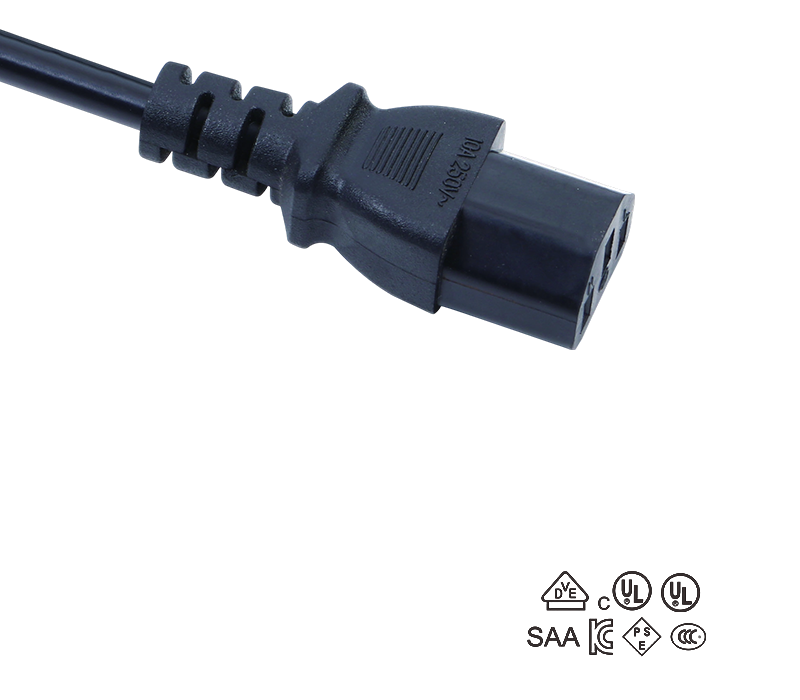
- Check for UL listing or ETL certification. A UL-listed or ETL-certified electrical power cord has been independently tested to verify that it meets the specifications printed on its jacket. Uncertified cords—particularly from unverified online sources—may have conductors significantly undersized from what the gauge marking suggests.
Following this sequence takes less than five minutes and eliminates the guesswork that causes the majority of power cord-related safety incidents. The right electrical power cord is always the one that is correctly rated for the load, the length, and the environment—not the cheapest one that fits the plug.
Latest News

Contact Us
LET'S START COLLABORATING
 Ningbo TOP Electromechanical Co., Ltd.
specializes in the R&D and manufacturing of
wires & cables, plugs & sockets, waterproof LED connectors, and more. Ourproducts
meet multiple international certifications and are widely used in global markets.
Ningbo TOP Electromechanical Co., Ltd.
specializes in the R&D and manufacturing of
wires & cables, plugs & sockets, waterproof LED connectors, and more. Ourproducts
meet multiple international certifications and are widely used in global markets.
STAY CONNECTED
 Phone:+86-13586690829
Tel:+86-0574-62135837-801
 [email protected]
[email protected]
 Sibei Industrial Yuyao City, Ningbo, Zhejiang, China
MOBILE
Copyright © Ningbo TOP Electromechanical Co., Ltd. All Rights
Reserved
 Custom Electrical Power Cord Manufacturers