


 中文简体
中文简体  Español
2026 Outdoor Extension Cord Buying Guide: Durability, Safety, and Efficiency
 2026.05.07
 Industry News
Why Choosing the Right Outdoor Extension Cord Matters
An outdoor extension cord is not just a convenient accessory; it is a critical tool for safely powering outdoor appliances, tools, and lighting systems. Using the wrong cord can lead to electrical hazards, equipment damage, and reduced performance. Choosing a cord specifically rated for outdoor use ensures resistance to moisture, UV rays, and temperature variations, providing long-term reliability.
Outdoor-rated cords typically feature thicker insulation, heavy-duty conductors, and durable connectors. They are designed to handle environmental stress that indoor cords cannot, reducing risks of short circuits and electrical shocks.
Key Features of Outdoor Extension Cords
When selecting an outdoor extension cord, focus on these essential features:
Weather Resistance
Outdoor cords must resist water, UV rays, and temperature extremes. Look for cords labeled “Outdoor Rated” or with a “W” marking. These cords have insulation and jacketing that protect against cracking, fraying, and moisture penetration.
Gauge and Amp Rating
The wire gauge determines the maximum current a cord can safely carry. For example:
| Cord Length | 14 AWG | 12 AWG | 10 AWG |
|---|---|---|---|
| 0–25 ft | 15 A | 20 A | 25 A |
| 25–50 ft | 10 A | 15 A | 20 A |
| 50–100 ft | 5 A | 10 A | 15 A |
Using an undersized cord can cause voltage drop, overheating, and potential fire hazards. Selecting the proper gauge for the length and load is critical.
Plug and Connector Quality
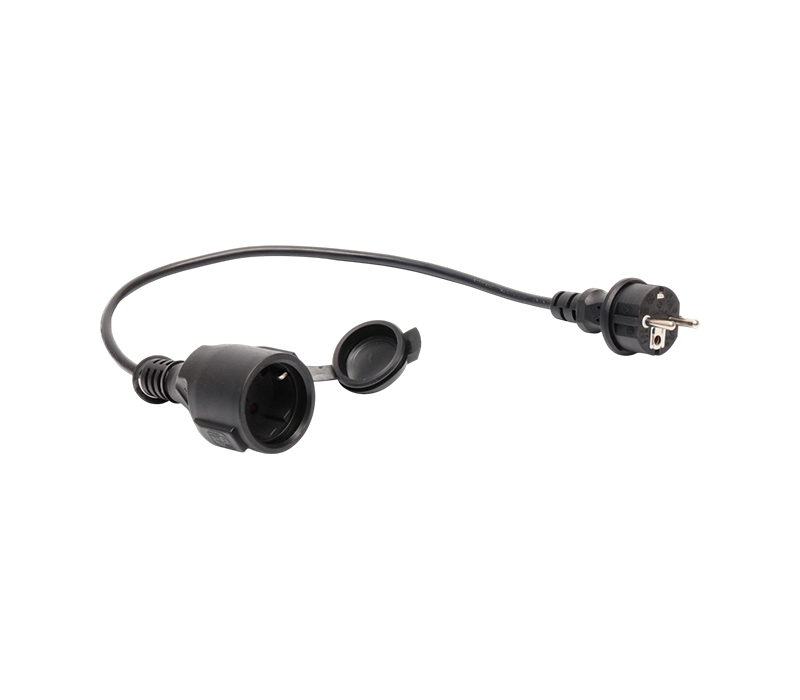
Cords with molded plugs, reinforced prongs, and grounded (three-prong) designs improve safety. Waterproof or weather-resistant connectors further protect against moisture ingress, especially for outdoor applications.
Types of Outdoor Extension Cords
Light-Duty Cords
Light-duty cords, typically 16–14 AWG, are suitable for low-power devices such as garden lights, small pumps, or holiday decorations. They are flexible and easy to handle, but limited to short runs and low amperage.
Medium-Duty Cords
Medium-duty cords (14–12 AWG) can power most household outdoor equipment including power tools, lawn mowers, and pressure washers. These cords offer better durability and longer reach while maintaining flexibility.
Heavy-Duty Cords
Heavy-duty cords, typically 12–10 AWG, are used for high-power tools and construction equipment. They are thicker, more rigid, and highly resistant to abrasion, suitable for professional or industrial outdoor use.
Safety Guidelines for Outdoor Extension Cords
Proper usage of outdoor extension cords ensures safety and longevity. Follow these guidelines:
- Never use indoor-rated cords outdoors, even temporarily.
- Avoid running cords through water, puddles, or damp soil.
- Do not overload cords beyond their ampacity or length rating.
- Inspect cords for cracks, cuts, or exposed wires before each use.
- Uncoil cords fully to prevent overheating during use.
- Store cords in a dry, shaded area to prevent UV or moisture damage.
Common Mistakes to Avoid
Many accidents occur because users underestimate voltage drop, fail to use grounded cords, or misuse cords in wet environments. Following manufacturer guidelines and proper selection is critical for safety.
Choosing the Right Length and Gauge
Selecting the correct cord length and gauge reduces energy loss and prevents overheating. Consider the following:
- Measure the distance from the power source to the device.
- Choose a gauge that supports the device's current draw for that length.
- For frequent outdoor use, a slightly heavier gauge improves durability and safety.
Example: A 50 ft, 14 AWG cord can safely handle up to 15 amps, sufficient for most household power tools, while longer runs may require 12 AWG to prevent voltage drop.
Maintenance Tips for Longevity
Regular maintenance ensures your outdoor extension cord lasts for years:
- Check insulation and connectors before each use.
- Clean dirt and debris from prongs and plugs to maintain proper contact.
- Avoid sharp bends or kinks that stress internal wires.
- Use cord reels or hooks to prevent tangling and physical damage.
- Replace cords immediately if any damage or wear is detected.
Practical Applications of Outdoor Extension Cords
Outdoor extension cords are versatile tools for various scenarios:
Gardening and Landscaping
Powering lawn mowers, hedge trimmers, leaf blowers, and irrigation systems requires durable cords that withstand outdoor conditions.
Construction Sites
Heavy-duty cords supply electricity to power saws, drills, compressors, and temporary lighting in rough environments. Use cords rated for industrial loads and abrasion resistance.
Outdoor Events and Lighting
Event organizers rely on outdoor extension cords to power audio systems, stage lights, and decorative lighting. Using weatherproof cords prevents interruptions and hazards.
Emergency and Backup Power
Generators often require long outdoor extension cords to deliver power safely. Selecting the proper gauge prevents overheating and ensures equipment operates reliably.
Latest News

Contact Us
LET'S START COLLABORATING
 Ningbo TOP Electromechanical Co., Ltd.
specializes in the R&D and manufacturing of
wires & cables, plugs & sockets, waterproof LED connectors, and more. Ourproducts
meet multiple international certifications and are widely used in global markets.
Ningbo TOP Electromechanical Co., Ltd.
specializes in the R&D and manufacturing of
wires & cables, plugs & sockets, waterproof LED connectors, and more. Ourproducts
meet multiple international certifications and are widely used in global markets.
STAY CONNECTED
 Phone:+86-13586690829
Tel:+86-0574-62135837-801
 [email protected]
[email protected]
 Sibei Industrial Yuyao City, Ningbo, Zhejiang, China
MOBILE
Copyright © Ningbo TOP Electromechanical Co., Ltd. All Rights
Reserved
 Custom Electrical Power Cord Manufacturers