


 中文简体
 Español

Electrical Equipment Components: A Buyer's Guide to Plugs, Connectors & LED Wiring
 2026.11.05
 Industry News
A specification sheet arrives for a 15 m garden light set: 25 bulbs, a waterproof joint at every connection, and a plug that must fit a socket several thousand kilometres away. One quote comes back at an attractive price with a 10 A plug, no fuse and no IP number on the drawing. That is the moment electrical equipment components stop being a commodity line item and become a compliance decision.
The conclusion first: specify by interface and by rating, not by photograph. Three checks settle most of the risk before price is even discussed - the plug standard and its rated current, the ingress protection at every joint, and the connector family that ties harness, splitter box and fixture together. Everything below explains why those three items decide whether a container clears inspection or comes back.
Start With the Plug Standard, Not the Price
Plug geometry is regulated, and the differences are structural rather than cosmetic. A Europlug with 4 mm pins tops out at 2.5 A; a Schuko plug carries 16 A because its pins, contacts and earth clip are built for it. A British plug carries a cartridge fuse matched to the appliance cord, so a 13 A plug on a 0.75 mm² lead is a fault waiting to happen unless the fuse value matches the load. None of this survives a photograph - it survives a drawing with dimensions, ratings and the standard number printed on it.
| Standard family | Typical rating | Common variants | Check on the drawing |
|---|---|---|---|
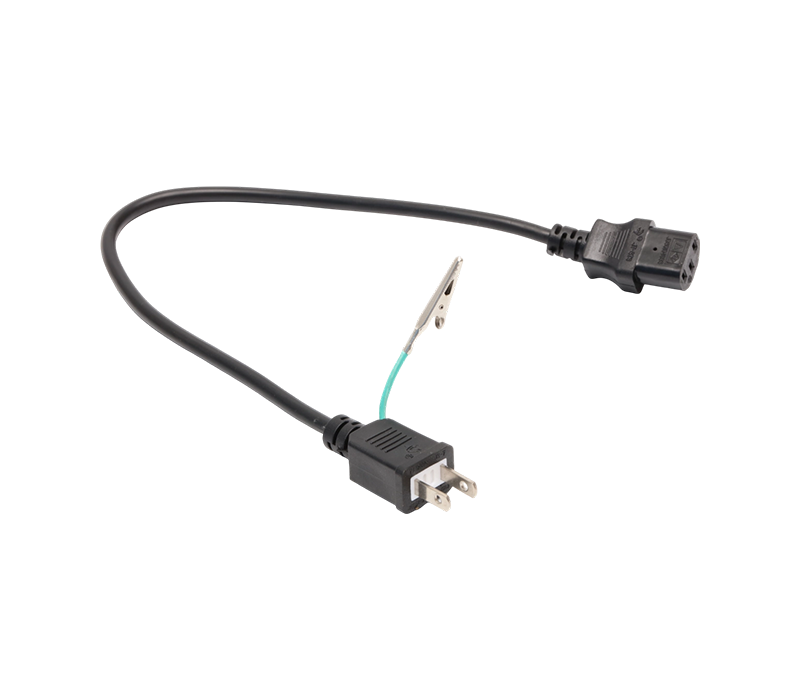
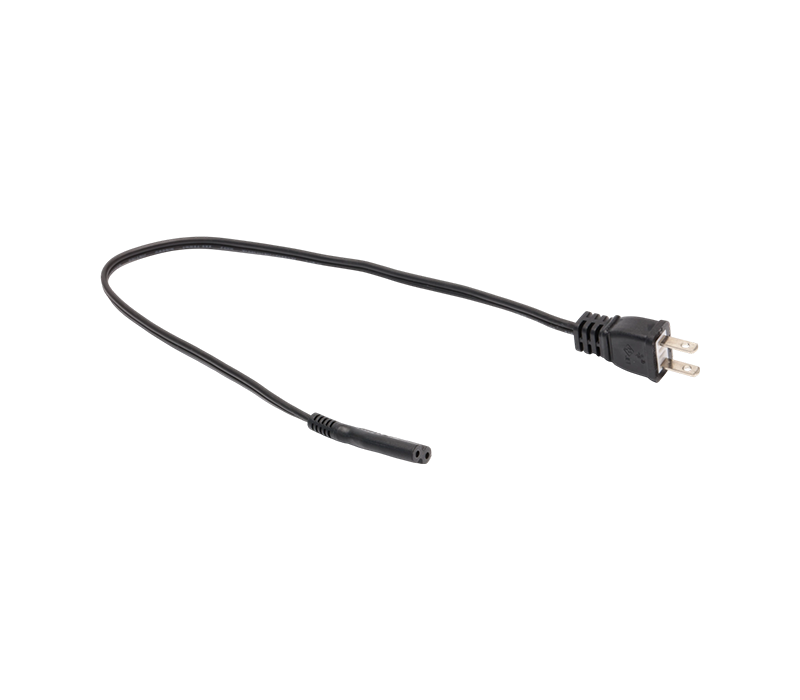
| North America, Japan, Taiwan (NEMA) | 15 A, 125 V | 2-pin, 3-pin, 90-degree elbow, wire clamp, 20 A 3-pin | Blade configuration, cord type, 125 V only |
| Europe (CEE 7) | 2.5 A and 16 A, 250 V | Europlug 2-pin, Schuko 3-pin, waterproof, angled | Pin diameter, earth contact, IP class |
| United Kingdom (BS 1363) | 13 A, 250 V | Fused 3-pin, detachable, female socket | Fuse rating, shutter compatibility |
| Australia and New Zealand | 10 A and 16 A, 250 V | 2-pin, 3-pin round, IEC-terminated, female socket | Insulation sleeve length |
| China (GB) | 10 A and 16 A, 250 V | Straight, 90-degree elbow, IEC terminated | Blade size difference between 10 A and 16 A |
| Brazil (NBR 14136) | 10 A and 20 A, 250 V | 2-pin, 3-pin | Pin diameter on 20 A versions |
| South Africa, Switzerland, Denmark, Italy, Israel | 6 A to 16 A, 250 V | 3-pin, waterproof, angled | Country-specific earth pin position |
Read the table with a purchasing lens, because the failure mode is rarely the metal. It is a 125 V plug shipped to a 230 V market, a 10 A body used where 16 A appliances dominate, or a fused plug delivered with the wrong fuse. Ask for the rating, the standard number and the fuse value in writing for every line item, then compare those three fields against the destination market.
 JT006A 13A 250V UK Fused PlugUK-standard 13 A 250 V plug with built-in fuse and pure-copper conductors; verify fuse value and cable compatibility for the destination market.View Product →
Current Ratings and the Voltage Detail Buyers Mix Up
A 250 V rating does not mean a plug works everywhere in Europe, and a 15 A plug does not deliver 15 A continuously through any cable. Ratings assume a matching cord cross-section and a defined ambient temperature. Drop to a thinner cord and the plug is no longer the limiting part - the cable is, and the temperature rise simply moves to the weakest point in the chain.
Typical rated current by plug family (amperes, bars to scale)
Europlug 2-pin2.5 A
South Africa 3-pin6 A
China, Italy, Australia 3-pin10 A
UK fused 3-pin13 A
US, Japan, Taiwan 3-pin15 A
Europe Schuko 3-pin16 A
US, Brazil high current20 A
The mismatches that generate returns are predictable: 2.5 A Europlugs on kettles, 10 A plugs on 16 A air-conditioning leads, 20 A Brazilian plugs ordered against a 10 A socket mould. The fix is unglamorous - a line-by-line comparison of rated current against appliance current with a margin, plus a drawing that shows cord type next to the plug.
Ingress Protection: Water Gets In at the Cable, Not the Pins
IP44, IP65, IP67 - for outdoor work the second digit is the one that matters, and it applies to the whole assembly rather than the connector body alone. In service, moisture usually enters at the cable entry, through a gasket that has hardened or gone missing, or by capillary action along a stranded conductor. A moulded plug with real strain relief and a rated gasket beats an assembled plug with an impressive number on the label.
Two checks separate suppliers quickly. Thermal cycling - a few hours in a warm cabinet, then a cold store - opens gaps that a static water test never finds. And a pull test on the cable entry at the specified force shows whether the moulding bonded to the jacket or was merely flashed over it. Waterproof variants now exist across most standard families; a moulded 3-pin waterproof plug in the European pattern is the usual choice for outdoor fixtures, pumps and garden runs.
LED Wiring Components: Harness, Splitter and Switch
A low-voltage lighting run has four parts that must agree on pin count, pitch and polarity. Get one wrong and the fixture will not seat - or worse, it will seat reversed.
- Driver - 12 V DC, sized to the total head wattage
- Splitter box - 3, 4, 6, 9 or 12 ways, high or low voltage
- Connector harness - 2, 3 or 4 pin, male to female, IP67 for exposed runs
- Fixture head - cabinet, mirror or display light
- Connector harness - 2, 3 or 4 pin, male to female, IP67 for exposed runs
- Switch - foot switch, touch dimmer or IR sensor, wired on the low-voltage side
- Splitter box - 3, 4, 6, 9 or 12 ways, high or low voltage
Three specifications do the real work. Pin count and gender, since 2-, 3- and 4-pin pairs are the common families and they do not mix. Voltage class, because high-voltage and low-voltage harnesses are not interchangeable even when the housings look identical. And sealing class, where IP67 male/female connectors and Y-shaped splitters keep a branched outdoor run watertight. Splitter boxes set how many heads a single driver can feed, so the box rating must cover total load rather than per-head load.
The assembly logic behind these parts is worth ten minutes before a first order; our note on LED connector harnesses in fixture wiring walks through the sequence from driver to head.
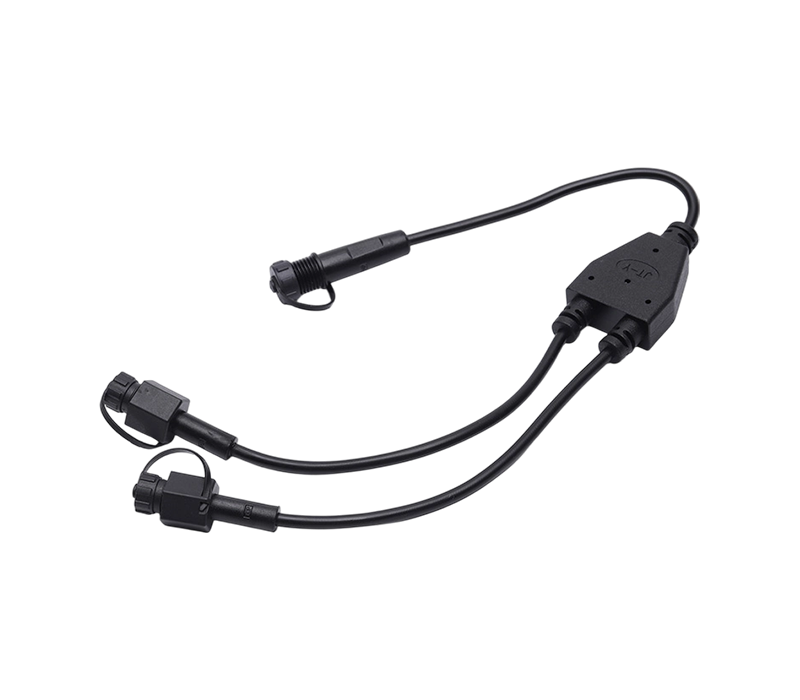 IP67 Y-Shaped Male/Female DC ConnectorWaterproof IP67 Y-shaped connector rated 3 A at 12/48 V DC, with 0.34–0.5 mm² wire compatibility for outdoor lighting and industrial automation.View Product →
Cord Length, Strain Relief and the Details That Cause Returns
Most rejections at goods-in are mechanical, not electrical: a 90-degree elbow that will not clear the skirting board, a cord 20 mm shorter than the drawing, a fuse holder that needs a tool to open, a colour that drifts between batches. A right-angle plug buys 30 to 40 mm of clearance behind a wall-hung fixture - often the difference between a cabinet sitting flush and not. A wire clamp that grips the outer jacket rather than the conductors decides whether the plug survives a 5 kg pull test.
Two more points worth fixing in writing: whether the plug is moulded or rewireable - moulded for volume, rewireable for field service - and the carton configuration, because moving from a 100-piece inner box to a 500-piece master carton changes handling damage rates more than most buyers expect.
Match the Component to the Fixture, Not the Catalogue Page
A cabinet light set running at 12 V DC through a foot switch, a mirror front light built on an SMD2835 array of 18 to 108 LEDs, a 1 W or 3 W bedside lamp, a string of 25 E12 or G40 bulbs - each places a different demand on the same small parts. The 12 V run needs a driver, splitter and switch rated for total wattage. The mirror light needs a connector that tolerates a bathroom. The string light needs a plug, a socket base and an IP rating that match the destination market. Reading the fixture first and the catalogue second saves a sample round.
A Spec Review Checklist Before the First Order
- Destination market plus the exact plug standard number and rating.
- Appliance current and cord cross-section, checked against the plug rating with margin.
- Joint count and location - indoor, sheltered or exposed - then the IP class for each joint.
- Connector family: pin count, gender, pitch, voltage class and keying.
- Splitter and driver loading calculated on total wattage, not per head.
- Mechanical details: cord length tolerance, straight or elbow, clamp type, fuse value, colour.
- Documents: drawing, sample approval record and the approval marks expected on delivered goods.
Electrical equipment components are inexpensive to change on a drawing and expensive to change in a container. Send the destination market, the appliance current, the joint map and the fixture wattage, and most of the specification can be locked before a single sample is moulded. If a standard is unfamiliar, the contact page is the shortest route to a straight answer.
Latest News

Contact Us
LET'S START COLLABORATING
 Ningbo TOP Electromechanical Co., Ltd.
specializes in the R&D and manufacturing of
wires & cables, plugs & sockets, waterproof LED connectors, and more. Ourproducts
meet multiple international certifications and are widely used in global markets.
STAY CONNECTED
 Phone:+86-13586690829
Tel:+86-0574-62135837-801
 [email protected]
 Sibei Industrial Yuyao City, Ningbo, Zhejiang, China
MOBILE
Copyright © Ningbo TOP Electromechanical Co., Ltd. All Rights
Reserved
 Custom Electrical Power Cord Manufacturers