


 中文简体
 Español

Commercial Grade Christmas Light Strings: Wire, Safety, and Buying Guide
 2026.11.26
 Industry News
Two strings can look identical in a carton and still behave very differently after a winter outdoors. One uses 22 AWG wire, molded sockets, and a small plug fuse; the other uses 18 AWG wire, sealed sockets, and a replaceable fuse. Both may be sold as commercial grade Christmas light strings. That is the first buying lesson: commercial grade is not a single certificate. It is a bundle of construction choices that decide how much power the string can carry, how long it can run, and how often maintenance crews have to return to the roof. The practical approach is to compare the specification line by line, then verify the exact string family against the plug standard, load limit, and outdoor rating for the project. For a plain-language baseline, this overview of string light construction is a useful starting point.
What Commercial Grade Actually Means
In the lighting trade, “commercial grade” is a marketing and procurement term, not a universal legal standard. That is why two suppliers can use the same phrase for products with different wire gauges, socket designs, and run limits. The label becomes useful only when it is backed by measurable details: conductor size, insulation material, socket temperature rating, fuse type, connector sealing, maximum connected wattage, and the safety listing that applies to the exact model.
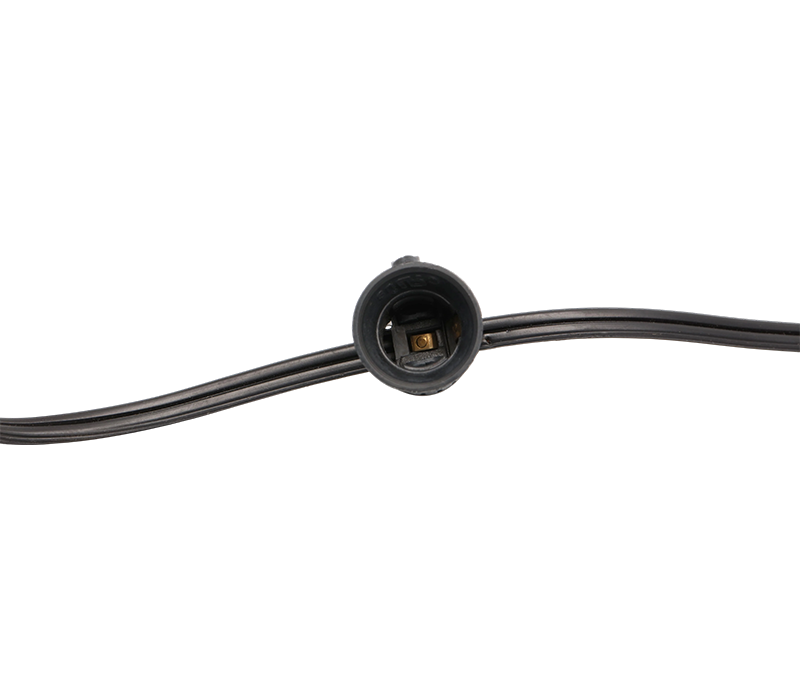
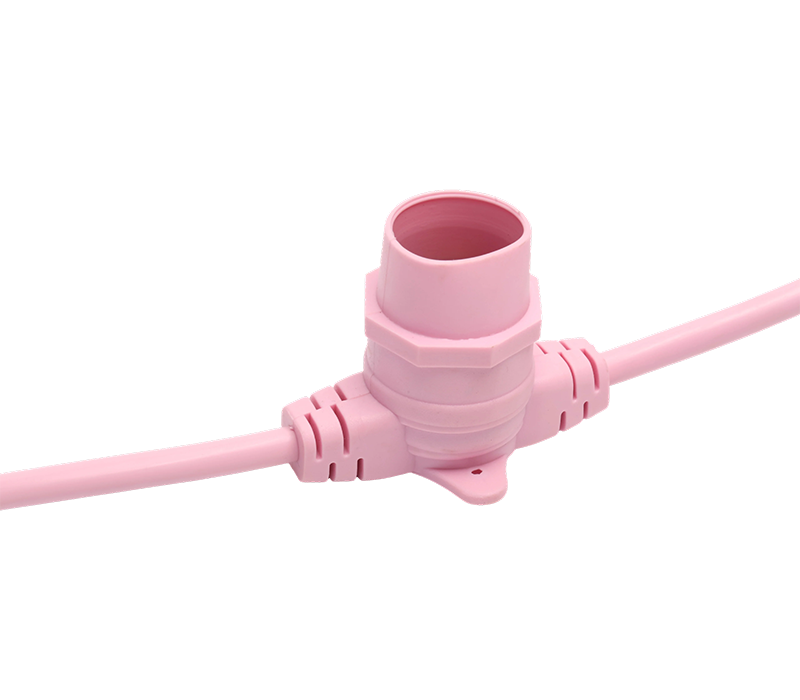
For a Christmas light string, the most important difference is usually the wire. A thicker conductor has lower resistance, so less energy is lost as heat and voltage drop along the run. That means more bulbs can be connected before the last bulbs dim or the wire overheats. Socket construction matters just as much. A sealed, replaceable socket with corrosion-resistant contacts is easier to service and less likely to admit water than a molded, non-replaceable socket. Fusing is another checkpoint. A replaceable plug fuse with a clear current rating protects the string and the branch circuit; a sealed, unmarked fuse gives the buyer less to inspect and less to replace.
| Feature | Decorative retail string | Commercial grade string | Why it matters |
|---|---|---|---|
| Wire gauge | Often 20-22 AWG | Often 18 AWG, sometimes 16 AWG for high-load runs | Lower gauge reduces voltage drop and supports longer runs. |
| Insulation | Basic PVC with limited UV protection | UV-stabilized, cold-flex insulation | Resists sunlight, cracking, and seasonal handling. |
| Sockets | Molded, sometimes non-replaceable | Sealed, replaceable, corrosion-resistant contacts | Fewer water paths and easier field repairs. |
| Fusing | Small or non-replaceable fuse | Replaceable plug fuse with a marked rating | Protects the string and simplifies troubleshooting. |
| Connectors | Light-duty push-in | Keyed, strain-relieved, IP-rated | Stable connections outdoors and less pull-out risk. |
| Documentation | Minimal | AWG, wattage, maximum run, IP rating, listing | Allows proper planning and inspection. |
Wire Gauge, Voltage Drop, and Run Length
Run length is not a fixed number that can be copied from one string to another. It depends on supply voltage, bulb wattage, conductor size, ambient temperature, and the manufacturer’s maximum connected load. A 120 V string with 18 AWG wire may support a longer connected run than a 22 AWG string with the same bulbs, but the only safe figure is the one printed on the product or confirmed in writing by the supplier. As a planning rule, calculate total watts as bulb watts multiplied by bulb count, then keep the connected load below the string’s rating and the branch circuit’s limit. Leave margin for startup current, extension cords, and aging connectors.
Voltage drop shows up as dimming at the far end, warmer wire, or nuisance fuse failures. On a commercial installation, those symptoms are expensive because they usually appear after the lift has been rented and the crew is on site. If the design needs a long façade run, the better answer is often to split the load across multiple circuits or use a heavier conductor rather than adding another extension cord. Low-voltage systems solve some shock concerns, but they introduce transformer capacity, cable length, and connector voltage-drop issues of their own.
Connectors, Sealing, and Outdoor Reality
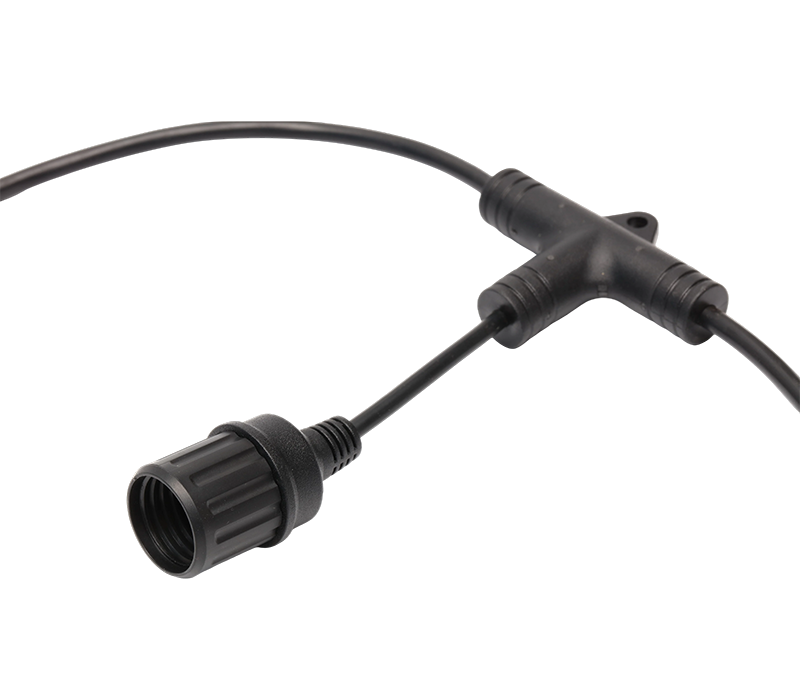
Outdoor Christmas light strings live in a harsh cycle: rain, snow, freeze-thaw movement, UV exposure, and seasonal handling. An IP rating is a useful starting point, but it is not a complete installation instruction. IP65 generally handles dust and water jets; IP67 adds temporary immersion protection for a defined time and depth. Neither rating replaces a drip loop, a properly supported cable, or a GFCI-protected circuit where required. Look for keyed connectors with strain relief, molded bodies, and contact materials that resist corrosion. A connector that pulls apart under wind load will fail even if the datasheet carries a high IP number.
Low-voltage commercial strings are often chosen for temporary public displays and residential installations where shock risk should be reduced. A 24 V string with a waterproof connector can be a sensible option for garden and façade runs, provided the transformer is sized for the total load and located in a dry, ventilated enclosure. The trade-off is current: lower voltage means higher current for the same wattage, so cable size and connector rating become more critical, not less.
 24V Waterproof LED Christmas String Lights with App ControlA 15 m, 25-bulb 24V string with waterproof connectors and Bluetooth color control; review it for façade or garden displays where reduced shock risk matters.View Product →
Plug Standards and Export Compliance
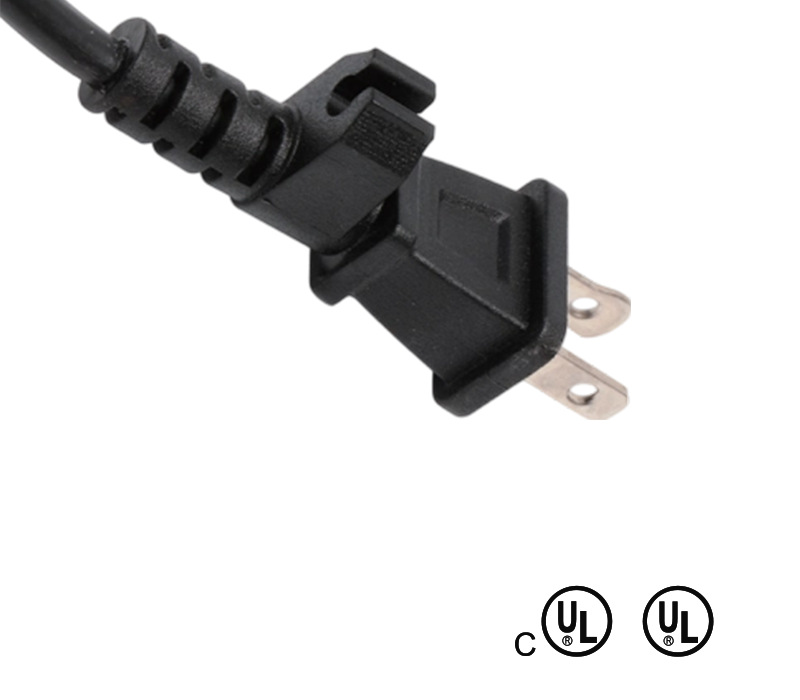
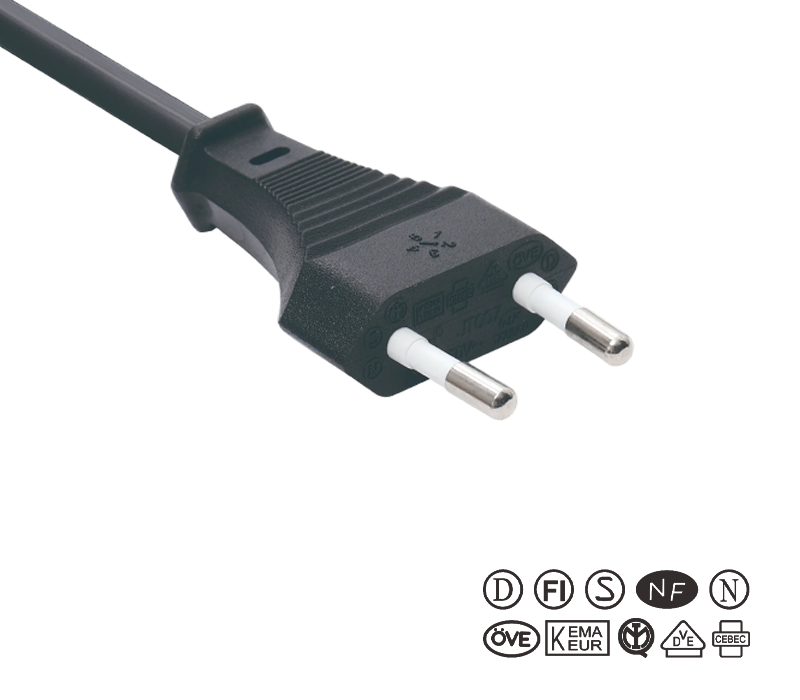
For commercial buyers, the plug is part of the safety system. A string destined for the United States typically needs a 15 A 125 V plug configuration with the correct polarity and fuse arrangement; a European market string may use a 16 A 250 V plug; Australian projects usually call for a 10 A or 16 A plug with the local pin pattern; the UK market uses a 13 A fused plug. These are not interchangeable adapters. The plug, wiring, fuse, and marking must match the destination market and the exact product listing. If the string is being private-labeled or built for a mixed export program, ask for the plug standard, conductor size, and fuse rating in writing before approval.
 American-Style String Lights with Fuse and App ControllerCombines a classic American-style string, accessible fuse protection, and app control for on/off, brightness, color, and flashing modes, useful for U.S. patio and balcony displays.View Product →
For North American commercial displays, an American-style string with a fused plug and app controller can simplify scene scheduling while keeping the fuse accessible for maintenance. For Australian projects, a multicolor string with an Australian-standard three-pin plug and waterproof construction addresses the plug and exposure requirements in one assembly. The key is to avoid mixing market-specific plugs with generic controllers or extension cords that were not evaluated as part of the same system.
 Australian-Style Multicolor String Lights with Three-Pin Plug and Waterproof ConnectorsPairs multicolor illumination with an Australian-standard three-pin plug and waterproof connectors, making it relevant for outdoor garden parties and festive displays in the Australian market.View Product →
A Practical Buyer Checklist
Before approving a commercial-grade Christmas light string, ask for the details that determine field performance. A supplier who can answer these points clearly is easier to audit and easier to hold to a specification.
- Confirm the conductor gauge, insulation material, and temperature rating.
- Request the maximum connected wattage and maximum run length for the exact bulb type.
- Check the fuse type, current rating, and whether it is replaceable in the field.
- Verify the plug standard, polarity, and market-specific safety marking.
- Ask for the IP rating of mated connectors, not just the bulb or socket.
- Review socket construction: sealed, replaceable, and corrosion-resistant where exposed.
- Request a sample for a bend, pull, and moisture test before a full order.
- Confirm spare bulbs, fuses, and connector pigtails are available after delivery.
Commercial-grade Christmas light strings are a long-life purchase only when the wire, sockets, fuses, connectors, and plug standard are specified together. The lowest unit price is rarely the lowest installed cost if the string dims at the end of a run or fails after the first freeze. If you are sourcing for a specific market, share your destination market and load requirements so the plug, fuse, and string construction can be matched before production.
Latest News
Contact Us
LET'S START COLLABORATING
 Ningbo TOP Electromechanical Co., Ltd.
specializes in the R&D and manufacturing of
wires & cables, plugs & sockets, waterproof LED connectors, and more. Ourproducts
meet multiple international certifications and are widely used in global markets.
STAY CONNECTED
 Phone:+86-13586690829
Tel:+86-0574-62135837-801
 [email protected]
 Sibei Industrial Yuyao City, Ningbo, Zhejiang, China
MOBILE
Copyright © Ningbo TOP Electromechanical Co., Ltd. All Rights
Reserved
 Custom Electrical Power Cord Manufacturers