


 中文简体
中文简体  Español
Power Cord Basics: What Separates a Standard Cord From a True Heavy-Duty Power Cord
 2026.07.09
 Industry News
A power cord is a detachable length of insulated conductor that carries electricity from an outlet to a device that doesn't have power wiring built in — a monitor, a range, a piece of shop equipment. The difference between a standard cord and a heavy-duty power cord comes down to three things: thicker copper gauge, a tougher outer jacket, and a strain relief built to survive constant flexing, moisture, or abrasion instead of sitting still on an office floor.
What Counts as a Power Cord, and Where the Heavy-Duty Line Gets Drawn
The category is broader than most people assume
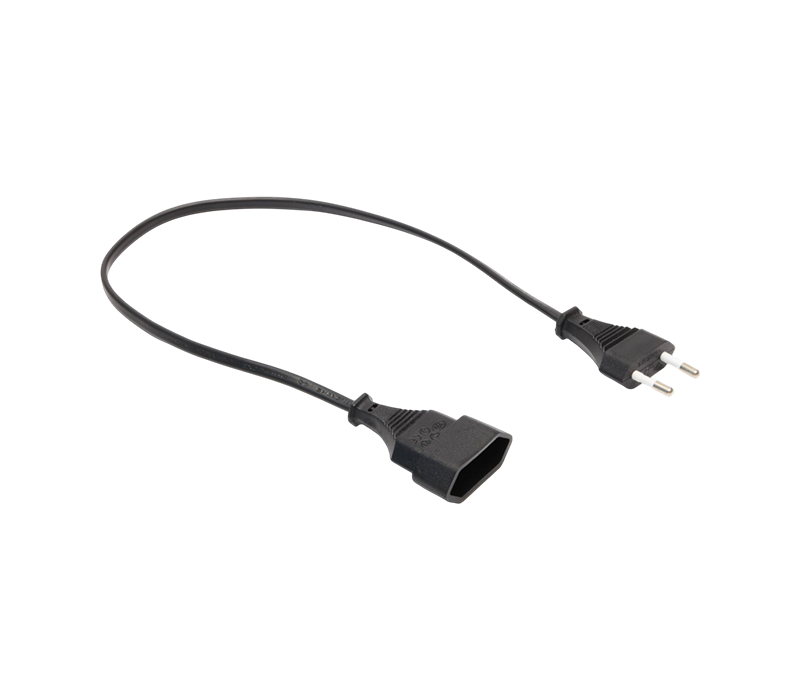
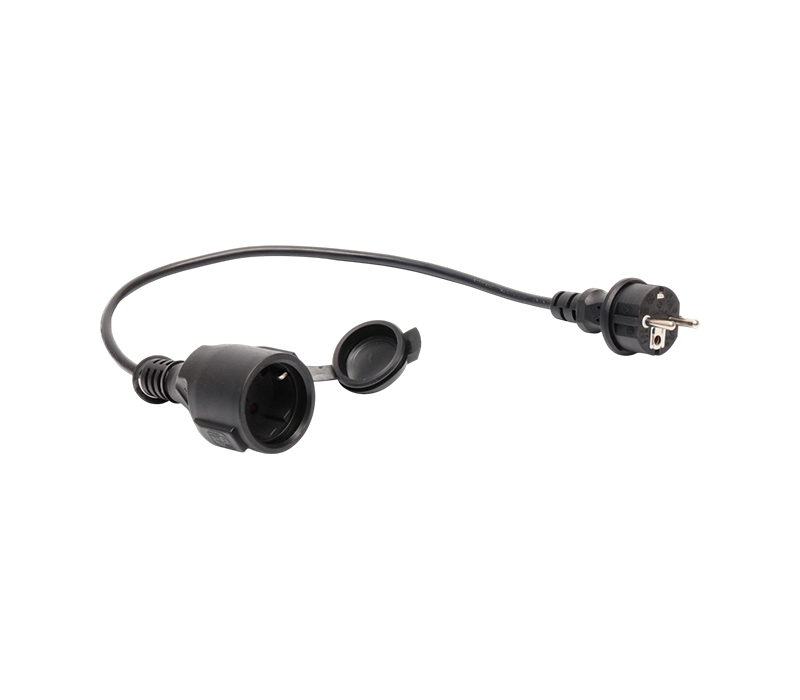
A power cord is used any time a device or appliance isn't hardwired or built with its own attached lead — a computer monitor, a clothes dryer, an electric range, a piece of portable shop equipment. One end terminates in a molded plug that goes into a wall outlet or receptacle, and the other end connects to the device through bare wires, a socket, or a matching connector.
Not every power cord is built to the same standard, and that's where the "heavy-duty" distinction actually matters in practice. A cord rated for an office printer sitting on carpet has different structural demands than one running to a drill press on a factory floor, coiling and uncoiling daily, exposed to oil, moisture, or foot traffic. Using a light-duty cord in a heavy-duty application doesn't just wear out faster — it becomes a real safety liability once the jacket cracks or the strain relief fails under repeated flexing.
| Factor | Standard / Light-Duty Power Cord | Heavy-Duty Power Cord |
|---|---|---|
| Typical jacket material | PVC, general-purpose | Oil- and abrasion-resistant compounds (e.g. SJOOW, SOOW type) |
| Conductor gauge | Thinner, 16–18 AWG common | Thicker, 10–14 AWG common |
| Flexibility under repeated use | Adequate for stationary use | Engineered for constant coiling and flexing |
| Environmental exposure | Dry, temperature-controlled indoor spaces | Moisture, oil, outdoor and semi-enclosed conditions |
| Strain relief design | Standard molded relief | Reinforced relief, sometimes with safety spring or bus drop grip |
| Typical applications | Computers, monitors, home appliances | Hand tools, drilling/milling equipment, industrial machinery |
Voltage and Regional Standards You Can't Assume Are Universal
A cord built for one region's grid will not perform safely in another's
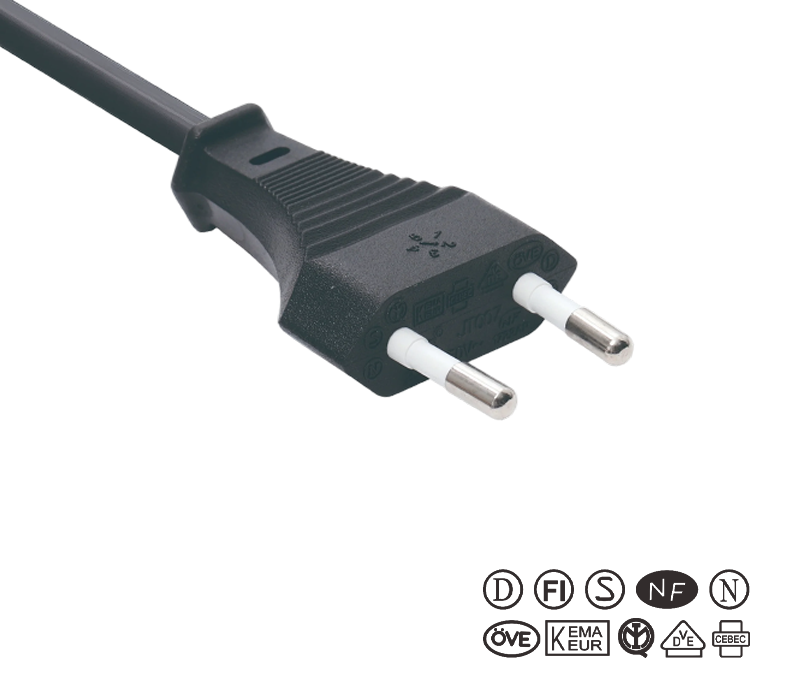
Power cords don't follow one global standard, which means the voltage and frequency a cord is rated for has to match the region it's shipping to, not just the device it's plugged into. North America, Central and South America, Japan, and a handful of other countries run on 100–130V at 50–60Hz. Most of the rest of the world runs on 220–240V at 50Hz — and there are exceptions within both groups that use different voltages or frequencies entirely.
This matters most for manufacturers and distributors shipping the same piece of equipment into multiple markets, where a single power cord specification simply won't clear every region's electrical code. Getting the regional spec wrong isn't a minor inconvenience — a cord rated for the wrong voltage range is a fire and equipment-damage risk, not just a compatibility issue.
The Three Components Every Power Cord Depends On
Simple on the surface, but each part has a real failure mode if it's underspecified
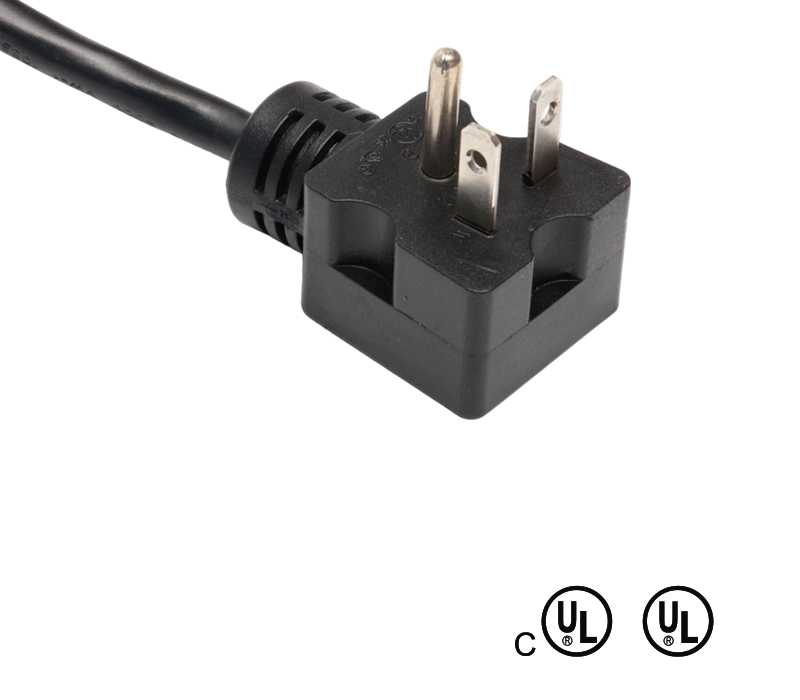
- The plugThe molded connector that mates with the outlet or receptacle — its pin configuration and grounding setup are what regional standards like NEMA are built around.
- The cord itselfThe insulated conductor bundle that actually carries current. Gauge, insulation material, and conductor count all scale with the current and environment the cord needs to handle.
- The strain reliefSecures the cord where it enters the equipment enclosure, reducing the chance it detaches from the termination point due to motion, flexure, vibration, or tension. On heavy-duty cords, this is often reinforced with a safety spring or bus drop support grip.
Of the three, strain relief is the component most often underrated until it fails. A cord with the correct gauge and a durable jacket can still fail prematurely if the strain relief lets repeated tension transfer directly to the internal connection point instead of absorbing it.
Connector Standards That Actually Matter: NEMA vs. IEC 60320
Two systems that solve different parts of the same problem
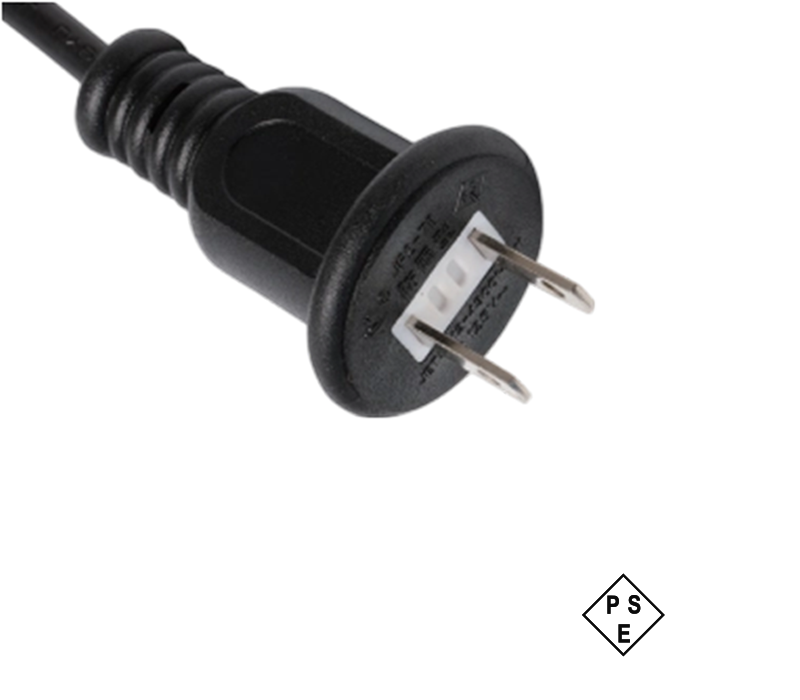
In North America, NEMA (National Electrical Manufacturers Association) sets the standard for receptacle configuration, cord voltage capacity, and plug type. NEMA Type A plugs use two flat blades; Type B adds a grounding pin, which is the version required for most powered equipment beyond small electronics.
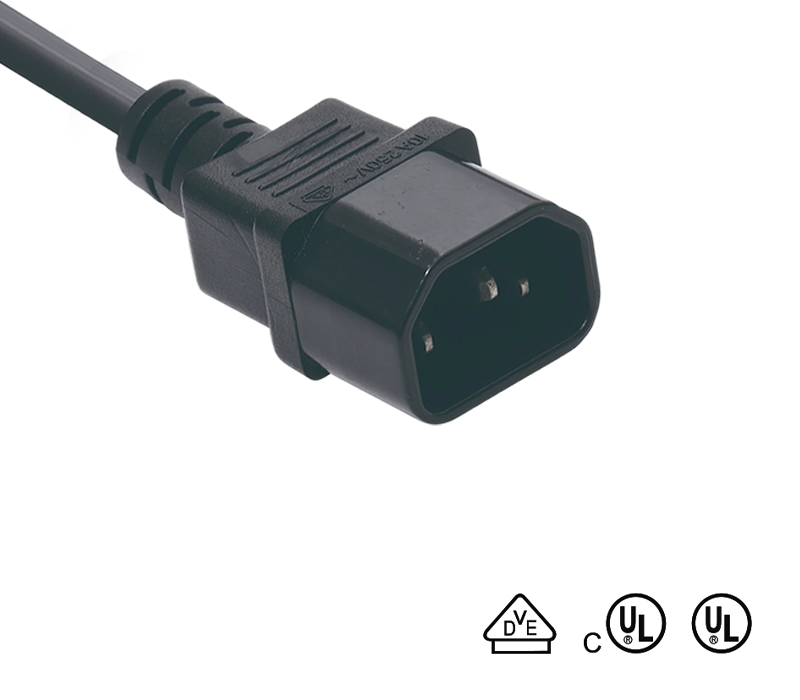
On the device-connection end, IEC 60320 is the international standard most widely used outside plug-and-outlet configurations — it governs the connector that attaches to the equipment itself, with ratings ranging from C1 up to C24 depending on current, voltage, and temperature requirements.
| IEC 60320 Type | Rating | Typical Use |
|---|---|---|
| C13 | 10A, 250V, 70°C | Computers, monitors, amplifiers, printers, fixed-configuration switches |
| C15 | Higher temperature tolerance than C13 | Electric kettles, computer closets, server room equipment |
Matching the wrong connector type to a device isn't just a fit problem — a C13 connector rated for 70°C on a device that runs hotter than that, such as certain kettles or dense server equipment, is a genuine thermal risk, which is exactly why the C15 rating exists as a distinct spec rather than a minor variant.
Matching Cord Construction to the Environment It'll Actually See
The application determines the build far more than the device being powered
Standard power cords are built for dry, temperature-controlled indoor environments — an office, a server room, a household appliance sitting in one place. Once a cord has to operate in a partially enclosed space, a high-activity work area, or anywhere with regular movement, moisture, or debris, it needs a more rugged construction to hold up. That's the point at which a heavy-duty power cord — thicker gauge, tougher jacket, reinforced strain relief — stops being a nice-to-have and becomes the only appropriate choice.
Plug orientation matters here too. Straight plugs work fine in open space, but in tight equipment clearances a right-angle plug reduces the mechanical stress placed on the cord at the connection point, meaningfully cutting down on wear in cramped installations.
100–130VStandard range across North America, Japan, and most of the Americas
220–240VStandard range across most of the rest of the world
C1–C24Full range of IEC 60320 connector ratings by current, voltage, and temperature
Where Heavy-Duty Power Cords Earn Their Cost
The premium is justified in specific, predictable settings
A heavy-duty power cord costs more per foot than a standard one, and that premium is easy to justify in a narrow set of demanding applications: powered hand tools that get dragged across a job site daily, drilling and milling equipment exposed to metal shavings and cutting fluid, medical devices where cord failure isn't an acceptable risk, and telecommunications equipment running in less-controlled physical environments than a typical office.
The real test for whether a job needs a heavy-duty power cord isn't the device's power draw — it's the environment the cord has to survive. A low-wattage tool used daily in a wet, high-abrasion setting needs the reinforced jacket and strain relief a heavy-duty cord provides just as much as a high-draw machine does, while a high-draw device sitting still in a clean, dry space may never need anything beyond a properly gauged standard cord.
Latest News

Contact Us
LET'S START COLLABORATING
 Ningbo TOP Electromechanical Co., Ltd.
specializes in the R&D and manufacturing of
wires & cables, plugs & sockets, waterproof LED connectors, and more. Ourproducts
meet multiple international certifications and are widely used in global markets.
Ningbo TOP Electromechanical Co., Ltd.
specializes in the R&D and manufacturing of
wires & cables, plugs & sockets, waterproof LED connectors, and more. Ourproducts
meet multiple international certifications and are widely used in global markets.
STAY CONNECTED
 Phone:+86-13586690829
Tel:+86-0574-62135837-801
 [email protected]
[email protected]
 Sibei Industrial Yuyao City, Ningbo, Zhejiang, China
MOBILE
Copyright © Ningbo TOP Electromechanical Co., Ltd. All Rights
Reserved
 Custom Electrical Power Cord Manufacturers